
Natural anticoagulants and heparin
Read the draft explanation
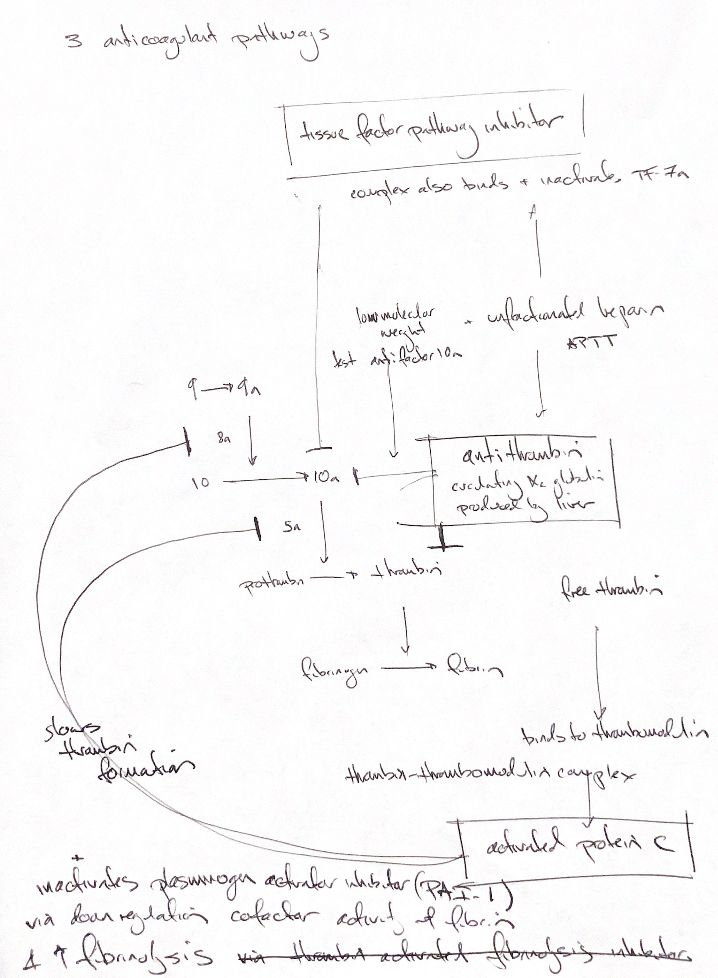
Tissue factor pathway inhibitor (TFPI) first binds and inactivates Xa. That complex then blocks tissue factor–VIIa. Antithrombin is a circulating α₂-globulin made in the liver. It inhibits Xa and thrombin. Endothelial heparan sulphate speeds its action.
Thrombin binds thrombomodulin on intact endothelium. This complex activates protein C. Activated protein C (APC), with protein S as its cofactor, inactivates Va and VIIIa. This slows further thrombin formation.
The lysis link needs care. In purified human clot systems, APC neutralised PAI-1 and sped clot lysis without requiring protein S. The original note also links more lysis to reduced fibrin cofactor activity. These effects differ. Less fibrin can give tissue plasminogen activator (tPA) less support for plasminogen activation, reducing that route to lysis. Net fibrinolysis depends on the setting.
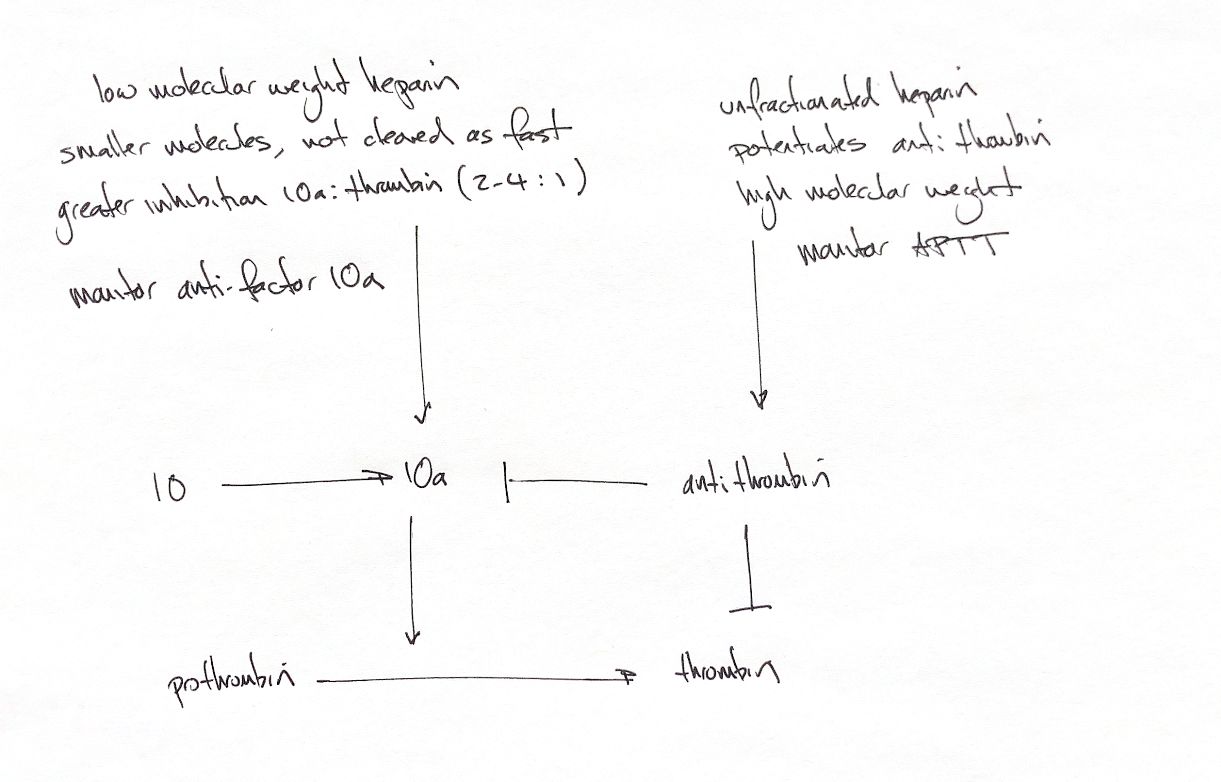
Unfractionated heparin (UFH) and low-molecular-weight heparin (LMWH) boost antithrombin. LMWH's shorter chains favour anti-Xa over anti-thrombin activity. The source/book ratio is usually 2:1–4:1. It varies by preparation and is not a treatment target. LMWH can act longer, but species, product and renal function matter. Cats can absorb and eliminate it rapidly; human dosing intervals do not simply carry across.
The note pairs UFH with aPTT. This can reflect its effect, but species, reagent and patient differences matter. The 2019 CURATIVE guidance prefers anti-Xa for dogs. Use anti-Xa if measuring LMWH effect; aPTT is unreliable for this. Anti-Xa measures heparin-related inhibition of reagent Xa, not factor X activity. Routine LMWH monitoring has limited evidence of improved outcomes in all dogs and cats.
References
Johnston & Tobias, 2nd ed., Ch. 7; de Fouw 1988; Alwood 2007; CURATIVE 2019; Cornell AHDC.