
Overview
What is a slipping kneecap?
The kneecap, or patella, is a small bone at the front of the knee. It normally glides in a groove at the end of the thigh bone as the knee bends and straightens.
With medial patellar luxation (MPL), the kneecap slips out of that groove toward the inside of the leg. “Medial” means toward the inside, and “luxation” means out of place. The kneecap may slip back in, or it may stay out.
The thigh muscles pull on the kneecap to straighten the knee. Below the kneecap, a strong band called the patellar tendon attaches it to the front of the shin bone, just below the knee. These parts need to line up so the muscles pull the kneecap along its groove.
Why the thigh bone is checked first
The kneecap may slip because its groove is shallow or because the muscles and tendon pull it away from the groove. The shape of the leg bones, the position of the tendon’s attachment and tight tissue around the kneecap can all affect this pull.
When the kneecap slips, the assessment starts with the thigh bone, or femur. A bend or twist in this bone can pull the kneecap away from its groove. The surgeon then examines the groove, the tendon’s attachment and the rest of the leg to decide what needs correcting. Not every dog needs surgery to straighten a bone.
MPL often develops as a dog grows, rather than after one accident. It can affect small or large dogs, and sometimes both back legs. Wear in the joint can lead to arthritis, which causes pain and stiffness.
Can cats have a slipping kneecap too?
Yes. Some cats have a kneecap that moves more freely without causing trouble. The surgeon considers whether it is causing pain, a limp or difficulty using the leg before recommending treatment. A loose kneecap on its own does not mean a cat needs surgery.
Signs and symptoms
What you might notice at home
You may see your dog suddenly hold a back leg up for a few steps, then walk normally again. This is often called “skipping.” The dog may stretch or shake the leg before putting it down. Other signs include:
- A limp that becomes more frequent or does not go away.
- Walking with the knee bent or having trouble straightening the leg.
- Less willingness to walk, jump or play.
- A change in the shape or position of the back legs as a puppy grows.
Some dogs have no obvious signs; their vet finds the slipping kneecap during a routine check. Others have ongoing pain or difficulty using the leg. A dog does not have to cry for the knee to be sore.
Skipping can have other causes. Even if your dog has a slipping kneecap, a new limp may be a different problem. The cruciate ligament, a strong band inside the knee that helps keep it stable, can also tear in the same knee.
If your dog suddenly stops using the leg, is very painful or develops a much worse limp, contact your vet or the hospital. Do not assume it is the usual kneecap skipping.
Diagnosis
What happens at the consultation?
The surgeon watches your dog walk and examines both back legs. By feeling the knee, the surgeon checks whether the kneecap is out of its groove or can slip out, whether it goes back into place, and whether moving the knee causes pain.
The examination also includes the hips, the shape of the legs and the cruciate ligament. It shows how the kneecap moves. X-rays show the bones and help the surgeon plan treatment.
The surgeon sometimes repeats part of the examination under sedation, using medicine to make your dog sleepy and relax the muscles. This can make the examination more comfortable and help with carefully positioned X-rays.
The other knee may also have a slipping kneecap without an obvious limp. It may only need monitoring now, but signs can develop later.
What do the four grades mean?
The grade describes how easily the kneecap leaves its groove and whether it can go back:
- Grade I: it can be pushed out during the examination, then returns on its own.
- Grade II: it slips out and may stay out until the leg moves or it is put back.
- Grade III: it stays out most of the time. It can be put back, but slips out again.
- Grade IV: it stays out and cannot be put back into the groove during the examination.
These are examination findings, not a test to try at home. The grade alone cannot show how much pain your dog has or which operation is needed. The surgeon also considers the limp, how often the kneecap slips, joint wear, growth and the rest of the leg.
How do X-rays help assess the thigh bone?
The surgeon starts by looking at the shape and alignment of the femur, from the hip to the knee. A close-up of the kneecap alone does not show the whole bone or explain why the kneecap is being pulled out of its groove.
You do not need X-rays before referral. After the examination, the surgeon discusses the views needed to assess the leg and plan treatment.
Measuring the bend
Reference lines on an X-ray help the surgeon measure the bend near the knee. One of these measurements is called the anatomic lateral distal femoral angle, or aLDFA.
What does the 102° reference mean?
In a study of 81 thigh bones from 51 dogs, Clark and colleagues compared X-ray measurements with CT measurements using a 102° screening cutoff. Measurements below that cutoff were useful for screening out a marked inward bend in the lower femur. Higher X-ray measurements needed further assessment because X-ray and CT measurements could differ substantially.
102° is a screening reference, not an automatic reason for a bone-straightening operation. The surgeon assesses the imaging alongside your dog’s examination and the other causes of the slipping kneecap. Read the Clark study, 2023 →
Why can X-ray measurements be misleading?
An X-ray turns a three-dimensional bone into a flat picture. Turning or tilting the leg can make a bend look larger or smaller. Careful positioning helps, but an X-ray angle can still differ from the measurement on CT.
Why use CT for detailed alignment planning?
A CT scan shows the bone in three dimensions. The surgeon can align the views to the bone itself and measure bending and twisting in three dimensions.
X-rays are useful for the initial assessment. If the femur may need straightening or rotating, CT gives a better basis for detailed measurements and planning the correction. Planning a bone-straightening operation takes more information than an X-ray angle alone.
Not every dog with MPL needs CT or surgery on the femur. The surgeon recommends extra imaging when it could change treatment.
Treatment
Does every slipping kneecap need surgery?
No. Some mild cases can be monitored if the dog has no pain or difficulty using the leg. Monitoring means watching for changes, such as more frequent skipping or a lasting limp, and having the knee rechecked.
The surgeon is more likely to recommend surgery if skipping or limping is frequent, the knee is painful, or your dog struggles to use the leg. Joint wear and changes in a growing leg also matter. A young dog whose kneecap stays out of its groove, or whose leg shape is changing, needs assessment rather than waiting to see if it grows out of the problem.
If monitoring is appropriate, you and the surgical team can agree on activity, ways to keep your dog comfortable and when to recheck the knee. Monitoring does not straighten a bone or move the tendon’s attachment.
What does surgery change?
The aim is to help the kneecap stay in its groove as the knee moves. Your dog may need one or more of these changes:
Balance the tissues
Loosening tight tissue on one side of the kneecap and supporting the other side helps it stay centred.
Deepen a shallow groove
A deeper seat can give the kneecap a better place to sit when its groove is too shallow.
Move the tendon’s attachment
A small piece of the shin bone is moved, with the kneecap’s tendon still attached, so the pull through the kneecap lines up better.
See the kneecap realignment comparison above ↑
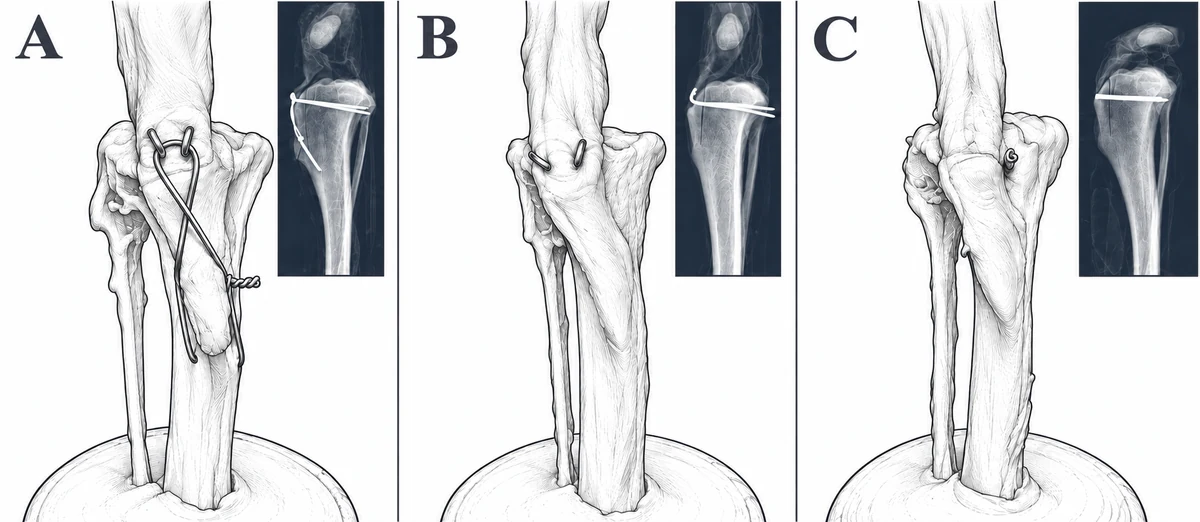
The repair depends on why the kneecap slips and what the surgeon finds inside the knee during surgery.
The operation uses general anaesthesia, which keeps your dog fully asleep. This is different from sedation for an examination or X-rays. The surgical team discusses the anaesthetic plan and pain relief before surgery.
Planning surgery and recovery
After the examination and imaging review, you can discuss the proposed repair and recovery with the surgical team.
Before surgery, plan a quiet rest area, non-slip flooring and a safe route outside for toilet breaks. Tell the surgical team if steps, lifting, other pets or time away from home will make recovery difficult. The team can help plan the support your dog needs.
Aftercare and outcome
What needs to heal?
The tissues around the knee need to recover. If bone was moved or straightened, it also needs to heal in its new position. Pins, wires or a plate hold the bone while this happens; they do not make it fully healed straight away.
For example, the moved tendon attachment shown above must join the shin bone. Walking better does not mean that join is strong enough for running or jumping.
When your dog goes home, you will be given instructions for medicines, activity limits and rechecks. Recovery takes several weeks. The timing depends on the repair and how the leg is healing.
What care does your dog need at home?
- Walk your dog on a leash, following the activity limits you have been given.
- Prevent running, jumping and rough play until the surgical team allows them.
- Protect the surgical wound (incision) from licking and check it as instructed.
- Give the prescribed medicines and contact the team if pain is not controlled.
- Attend the planned rechecks before increasing activity.
At rechecks, the surgeon assesses how comfortable your dog is, how the dog walks and whether the kneecap stays in place. Your dog may need follow-up X-rays, especially if bone was moved or there are concerns about healing or the pins, wires or plate. The surgical team explains which checks your dog needs. Walking better does not mean the bone has finished healing.
What result can you expect?
Many dogs use the leg well after surgery. The result depends on how much the leg has changed and which repairs are needed. Large bends or twists in the bones, joint wear or another knee problem can make recovery harder.
Keeping the kneecap in place does not remove arthritis that is already there. Some dogs still need help with pain or stiffness. Rehabilitation means exercises and changes in activity to help your dog regain strength and use the leg comfortably.
What problems can happen?
The kneecap can slip again. Pins, wires or a plate can irritate nearby tissues or move. Other risks include infection, a fracture or a moved piece of bone pulling away, delayed bone healing and continued limping. Some problems need another operation. This may include removing pins or other metal used in the repair.
The surgical team discusses the risks of the proposed repair before you decide about surgery.
When to contact the surgical team
Contact the surgical team if pain or limping gets worse, your dog suddenly stops using the leg, or the incision opens or drains fluid. Call your nearest emergency veterinary hospital if your dog is very painful, unwell or you are worried it cannot wait.
Surgical options for more complex cases
What if both knees need repair?
Discuss the repair and recovery plan for each knee with the surgical team.
When might a bent or twisted bone need correction?
A planned bone cut can straighten or rotate a bone when its shape pulls the kneecap away from the groove. Not every slipping kneecap needs this.
If bone is moved, pins, wires or a plate may be used to hold it in its new position while it heals.
What if the cruciate ligament is also torn?
The cruciate ligament helps stop the shin bone from sliding forward under the thigh bone. If it is torn as well, keeping the kneecap in place may not be enough to make the knee stable. The surgeon assesses both problems when planning surgery.
Some dogs need a kneecap repair combined with an operation to stabilise the knee, such as TPLO. MPL on its own does not mean your dog needs TPLO. Read about TPLO and cruciate ligament problems.