How to choose a TPLO surgeon in Ottawa
Choosing TPLO care involves more than finding a procedure name or comparing a price. Ask who will perform the surgery, how the operation is planned, who manages anesthesia and recovery, and what support is available if your dog needs help after discharge.
What DACVS-SA means
DACVS-SA means Diplomate of the American College of Veterinary Surgeons, Small Animal. It identifies an ACVS board-certified small animal veterinary surgeon.
Board certification represents additional specialist training after veterinary school, including internships, an ACVS-approved surgical residency, credential review, and specialist examinations.
It does not guarantee a particular result, and it does not mean that a veterinarian without this credential has no surgical experience. It is a verifiable marker of formal specialist training.
Review Dr Wood's training and credentialsSix questions to ask before choosing TPLO care
Use these questions with a specialist hospital, a general practice, or a visiting-surgeon service. Open each one to see why it matters and how I approach that part of TPLO care.
01Who will perform the TPLO, and what do their credentials mean?
Ask for the surgeon's name and exact qualifications. A professional interest in surgery, experience performing TPLO, and ACVS board certification describe different forms of training and experience.
I am Chris Wood, BSc, DVM (Dist), MS, DACVS-SA, an ACVS board-certified small animal veterinary surgeon with a professional interest in disorders of the hip and stifle.
Review my training and credentials02Is every TPLO individually planned before surgery?
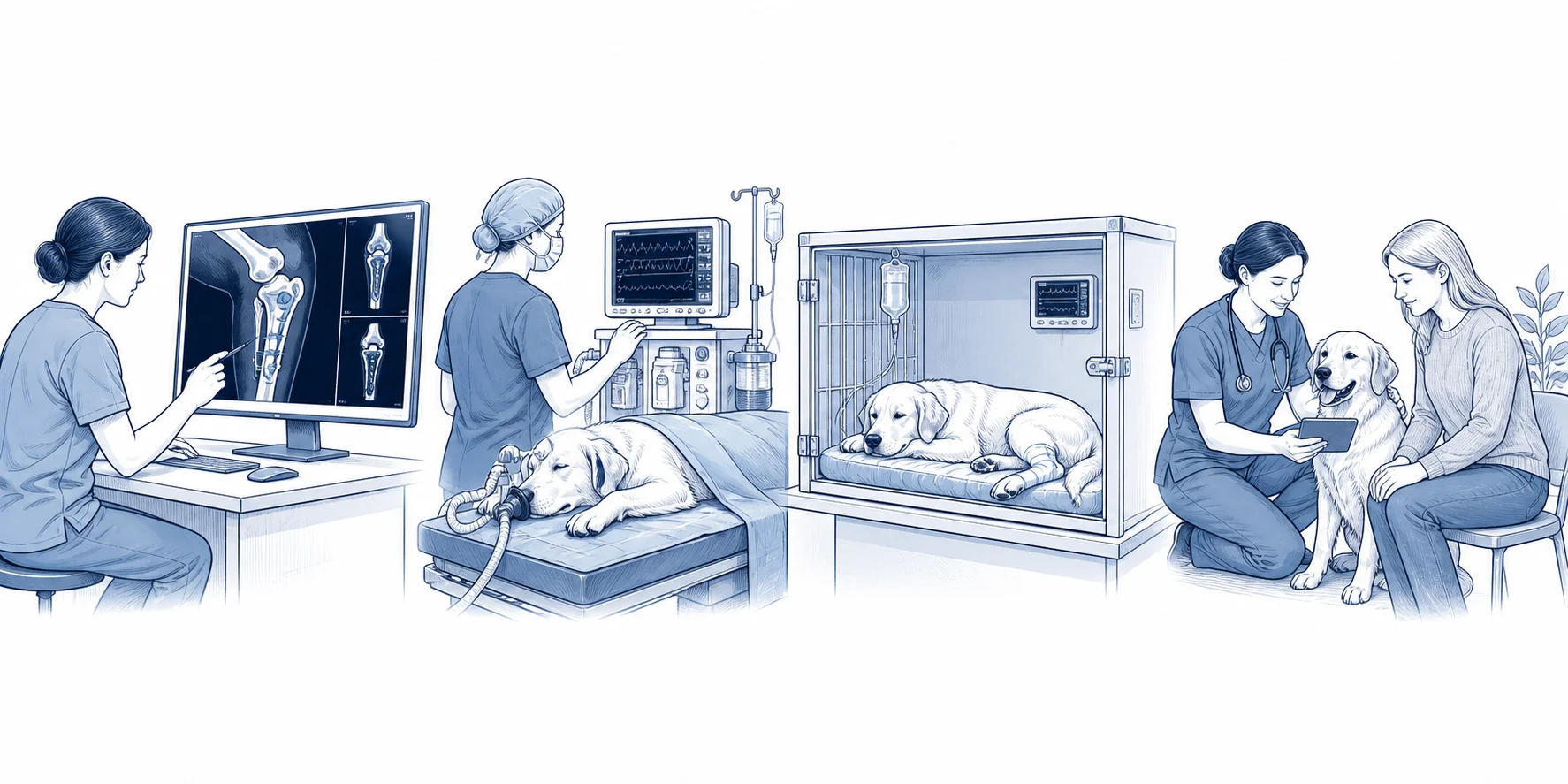
Ask how the radiographs are positioned and measured, how the planned bone cut and rotation are selected, and whether implant sizing is planned before surgery.
I virtually plan every TPLO from calibrated radiographs using VPOP, a virtual orthopedic planning program. When appropriate, my team works with the referring veterinarian to arrange suitable planning radiographs and pre-surgical diagnostics locally.
See the TPLO radiograph guide03Does the approach preserve muscle attachments, and how are the meniscus and knee stability assessed?
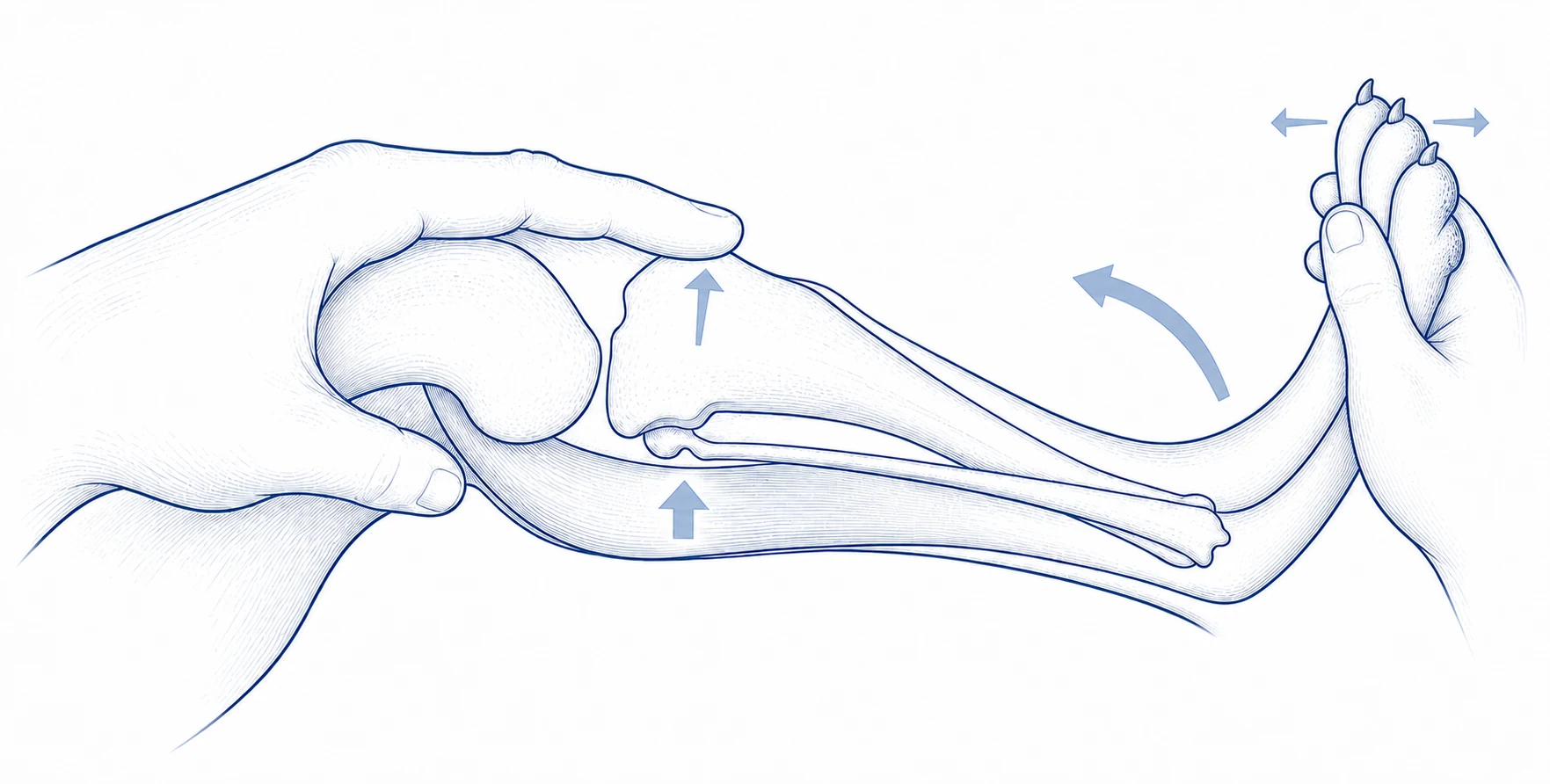
Ask whether important muscle-tendon attachments are routinely lifted from the bone or preserved, whether the meniscus is inspected, and how both forward movement and rotation of the knee are assessed. These details can change the surgical approach and decisions made during the operation.
In a traditional TPLO exposure, the pes muscle-tendon attachment may be lifted or cut from the tibia and then sutured back over the plate. That repaired layer must heal and can separate.
I use a muscle-sparing, or pes-sparing, approach in every TPLO. I make only a small opening through the fascia, preserve the hamstring and adductor muscle-tendon attachment to the bone, and plan the plate position around the preserved tissues from the beginning.
I also inspect the meniscus through a mini arthrotomy and assess forward and rotational stability before the TPLO, immediately after it, and again after the joint and pes fascia are closed. If meaningful rotational instability remains, I may add a lateral suture during the same operation.
See the muscle-sparing approach04Who leads anesthesia, and is overnight hospital monitoring available?
Ask who creates and supervises the anesthetic and pain-control plan, how recovery is monitored, and whether overnight hospital care is available if your dog needs it.
A board-certified veterinary anesthesiologist is involved in every TPLO. The surgery takes place in a 24-hour specialty and emergency hospital, so overnight monitoring is available. Selected dogs may have medically appropriate same-day discharge after early surgery and monitored recovery.
Compare hospitalization and cost options05Will the surgeon personally handle follow-up, and how is urgent reassessment arranged?
Care models differ. Ask whether postoperative messages and clinical decisions go directly to the operating surgeon, who examines the dog if recovery changes, and whether the schedule has room for urgent reassessment.
I personally handle TPLO postoperative follow-up. Owner questions, photos, videos, and clinical updates come to me rather than being delegated to a technician for clinical assessment.
I keep capacity in my schedule for urgent postoperative reassessments, so an owner with a meaningful concern does not have to wait for the next routine recheck. Scheduled examinations and radiographs continue through healing.
Review the postoperative question guide06What is included in the estimate and recovery support?
Compare more than the quoted total. Ask about diagnostics, implants, anesthesia, hospitalization, medications, follow-up radiographs, rehabilitation guidance, routine rechecks, and whether unexpected rechecks create another fee.
My written TPLO estimate is structured as one comprehensive package paid up front rather than a surgery-only fee followed by separate routine charges. It includes the planned surgery and implants, postoperative radiographs through confirmed healing, rehabilitation guidance, and routine or additional recheck examinations at no extra charge for up to six months.
If the opposite knee later requires a staged TPLO, a reduced second-side package price is available. The individual estimate still reflects medically appropriate hospitalization, locally arranged pre-surgical diagnostics, and any case-specific needs.
Review current TPLO prices and inclusionsReview the TPLO procedure, recovery, and current Ottawa pricing
Use the detailed TPLO guide to review planning and surgery, or compare current price ranges and package inclusions.
Verify specialist credentials
Owners can review the American College of Veterinary Surgeons' explanation of veterinary surgical specialists and Dr Wood's institutional profile.