
Blood products and transfusion volumes
The explanation corrects the handwritten multiplication cue for sodium correction time to division.
Read the draft explanation
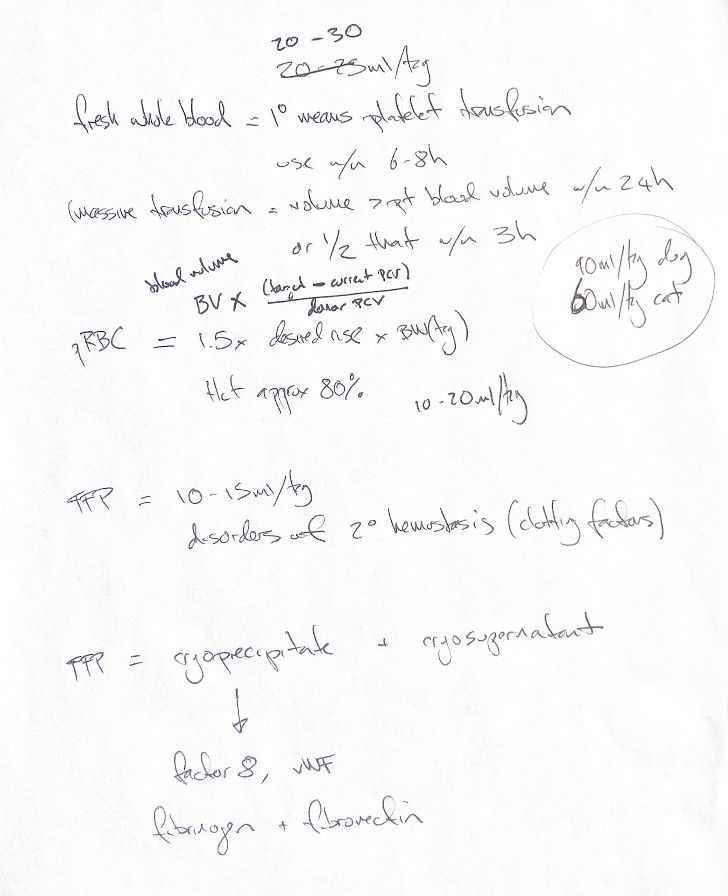
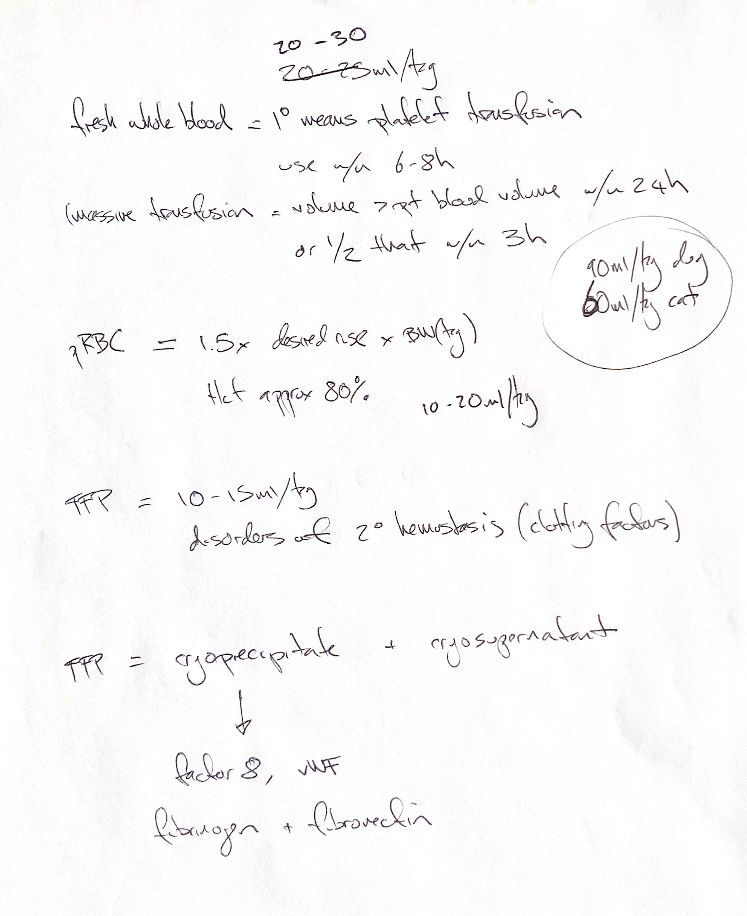
Choose the product for what is missing. Fresh whole blood provides red cells, plasma components and platelets when truly fresh. My notes give a 6–8-hour platelet cue; the book says best within 8 hours. It is not the only platelet product. Packed red blood cells mainly replace oxygen-carrying cells. They do not provide useful platelet or clotting-factor replacement.
Fresh frozen plasma supplies coagulation proteins for secondary haemostasis. Cryoprecipitate concentrates factor VIII, von Willebrand factor, fibrinogen and fibronectin. Cryosupernatant is the plasma left after cryoprecipitate is removed.
The original doses and different textbook sections do not always match. The comparisons stay visible. These are starting volume estimates, not automatic rapid boluses or a single transfusion trigger. Dose and repeat interval depend on the deficit, bleeding and response.
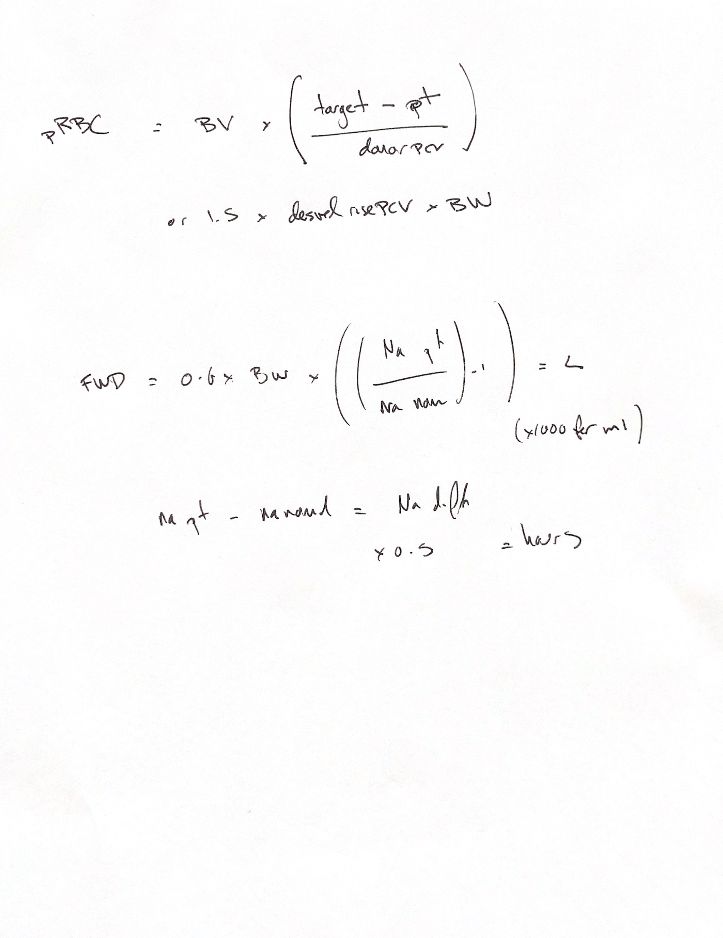
For the donor-PCV formula, total patient blood volume means millilitres. If the estimate is in mL/kg, multiply by body weight first. Use matching PCV units. The 1.5 shortcut uses a PCV rise in percentage points and was studied in anaemic dogs; it is not validated here for cats. Recheck the patient and PCV.
“Massive transfusion” describes exposure over time. It is not a target dose. The original feline blood-volume estimate also differs from two book sections, so these numbers should not be treated as one exact value.
Keep free-water deficit separate from blood volume. The 0.6 body-water fraction is an adult approximation. The result is litres; multiply by 1000 for millilitres. It excludes maintenance, ongoing losses and urgent resuscitation needs. Correction time is sodium change divided by the planned rate, correcting the original multiplication cue. Check sodium repeatedly; chronic or uncertain-duration hypernatraemia needs controlled correction, while acute severe cases need their own plan.
References
Johnston/Tobias, 2nd ed.; Short 2012 (canine study abstract); AAHA 2024.