
Shock mechanisms and species clues
Read the draft explanation
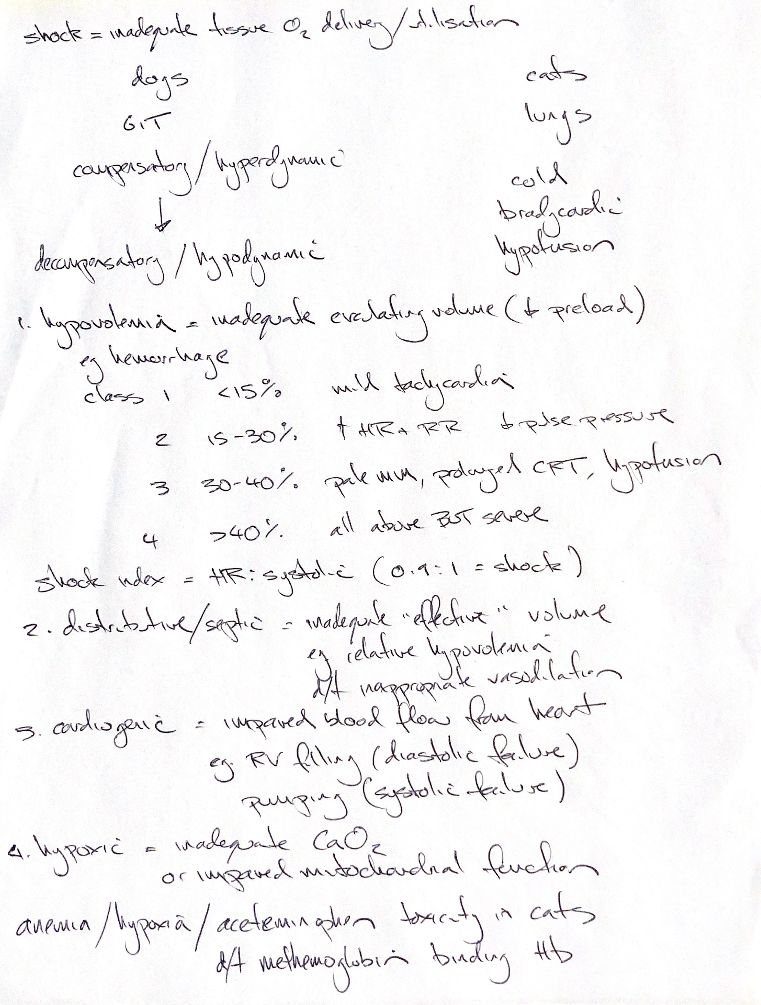
Shock means tissue oxygen delivery or utilisation is inadequate. The four groups in my notes describe where that support fails.
Hypovolaemic shock starts with too little circulating volume, such as after haemorrhage. Venous return and preload fall, which lowers cardiac output. Distributive shock involves inappropriate vasodilation and low effective circulating volume, or relative hypovolaemia. Sepsis is one cause and can affect several mechanisms at once.
In cardiogenic shock, the heart cannot fill or pump effectively. Diastolic failure impairs filling; systolic failure impairs pumping. The book also groups some obstructive causes, including impaired right ventricular filling, here.
Hypoxic shock can reflect low arterial oxygen content, or CaO2, from anaemia, hypoxaemia or abnormal haemoglobin. Cytopathic shock involves impaired cellular oxygen use, including mitochondrial dysfunction. Acetaminophen toxicity in cats can oxidise haemoglobin to methemoglobin and impair oxygen carriage.
The classic shock-organ cues are the GI tract in dogs and the lung in cats. They do not mean other organs are spared. Dogs may move from a compensatory, hyperdynamic pattern to a decompensatory, hypodynamic pattern; this is not universal. Cats may be cold, bradycardic and hypotensive, without tachycardia. Respiratory distress can occur.
Shock index is heart rate in beats/min divided by systolic arterial pressure in mmHg. My original 0.9–1.0 cue raises concern. One canine haemorrhage study advised investigation above 0.9; an emergency study used above 1.0 to distinguish moderate–severe shock. There was overlap with other dogs. Use it with examination and trends; these are not feline cut-offs or a stand-alone diagnosis.
References
Johnston & Tobias, 2nd ed., shock chapter; Peterson et al. 2013; Porter et al. 2013; AAHA Fluid Therapy Guidelines 2024.