
Dehydration and blood-loss severity
Read the draft explanation
Dehydration and hypovolaemia describe different deficits. Dehydration is loss of body fluid. Hypovolaemia is reduced circulating volume. They can occur together, but their percentage scales are not interchangeable.
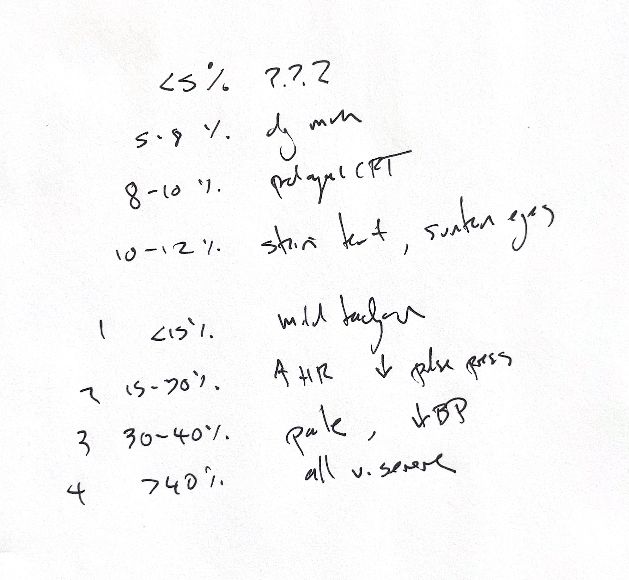
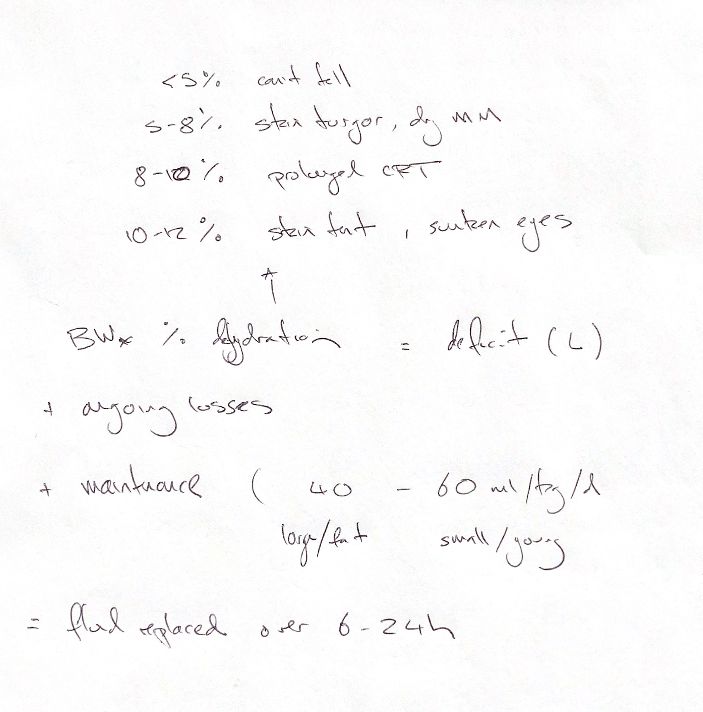
The dehydration ladder estimates a fluid deficit as a percentage of body weight. Below 5%, examination may not detect a change. At 5–8%, skin turgor falls and mucous membranes become dry. At 8–10%, the skin tent is more persistent and capillary refill time, or CRT, may be prolonged. At 10–12%, a severe skin tent and sunken eyes are typical cues, and perfusion may also be impaired.
These signs are estimates. Age, breed and body condition affect skin turgor. Dry gums alone do not give an exact dehydration percentage.
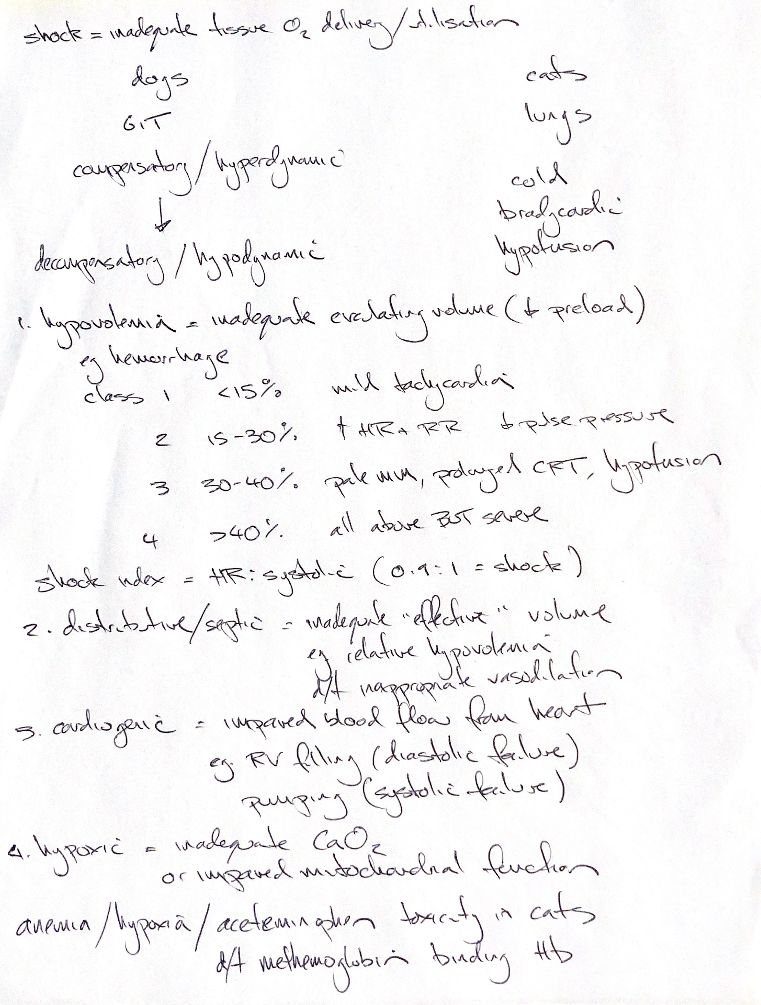
The haemorrhage ladder uses the percentage of circulating blood volume lost. Class 1 is under 15% in my notes, or up to 15% in the book; signs can be absent or limited to mild tachycardia. Class 2 is 15–30%, with increased heart and respiratory rates and lower pulse pressure. Class 3 is 30–40%, adding pale mucous membranes, prolonged CRT and hypotension. Above 40%, those signs become severe, with weak pulses, cold extremities and altered mentation.
These are ATLS-derived teaching classes, not a validated canine or feline blood-loss calculator. The reservoirs and pulse waves are schematic, not measurements. Bleeding rate, injury and the patient change the response. A normal blood pressure does not exclude shock, and shock can develop before the higher classes are reached.
References
Johnston & Tobias, Veterinary Surgery: Small Animal, 2nd ed., fluid therapy and shock chapters; AAHA Fluid Therapy Guidelines 2024, section 2.