
Hydroxyethyl starch
Read the draft explanation
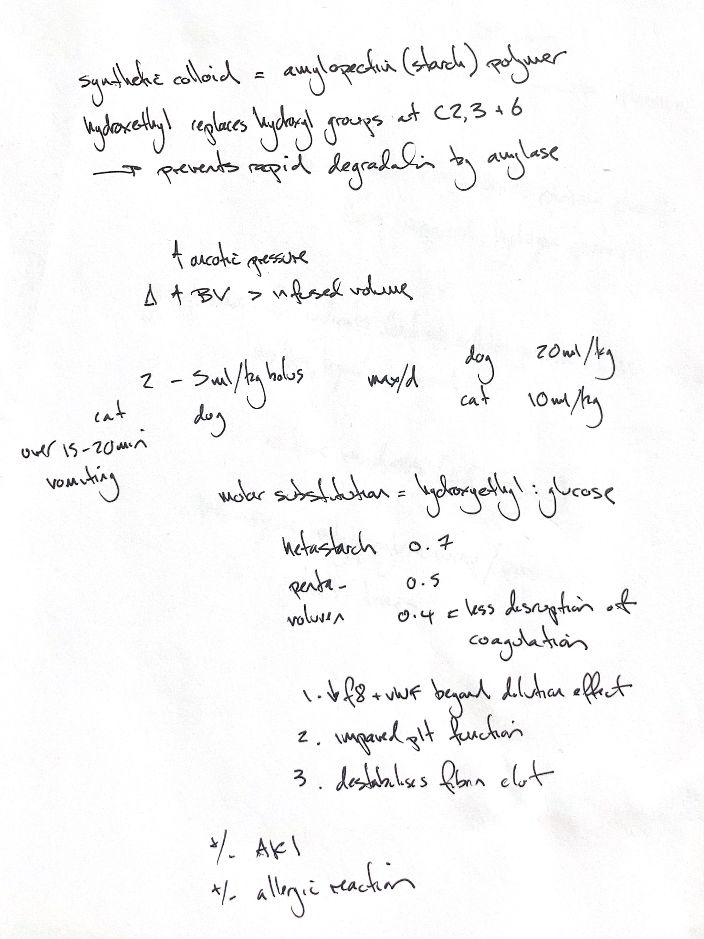
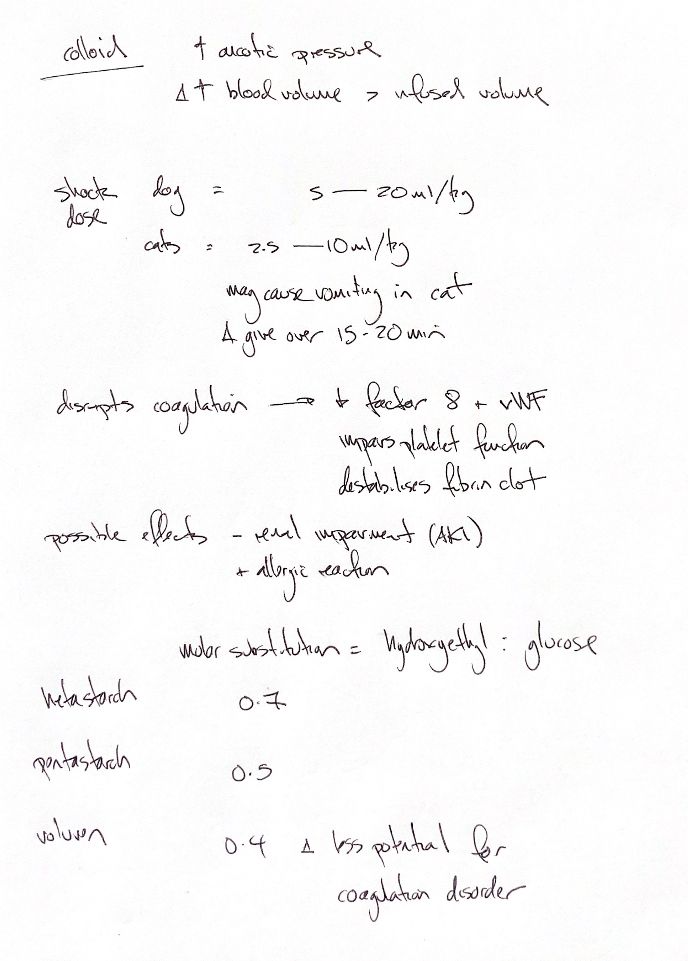
Hydroxyethyl starch, or HES, is one type of synthetic colloid. Large starch molecules increase plasma oncotic pressure. In the classic hyperoncotic model, water moves into plasma and blood volume can rise by more than the volume infused. Concentration, volume status and vascular leakage change that response. HES does not replace albumin's other functions.
HES comes from branched amylopectin. Hydroxyethyl substitution at C2, C3 and C6 slows breakdown by amylase. Molar substitution is the ratio of hydroxyethyl groups to glucose units. My notes use 0.7 for hetastarch, 0.5 for pentastarch and 0.4 for Voluven. Named products vary; the book lists some hetastarches at 0.75. Higher substitution slows breakdown and elimination. Lower substitution was intended to reduce coagulation effects, but this does not establish that one product is clinically safer.
Keep three dose cues separate: a 2–5 mL/kg aliquot for dogs and cats in my notes; historical shock-volume ranges of 5–20 mL/kg in dogs and 2.5–10 in cats; and original daily ceilings of 20 mL/kg in dogs and 10 in cats. These are different quantities, not validated safe maxima. Rapid infusion can cause vomiting in cats. My note says over 15–20 minutes; the book says at least 15.
HES can reduce factor VIII and vWF beyond dilution, impair platelet function and weaken fibrin-clot stability. Effects vary by product and study model. Possible harms also include acute kidney injury and allergic reactions. One canine 6% HES130/0.4 trial found no plasma biomarker effect; it did not establish overall safety or test every clotting mechanism.
AAHA 2024 advises avoiding synthetic colloids when alternatives work. If used, minimise dose and duration and monitor kidney function, coagulation and volume status.
References
Johnston & Tobias, 2nd ed.; Wierenga 2007; Hayes 2016; Boyd 2022; AAHA Fluid Therapy Guidelines 2024.