
Human albumin in dogs
Read the draft explanation
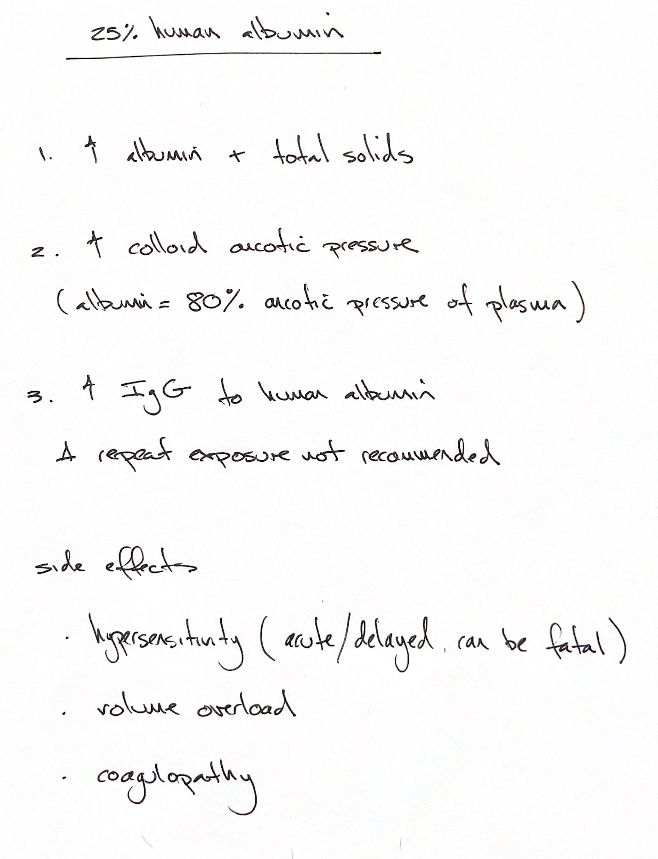
What does 25% human albumin change? It can raise plasma albumin, total solids and colloid oncotic pressure, or COP. Albumin helps create the oncotic pull that holds water in the circulation. The classic study cue is about 80% of normal plasma oncotic pressure. That relationship changes in critical illness, so albumin concentration alone does not predict COP in every dog. A higher albumin or COP has not established a survival benefit.
Human albumin is a foreign protein in dogs. Dogs can develop IgG antibodies against it, which is why repeated exposure is not recommended. Antibody formation does not mean every dog will show a clinical reaction.
The important complications are acute or delayed hypersensitivity, volume overload and coagulopathy. Hypersensitivity can be fatal. Delayed reactions may involve immune complexes, where antibodies bind the foreign protein and can injure tissues. Severe reactions have occurred in healthy dogs and in ill dogs; they cannot be dismissed as a finding limited to healthy research animals.
Volume overload means the circulation receives more volume than the patient can handle. Coagulopathy means clotting is impaired. These are separate risks from the immune response. Raising a laboratory value does not remove the need to weigh those risks against the intended benefit.
References
Johnston & Tobias, Veterinary Surgery: Small Animal, 2nd ed., fluid therapy chapter; Trow et al. 2008; Martin et al. 2008; Francis et al. 2007; Mazzaferro et al. 2020.