
Hypertonic saline, maintenance fluids and sodium correction
Read the draft explanation
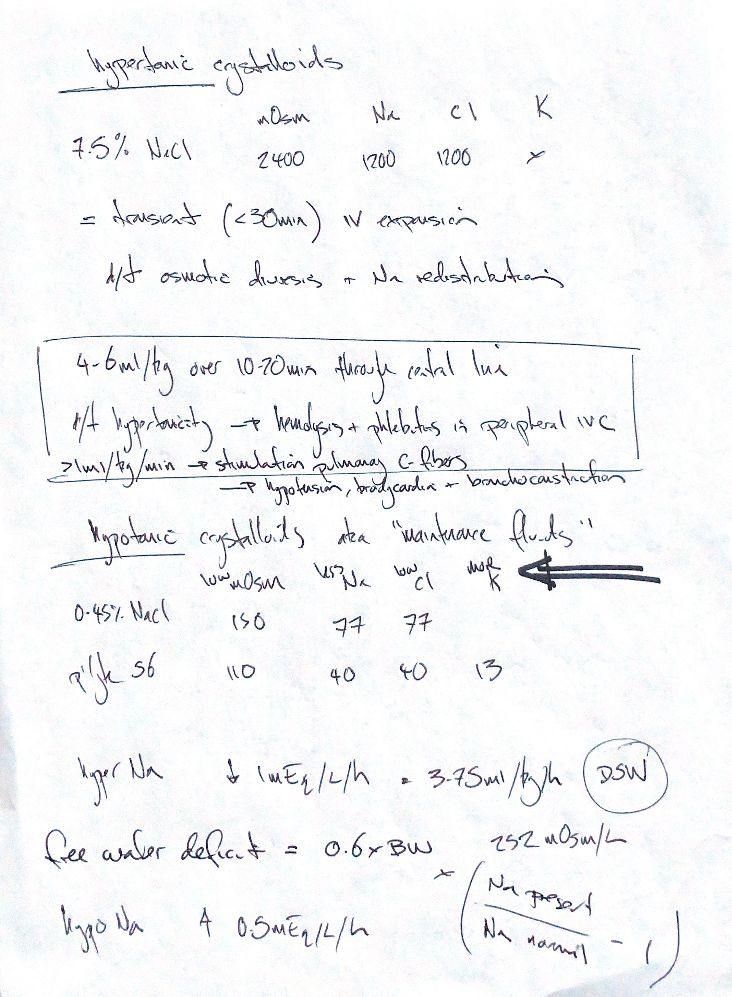
Hypertonic saline draws water into plasma. Expansion is brief as sodium redistributes and osmotic diuresis removes water. The original <30 min cue is approximate; duration varies. Continued fluid needs still require a plan.
Concentration and rate matter. The original 7.5% row gives Na and Cl 1200 mEq/L and osmolarity 2400 mOsm/L. B.Braun’s 7.5% label gives 1283 and 2566 theoretical. Its dose also differs from the original 4–6 mL/kg over 10–20 min. Rapid infusion can trigger a pulmonary C-fibre reflex with hypotension, bradycardia and bronchoconstriction. Small peripheral veins can develop haemolysis and phlebitis. The book favours a large central vein, while peripheral use also occurs in veterinary practice. Match access and monitoring to the infusion.
Hypotonic maintenance fluids have lower osmolarity, sodium and chloride than replacement fluids. Potassium varies: 0.45% NaCl has none; the book’s base Plasma-Lyte 56 has 13 mEq/L. D5W has a free-water effect after glucose is metabolised. Bag osmolarity and that effect are different.
For controlled chronic sodium correction, limit the fall in hypernatremia or rise in hyponatremia to ≤0.5 mEq/L/h and 10–12 mEq/L/day. A rapid fall can cause cerebral oedema; a rapid rise can cause osmotic demyelination. Confirmed acute cases and neurologic emergencies need separate plans. The note’s D5W 3.75 mL/kg/h cue (3.7 in the book), aiming for a fall of 1 mEq/L/h, is not a universal chronic regimen.
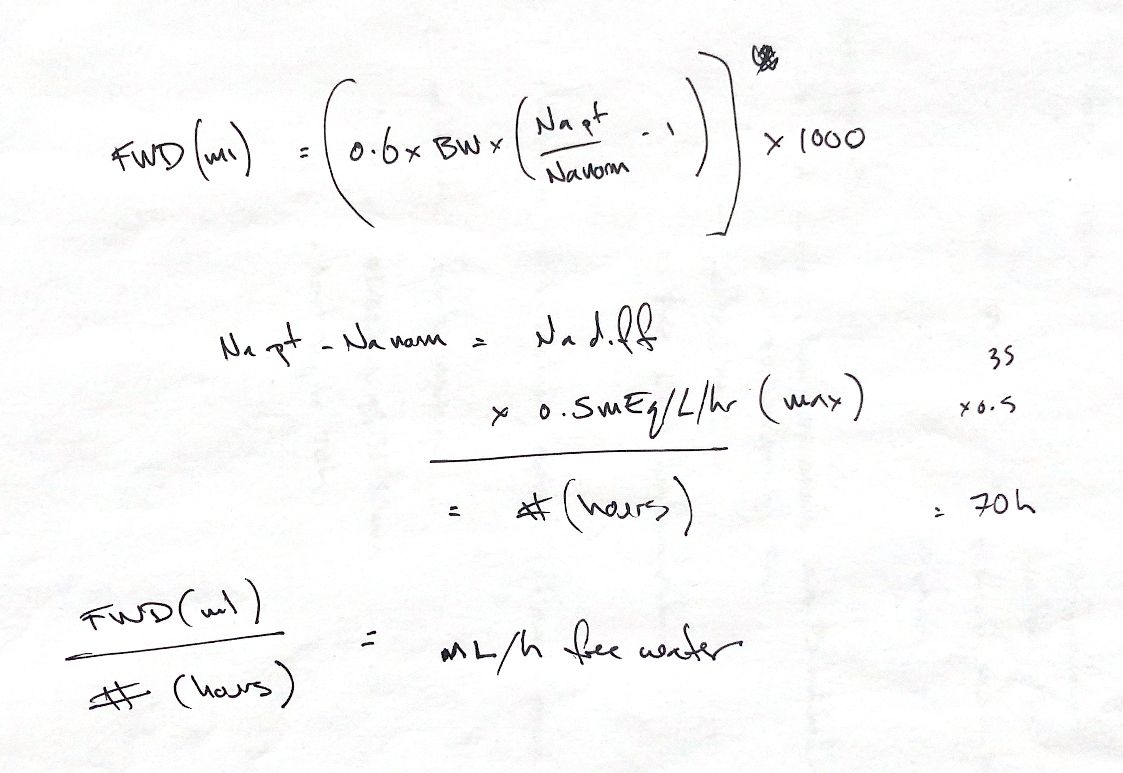
Estimate free-water deficit as 0.6 × weight in kg × [(patient Na/target Na) − 1], in litres. Multiply by 1000 for mL. The 0.6 estimate varies with body composition. Divide the sodium difference by the planned hourly fall to find time: 35 ÷ 0.5 = 70 h. The original multiplication sign is wrong. Divide deficit by time for an initial free-water rate, then reassess sodium, volume and ongoing losses. This estimate excludes maintenance and resuscitation.
References
Johnston & Tobias, 2nd ed., Ch.5; AAHA Fluid Therapy Guidelines 2024, §5 and FAQ; B.Braun 7.5% leaflet; Pisarri et al., Am J Physiol 1991;260:H1522–30.