
Cytokines and inflammatory cells
Read the draft explanation
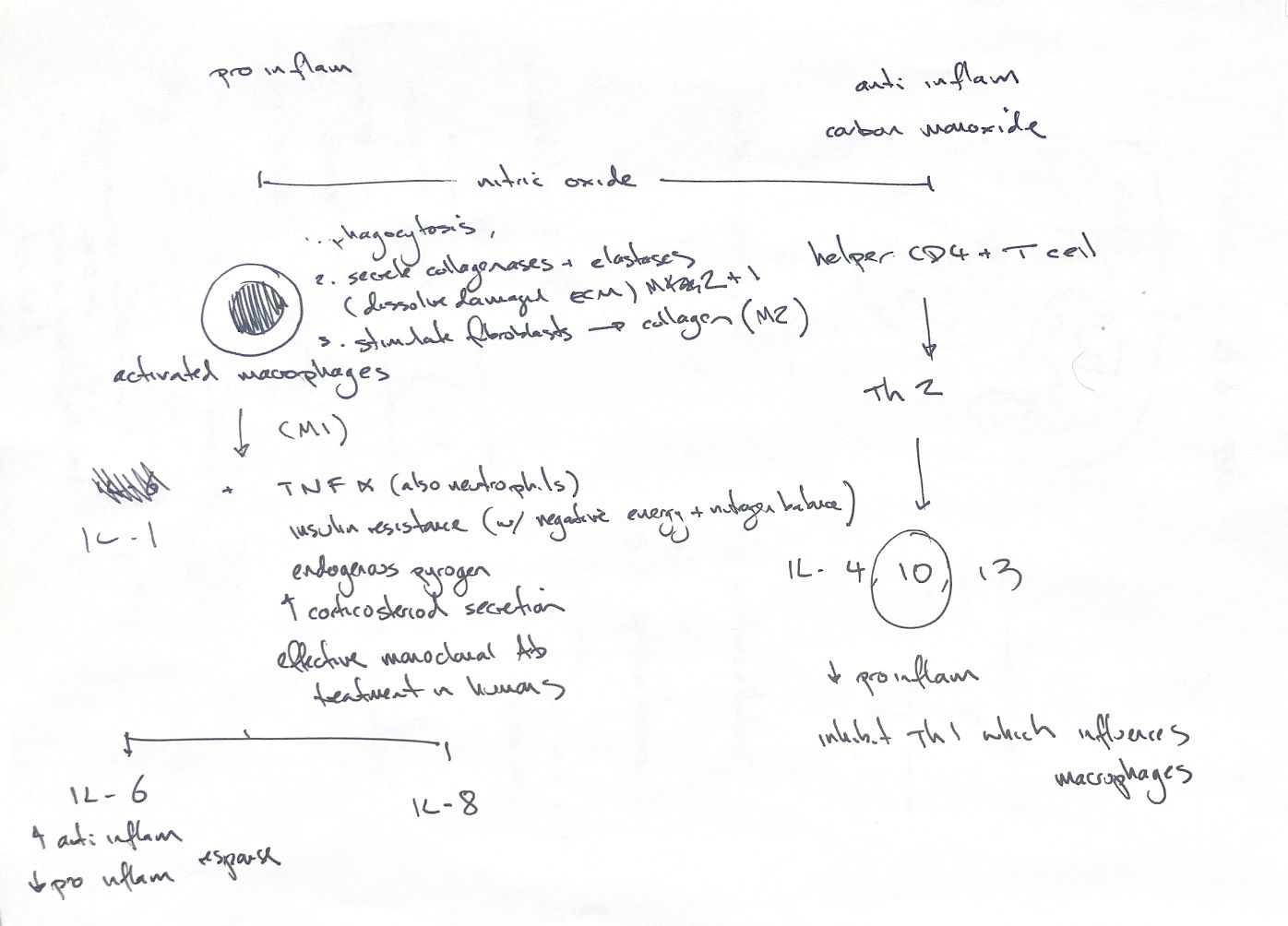
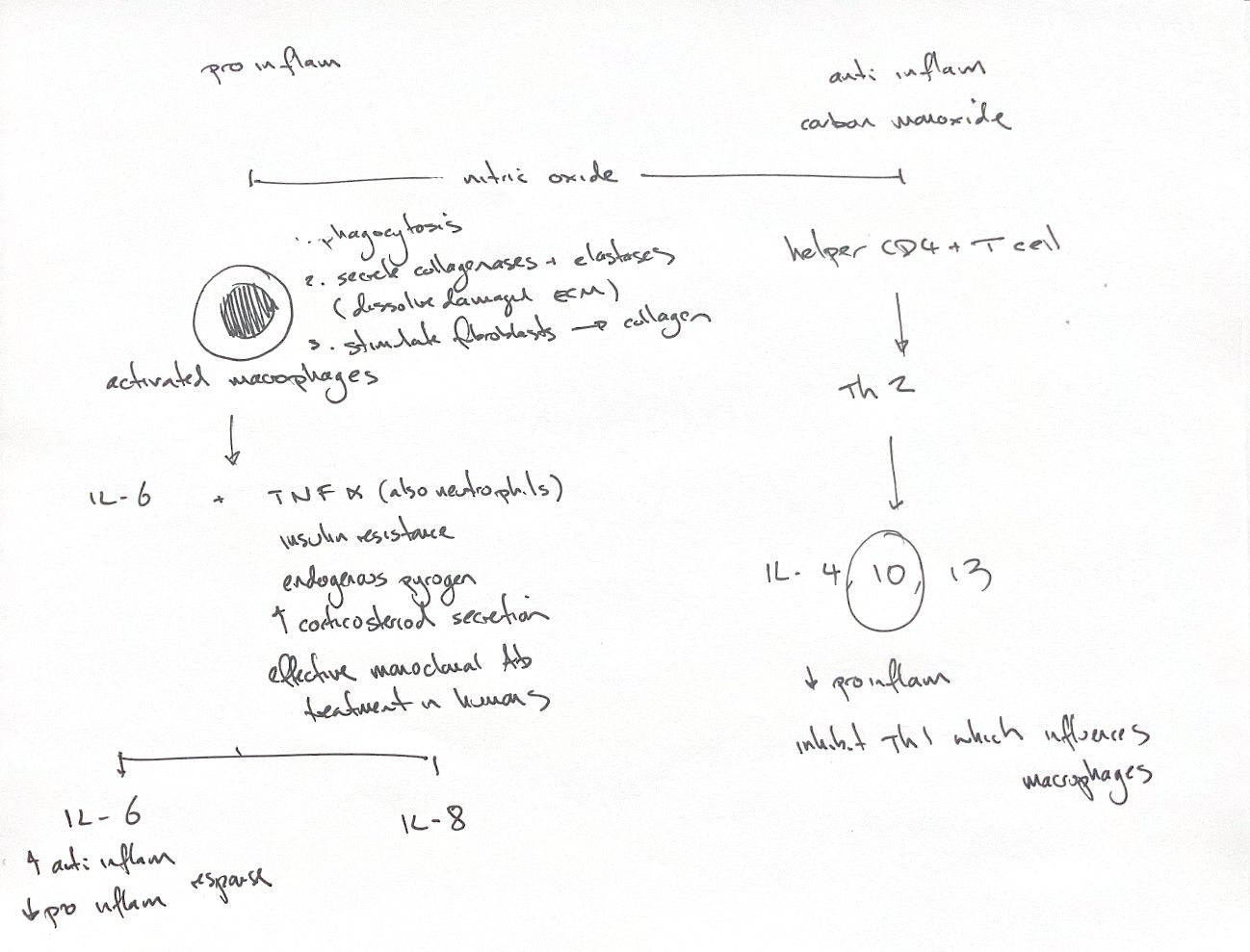
Activated macrophages remove pathogens and damaged cells by phagocytosis. Both M1 and M2 patterns release collagenases and elastases that break down extracellular matrix. M2 repair signals stimulate fibroblasts to make collagen. M1 and M2 describe parts of a continuum, rather than two fixed cell types.
IL-1 and TNF-α are early proinflammatory signals. Neutrophils also produce TNF-α. Systemic cytokine activity can promote insulin resistance, fever and neuroendocrine activation with increased corticosteroid secretion. Catabolic illness may bring negative energy and nitrogen balance when energy use and nitrogen loss exceed intake. These effects depend on the setting; the human TNF infusion evidence is not a measured response in every dog or cat.
IL-6 and chemokines such as IL-8 follow in the simplified cascade. IL-6 drives hepatic acute-phase protein synthesis, but it can also trigger compensatory anti-inflammatory effects and reduce proinflammatory cytokine production. IL-8, also called CXCL8, recruits neutrophils.
The classical CD4+ helper-cell pathway includes Th2-associated IL-4, IL-10 and IL-13. The circled IL-10 is the main anti-inflammatory memory cue. These signals can reduce proinflammatory responses and Th1 activity. Th1 signals, in turn, influence macrophage activation. IL-10 also comes from other cells, so the drawing is not an exclusive map of cytokine sources.
Nitric oxide can support inflammation or restrain it. Its effect depends on concentration and how it is produced. Endogenous carbon monoxide arises during heme breakdown and can reduce proinflammatory cytokines while increasing IL-10.
The earlier drawing puts IL-6 beside TNF-α; the paired correction gives IL-1. Human anti-TNF monoclonal antibodies treat selected inflammatory diseases, including Crohn's disease and rheumatoid arthritis.
References
Johnston/Tobias, Veterinary Surgery: Small Animal, 2nd ed., Chs. 1 and 8; Nielsen et al., Diabetes Metab Res Rev 2013;29:655–663; FDA infliximab labelling.