
Oral blood supply and regional blocks
Read the draft explanation
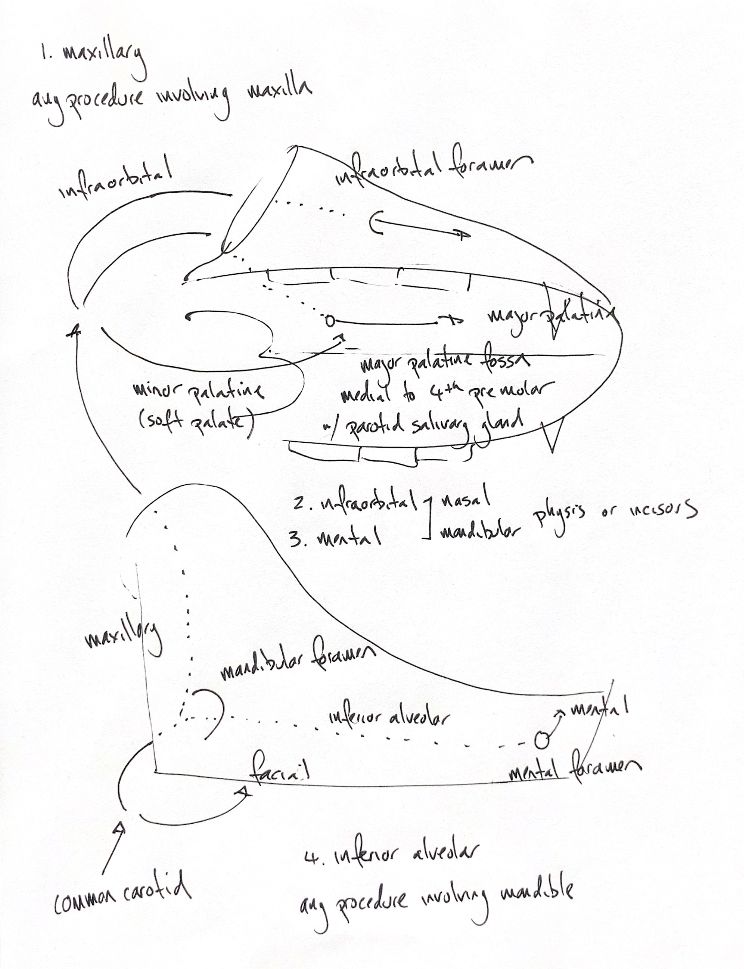
The external carotid gives rise to the maxillary artery. Its infraorbital and major palatine branches supply the maxillary region. The inferior alveolar artery enters the mandibular foramen, runs through the mandibular canal and continues rostrally toward the mental foramina. These arterial routes sit beside the nerve-block reminders because vessels and nerves share important landmarks.
At the upper fourth premolar, keep the two sides separate: the major palatine foramen is medial, while the parotid duct papilla is lateral. The note's “major palatine fossa” and parotid association should not suggest that saliva drains through the palatine foramen. Minor palatine vessels supply the soft palate.
The four numbered blocks are maxillary, infraorbital, mental and inferior alveolar. The maxillary and inferior alveolar reminders describe broad ipsilateral regions; “any procedure” is not a guarantee of complete anaesthesia. Infraorbital coverage of caudal teeth depends on the approach and spread, and molars may be missed.
Mental-block coverage needs particular care. The exiting mental nerves mainly supply the lower lip and intermandibular skin. Dental anaesthesia depends on reaching the relevant branches within the mandibular canal. A small canine clinical study found variable, limited desensitisation; later canine cadaver imaging demonstrated canal spread, which is a different endpoint from analgesia in a living patient. The handwritten “mandibular physis or incisors” remains an uncertain regional shorthand, not a validated indication.
References
Johnston & Tobias, 2nd ed., Ch 66, 89 and 100; UMN carnivore anatomy; AAHA 2019 dental guidelines; Krug & Losey 2011; Fechney & Clarke 2025 (online 2024).