
The blood–brain barrier and antibiotic entry
Read the draft explanation
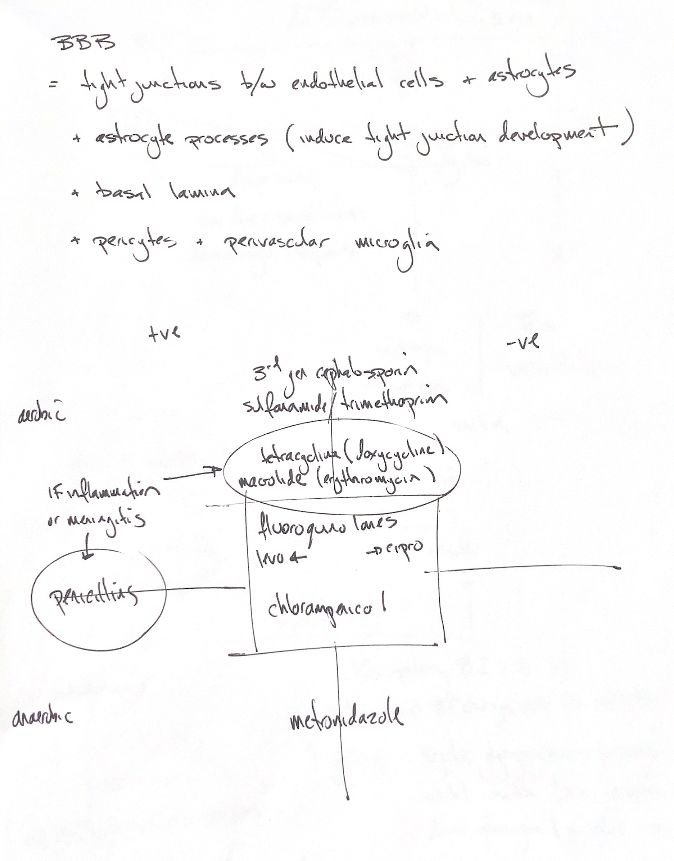
Tight junctions join neighbouring endothelial cells. Astrocyte processes, basal lamina and pericytes support this interface; the source also names perivascular microglia. Astrocytes influence barrier properties, but rodent developmental work shows that barrier formation can precede astrocytes. They are not the sole embryonic trigger.
Johnston & Tobias Table 29.1 groups third-generation cephalosporins, fluoroquinolones, metronidazole, sulfonamides, chloramphenicol and trimethoprim as having good penetration. It places tetracyclines—especially doxycycline and minocycline—erythromycin, penicillins and rifampin in a moderate-with-meningitis group. These are historical teaching categories adapted from Fenner 1984, not guarantees for every drug or patient. Current veterinary references emphasise the greater lipid solubility and penetration of doxycycline and minocycline.
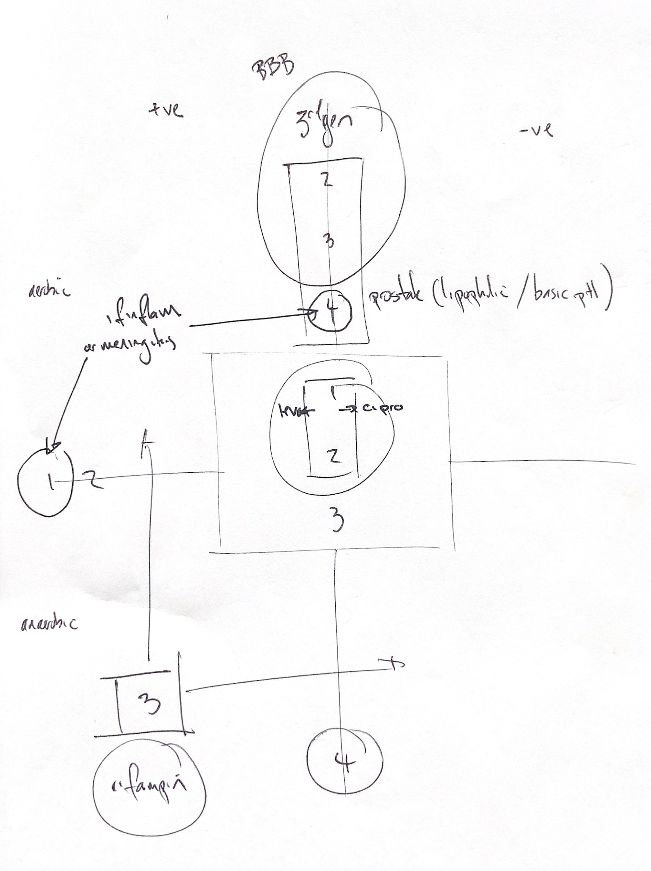
Gram-positive/negative and aerobic/anaerobic positions are spectrum reminders. They do not measure CNS entry or establish an isolate’s susceptibility. The numbered variant preserves recall placeholders, not doses or a complete drug key. The cramped fluoroquinolone label remains uncertain; “cipro” is clear. Separate small pointers do not establish drug conversion.
The “possible, lipophilic/basic pH” cue needs the same care: passage depends on lipid solubility and ionisation at the local pH, not “basic” alone. Specific drug, species, formulation, inflammation and achievable exposure matter. Entry is only one requirement for antimicrobial activity.
References
Johnston & Tobias, 2nd ed., Ch 29/Table 29.1; Daneman et al. 2010; Watson & McDonald 1976 and Boothe et al. 2001, abstracts; Merck/MSD Veterinary Manual.