
How pimobendan works
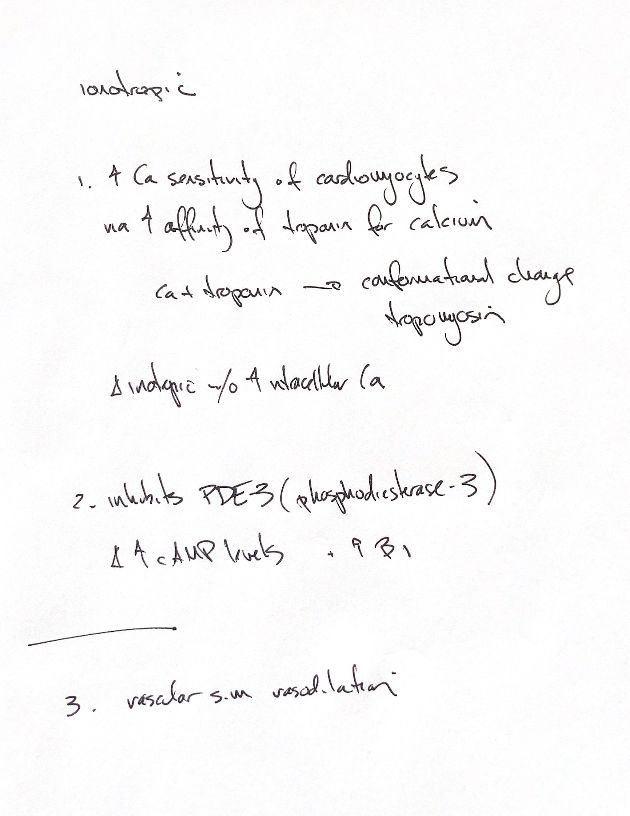
Read the draft explanation
Pimobendan has a positive inotropic effect: it can increase the force of cardiac contraction. The source heading says “ionotropic”, but inotropic is the term for contraction force here.
The first mechanism is calcium sensitisation. The cardiac myofilaments can develop more force at the same calcium level. Early experiments in dog and guinea-pig muscle proposed greater calcium affinity at the regulatory site of troponin C as an explanation. Calcium binding to troponin changes the regulatory complex and shifts tropomyosin, allowing actin–myosin interaction.
The note’s “without increased intracellular calcium” cue describes sensitisation. It is not a promise that pimobendan never increases intracellular calcium. In isolated intact ferret muscle, increased force was accompanied by larger calcium transients. Experimental preparation and conditions matter.
The second mechanism is inhibition of phosphodiesterase-3, or PDE3, with increased cAMP. The canine product label describes calcium sensitisation and PDE3 inhibition as two parts of the cardiac effect. Pimobendan is nonsympathomimetic; this is not β1-receptor agonism. The small questioned mark beside cAMP is uncertain in the original and does not establish a receptor mechanism.
Pimobendan also causes vascular smooth-muscle vasodilation. The label links this vasodilating activity to PDE3 inhibition. This vascular effect is distinct from the cardiac calcium-sensitisation explanation.
References
Johnston & Tobias, 2nd ed., Ch6/38/106 (context); Fujino1988 and Lee1989, indexed abstracts; Yamada2020 (human cardiac structures); current Vetmedin label.