
Laryngeal examination and doxapram
Read the draft explanation
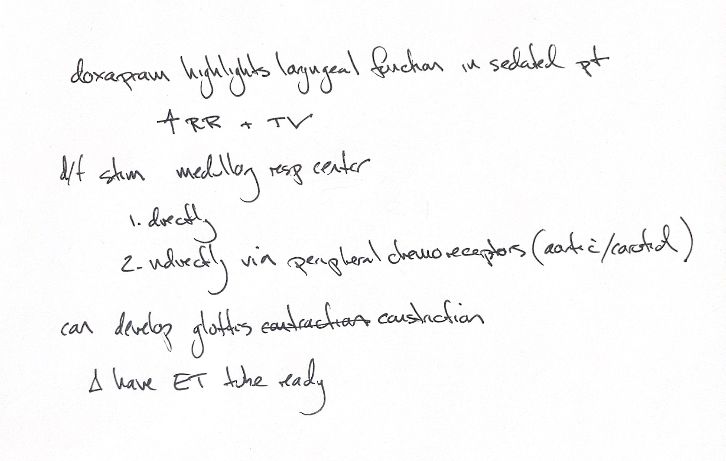
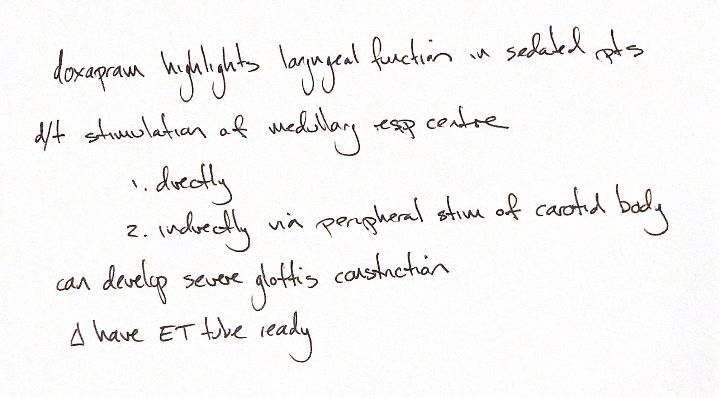
Doxapram is the respiratory stimulant in this note. It can help assess laryngeal function in sedated or lightly anaesthetised dogs by increasing respiratory effort. It can increase respiratory rate and tidal volume.
The note describes direct stimulation of medullary respiratory centres and indirect input through peripheral chemoreceptors. It names carotid and aortic chemoreceptors. Their relative contribution depends on dose and experimental conditions. Peripheral carotid stimulation can predominate, so direct medullary stimulation should not be assumed at every exposure. Experimental cat evidence describes aortic involvement as probable, rather than proving the same balance in every dog.
More movement does not always mean normal function. Some healthy-dog studies found greater laryngeal opening after doxapram. Another found deeper breaths without a significant increase in normal arytenoid motion. In dogs with laryngeal paralysis, stronger inspiration produced paradoxical inward movement and could cause severe glottic constriction. That is inward collapse, not restored active abduction.
Have an endotracheal tube ready in case severe glottic constriction requires intubation. Compare arytenoid movement with the breathing phase, and account for the anaesthetic drugs and depth. A deeply anaesthetised normal larynx can appear paralysed. Doxapram is an examination adjunct, rather than a guarantee of normal motion or a treatment that reverses paralysis.
References
Johnston & Tobias, 2nd ed., Ch22/101; Tobias2004; Jackson2004; Miller2002; Mitchell & Herbert1975; selected DOPRAM pharmacodynamics.