
PDA closure and the Branham reflex
Read the draft explanation
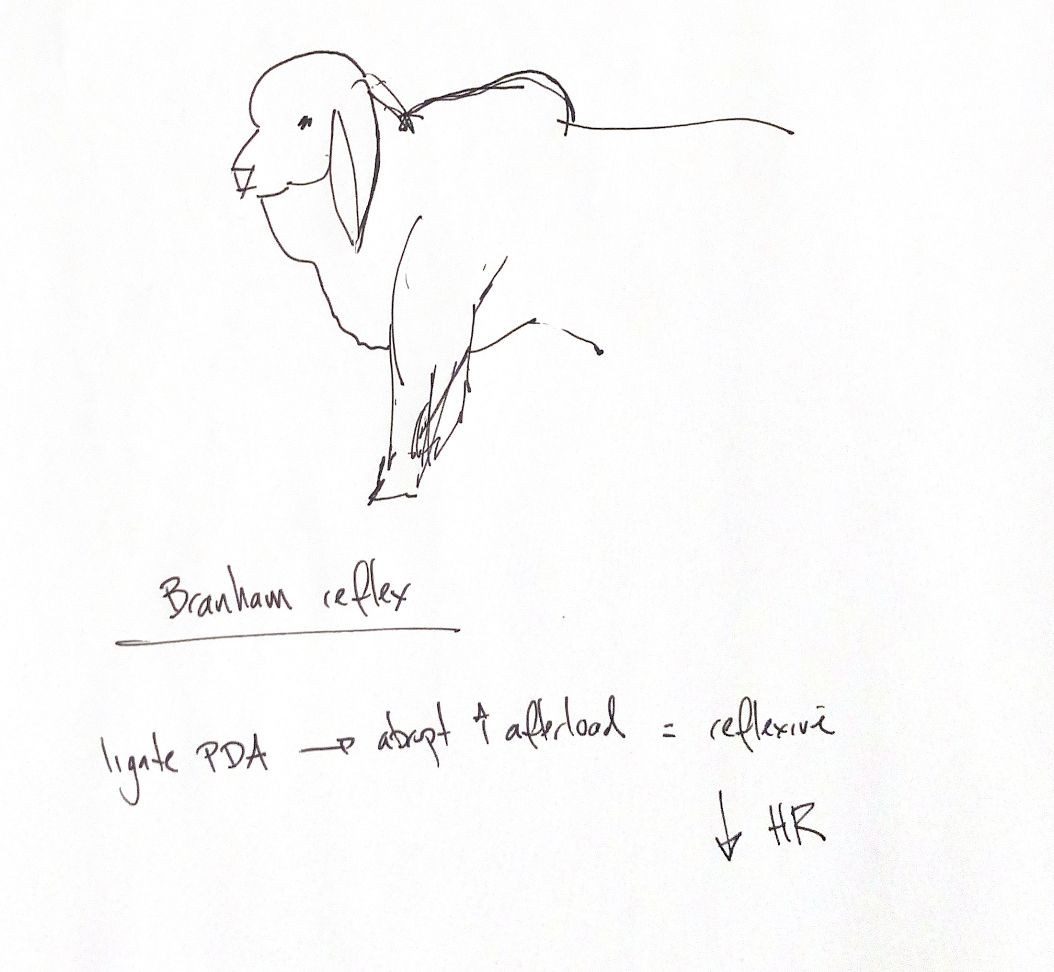
The Branham reflex is the expected slowing of heart rate after a patent ductus arteriosus (PDA) is closed. My note links ligation to an abrupt increase in afterload, followed by a reflexive fall in heart rate.
With a left-to-right PDA, blood can pass from the aorta into the pulmonary circulation. Closing that low-resistance route changes the load against which the left ventricle pumps. Arterial pressure can rise, and the baroreceptor reflex can slow the heart.
The response varies. Canine studies describe falls in heart rate with rises in diastolic pressure after surgical ligation or device closure. They do not establish one response size or time course for every patient. Anaesthetic drugs, the closure technique and the individual circulation all matter. A heart-rate change also needs the wider monitoring context.
The animal outline is the original memory cue. It does not show cardiac anatomy or identify a study population.
References
Johnston & Tobias, 2nd ed., Ch22 and Ch106; Madruga et al. 2021; De Monte et al. 2017.