
Ophthalmic anaesthesia
Thiopental is an IV induction agent. One original note lists it under the inhalant heading.
Read the draft explanation
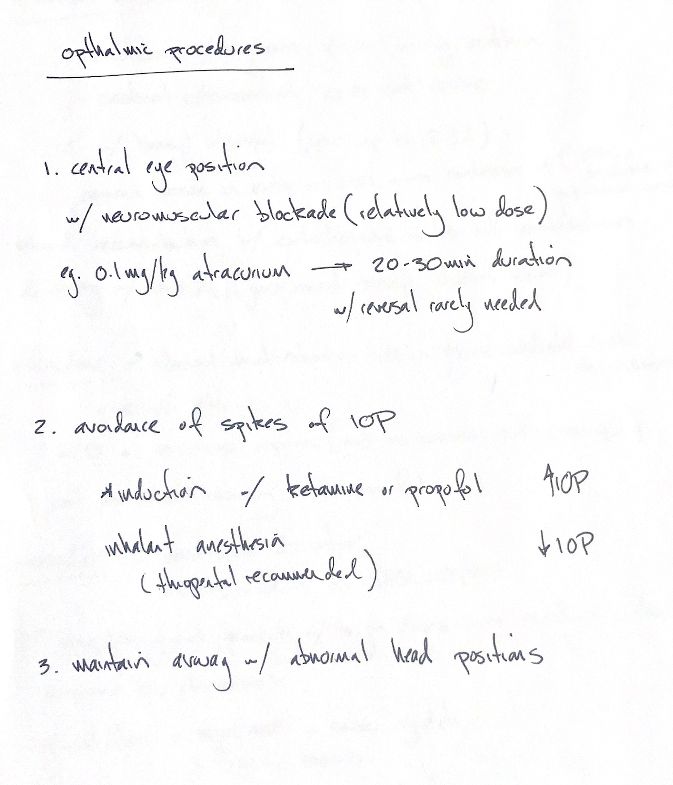
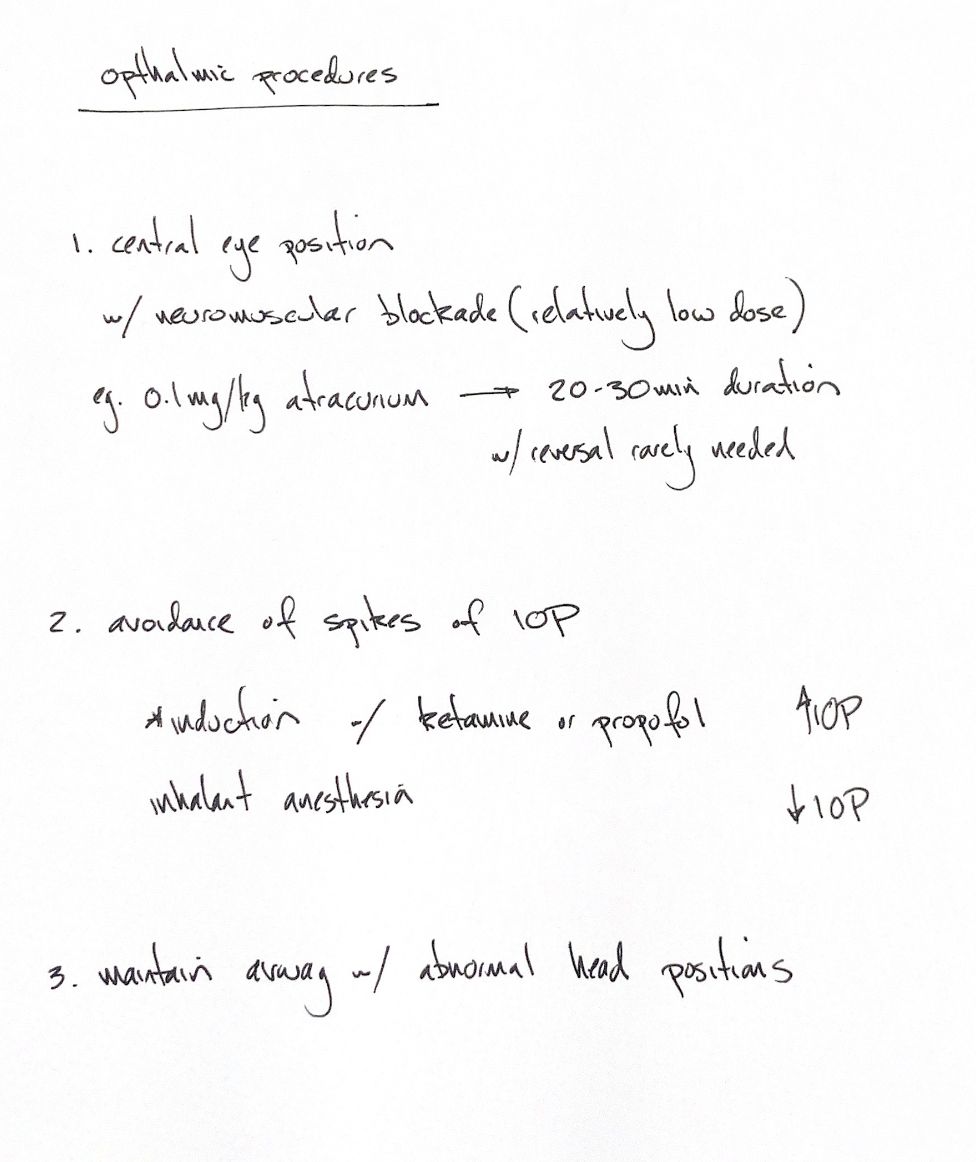
The three goals are a central eye position, avoiding spikes in intraocular pressure (IOP), and maintaining the airway when the head is in an unusual position.
Neuromuscular blockade can centre the eye. My note and the book give atracurium 0.1 mg/kg IV with a typical 20–30-minute effect. This is an example, not a recovery deadline. Dose and the anaesthetic used affect the duration. Intermittent positive-pressure ventilation is still required. Paralysis does not cause unconsciousness.
My notes say reversal is rarely needed. Current ACVAA 2025 guidance differs: when a peripheral nerve stimulator is assessed visually or by touch, pharmacological reversal is recommended. Four visible train-of-four twitches do not show normal function. Quantitative monitoring measures T4:T1, with ≥90% listed as normal in the ACVAA acceleromyography table. Recovery also needs patient and site assessment; breathing or elapsed time alone is not enough.
My induction cue is ketamine OR propofol ↑ IOP, with inhalants ↓ IOP. These are not universal drug rules. The canine studies depend on dose, premedication, existing IOP and intubation. They do not establish the same response in cats.
The first drawing also says “thiopental recommended”; the second omits it. Thiopental is an IV induction agent, not an inhalant. In a normal-dog comparison it caused a smaller peri-induction IOP rise than propofol. That does not make it best for every patient.
Head position and the surgical field can make airway access difficult. The book notes that a guarded, metal-spiral endotracheal tube may be needed to keep the machine outside the field. Airway access and ventilation still need attention throughout surgery.
References
Johnston & Tobias, 2nd ed., Chapters 21–22; Hofmeister et al. 2006/2008; Kastrup et al. 2005; ACVAA 2025.