
HCM, DCM and cardiac anaesthesia
Read the draft explanation
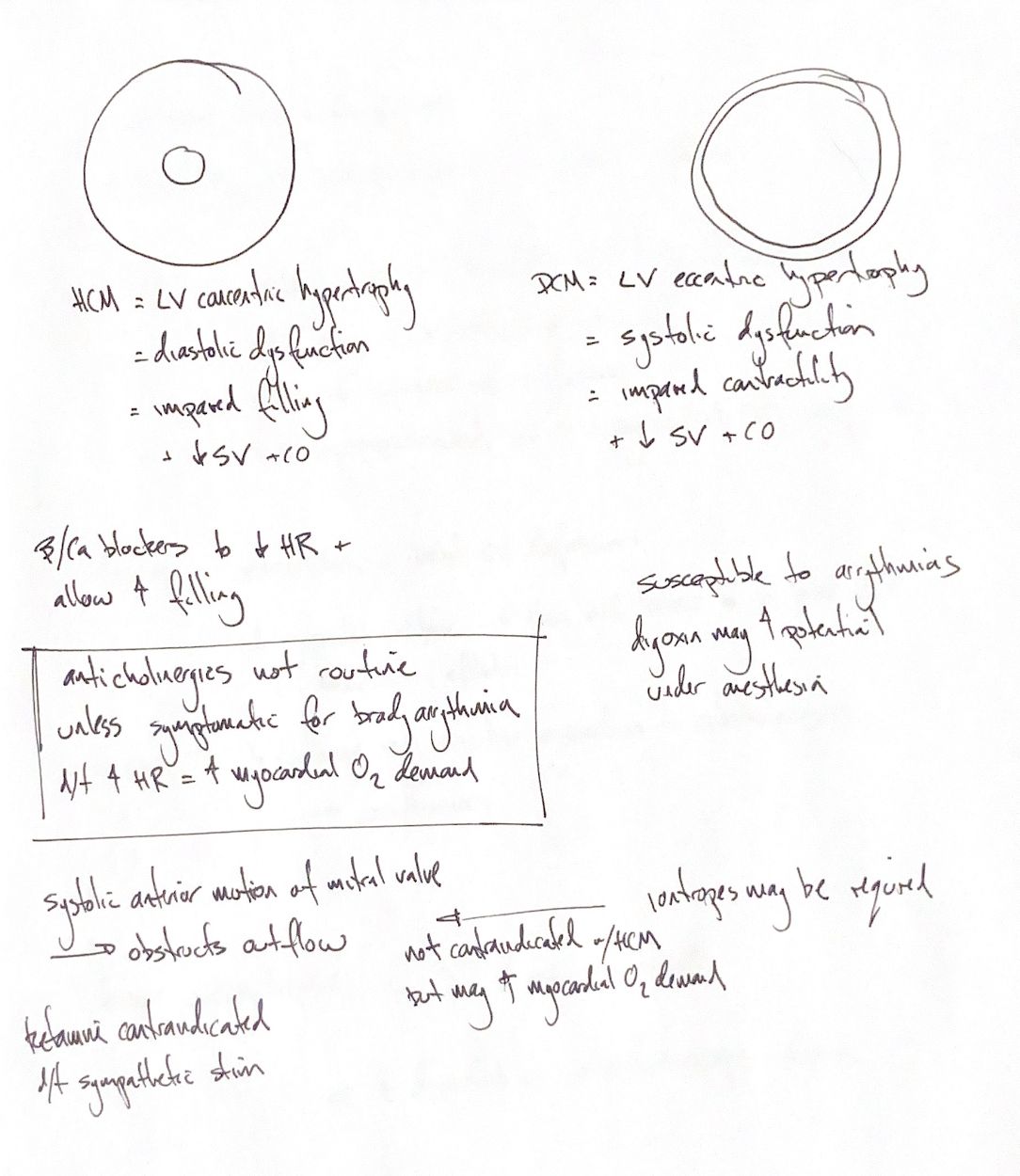
Hypertrophic cardiomyopathy (HCM) mainly impairs filling. A thick left-ventricular wall surrounds a small cavity. Dilated cardiomyopathy (DCM) mainly impairs contraction, with a dilated cavity. Either can reduce stroke volume and cardiac output.
Slowing heart rate can allow more filling time, but beta- or calcium-channel blockers are not routine treatment for every HCM cat. Systolic anterior motion of the mitral valve can obstruct outflow. It is not present in every case. Increased contraction can worsen this obstruction, so inotropic support needs the right context.
Anticholinergics are not routine unless symptomatic bradyarrhythmia is a concern. Faster heart rates increase myocardial oxygen demand.
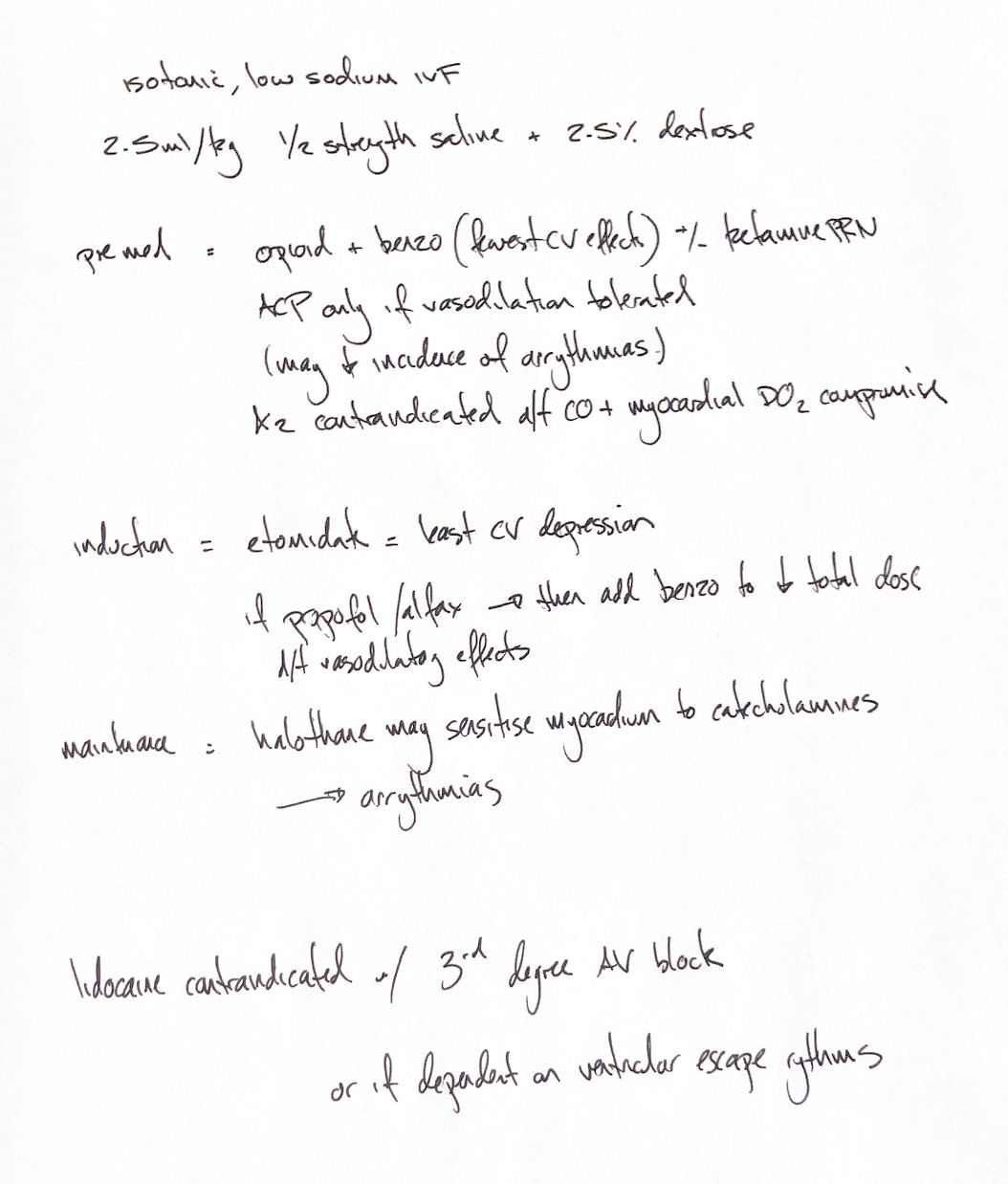
My fluid figure is read as 2.5 mL/kg, with an uncertain separator and no time unit. The book separately gives a classic 2–5 mL/kg/h range. Neither is a fixed prescription. Half-strength saline with 2.5% dextrose is iso-osmolar in the bag but becomes physiologically hypotonic as glucose is metabolised. AAHA makes its use conditional on need and tolerance.
An opioid–benzodiazepine combination may limit cardiovascular effects. Acepromazine needs tolerance of vasodilation. The book cautions against alpha-2 agonists in most cardiac patients. Its ketamine advice differs between induction and cautious low-dose use.
Propofol and alfaxalone can cause vasodilation. Etomidate may preserve blood pressure better than propofol, but healthy-dog evidence does not prove safety in severe cardiomyopathy. Adding a benzodiazepine does not always lower the induction dose; one 66-dog study found no reduction with midazolam.
DCM carries arrhythmia risk. My digoxin and halothane warnings need their drug and historical context. Lidocaine is contraindicated with third-degree AV block or dependence on a ventricular escape rhythm.
References
Johnston & Tobias, 2nd ed., Ch22; ACVIM feline consensus 2020; AAHA fluids 2024; Sams 2008; Covey-Crump 2008; Maze 1983.