
Hyperthyroid and hypothyroid anaesthesia
Read the draft explanation
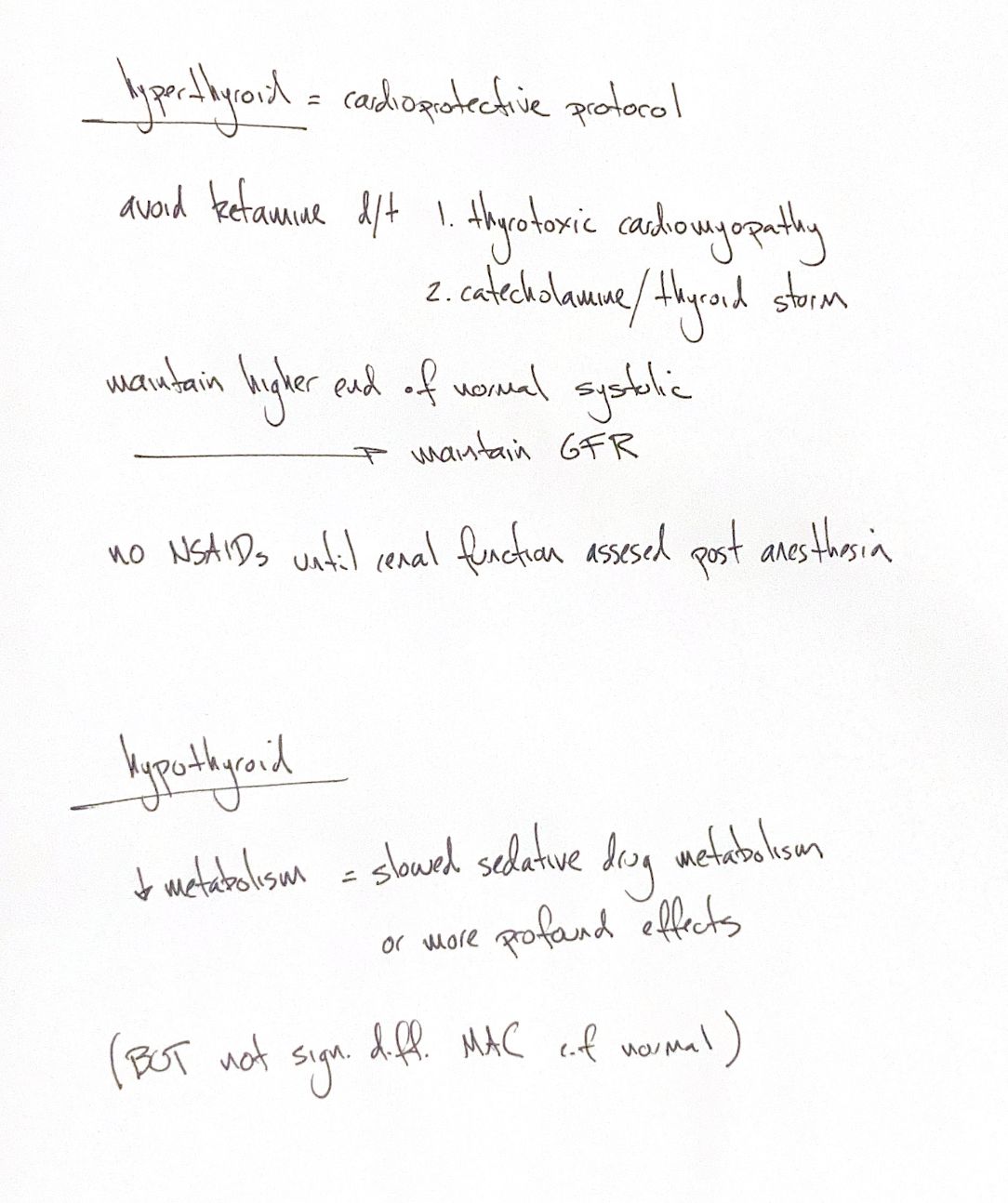
Hyperthyroidism can increase cardiac demand. My “cardioprotective protocol” cue means adapting anaesthesia to the patient's cardiac status, rather than one fixed recipe.
The note avoids ketamine for two reasons: thyrotoxic cardiomyopathy and extra sympathetic stimulation. It also names catecholamines and thyroid storm. The older textbook called storm theoretical in veterinary patients. A later cat report described a suspected storm during thyroidectomy; it did not establish ketamine causation. Storm means severe thyrotoxicosis with organ decompensation, not simply a catecholamine surge.
The note links higher-normal systolic pressure with maintaining glomerular filtration rate (GFR). The book discusses monitoring mean arterial pressure and supporting systemic pressure. These are perfusion cautions, not a validated pressure target for every patient. Hyperthyroidism can mask renal disease. The note therefore defers NSAIDs until renal function is assessed after anaesthesia. Current feline guidance also considers hydration, pressure, stable kidney disease and the product.
Hypothyroidism lowers metabolic activity. The textbook warns that sedative metabolism may slow or depressant effects may be more profound. This is a possible response, not a clearance change proved for every drug. The MAC exception is specific: experimentally hypothyroid dogs had no significant difference in isoflurane minimum alveolar concentration versus controls. That does not show that all sedatives, clearance and inhalants behave identically.
References
Johnston & Tobias, 2nd ed., Ch22; Berry & Panciera2015; Bond1988; DiBartola1996; Potter2020; AAFP2018; ISFM/AAFP2024.