
Alpha-2 agonists
Read the draft explanation
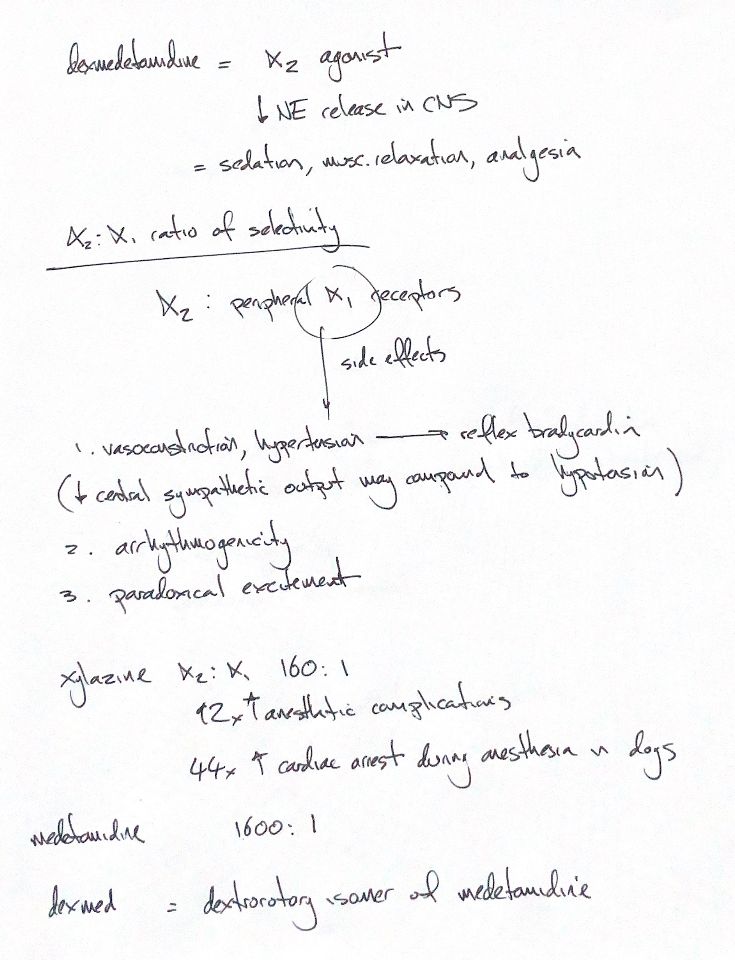
Dexmedetomidine activates α2 receptors and reduces norepinephrine release in the central nervous system. Norepinephrine is also called noradrenaline. This helps produce sedation, muscle relaxation and analgesia.
The α2:α1 ratio describes receptor selectivity. My notes give xylazine 160:1 and medetomidine about 1600:1. Classic rat-brain binding work reported 1620 for medetomidine. These are binding comparisons, not dose ratios or clinical safety scores. Dexmedetomidine is the dextrorotatory, or d-, enantiomer of racemic medetomidine.
My drawing and the textbook highlight peripheral α1 receptors. That explanation is incomplete. Peripheral α2 receptors also cause vasoconstriction. More α2 selectivity does not remove these peripheral effects.
Vasoconstriction can raise blood pressure and trigger reflex bradycardia. Reduced central sympathetic output can also slow the heart and contribute to later hypotension. Pressure may return to normal or fall below normal; the response depends on dose, administration, other drugs and the patient. Arrhythmias and paradoxical excitement can occur.
The xylazine figures need their historical context. A 1993 observational study in 66 Ontario practices included 8,087 dogs. Xylazine was associated with odds ratios of 91.5 for anaesthetic complications and 43.6 for cardiac arrest. These round to the 92× and 44× cues in my notes. They are different outcomes and measure odds, not absolute risk. Association does not establish causation or predict the risk for an individual dog today. The abstract does not give xylazine-specific event counts or confidence intervals.
References
Johnston & Tobias, 2nd ed., Ch21; Virtanen 1988/1989; Savola & Virtanen 1991; Flacke et al. 1990; Dyson et al. 1998; current Domitor/Dexdomitor SPCs.