
Ketamine
Read the draft explanation
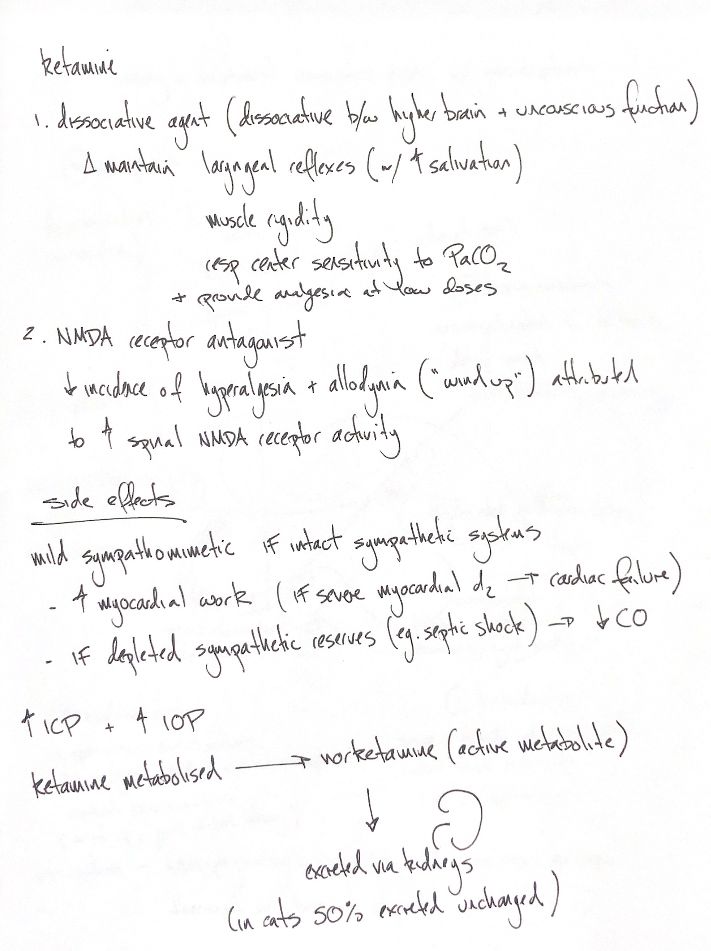
Ketamine produces dissociative anaesthesia. Higher brain processing becomes disconnected from some unconscious functions. Muscle rigidity and increased salivation can occur. Laryngeal reflexes may persist, but that does not ensure airway protection. Experimental dogs have retained a ventilatory response to PaCO₂. That does not establish adequate ventilation in every patient or drug combination.
Ketamine blocks NMDA receptors. This can reduce NMDA-mediated spinal amplification and support analgesia at subanaesthetic doses. Low-dose infusions have improved some postoperative pain measures as an adjunct in dogs. Hyperalgesia, allodynia and wind-up are related concepts, but they are not interchangeable, and benefit varies with the setting.
With an intact sympathetic response, ketamine can mildly stimulate the circulation and increase myocardial work. That extra work may be poorly tolerated in severe myocardial disease. When sympathetic reserves are depleted, as can occur in septic shock, myocardial depression may become more apparent and cardiac output may fall. These are conditional effects, not the same response in every shock state.
Intraocular pressure can rise, especially around induction in dogs. Intracranial pressure can also rise, but ventilation, other anaesthetic drugs and the underlying disease change the response. The blanket “always increases ICP” rule is too broad, and direct evidence in dogs and cats with neurological disease remains limited.
Ketamine is metabolised to active norketamine, with renal elimination of drug and metabolites. Cats also pass substantial unchanged ketamine in urine. The approximate 50% cue is a historical textbook estimate; published descriptions differ on the exact fraction.
References
Johnston & Tobias, 2nd ed., Ch21/36; Soliman 1975; Anis 1983; Wagner 2002; Hofmeister 2006; Robinson & Johnston 1986; VMD Ketavet SPC.