
Opioids - seven adverse-effect cues
Read the draft explanation
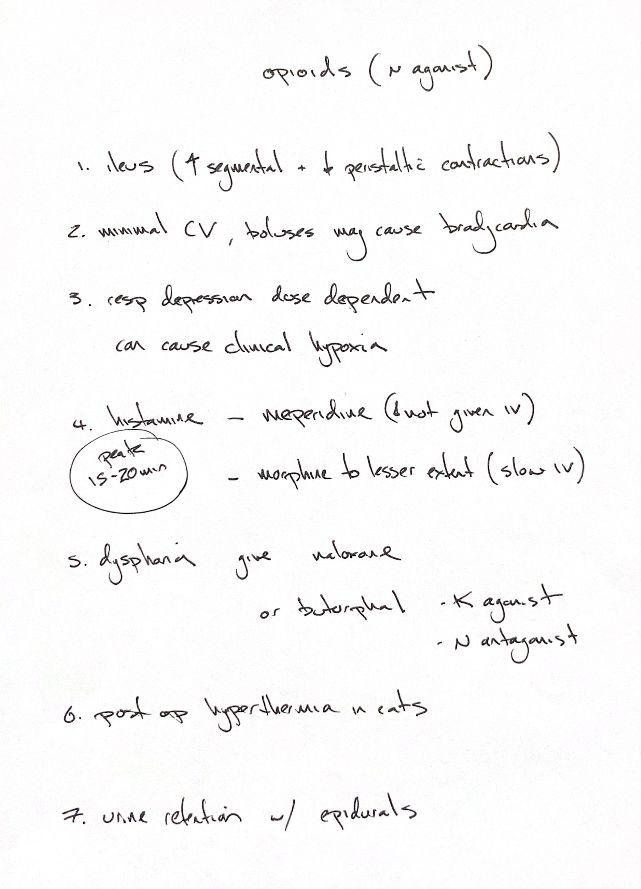
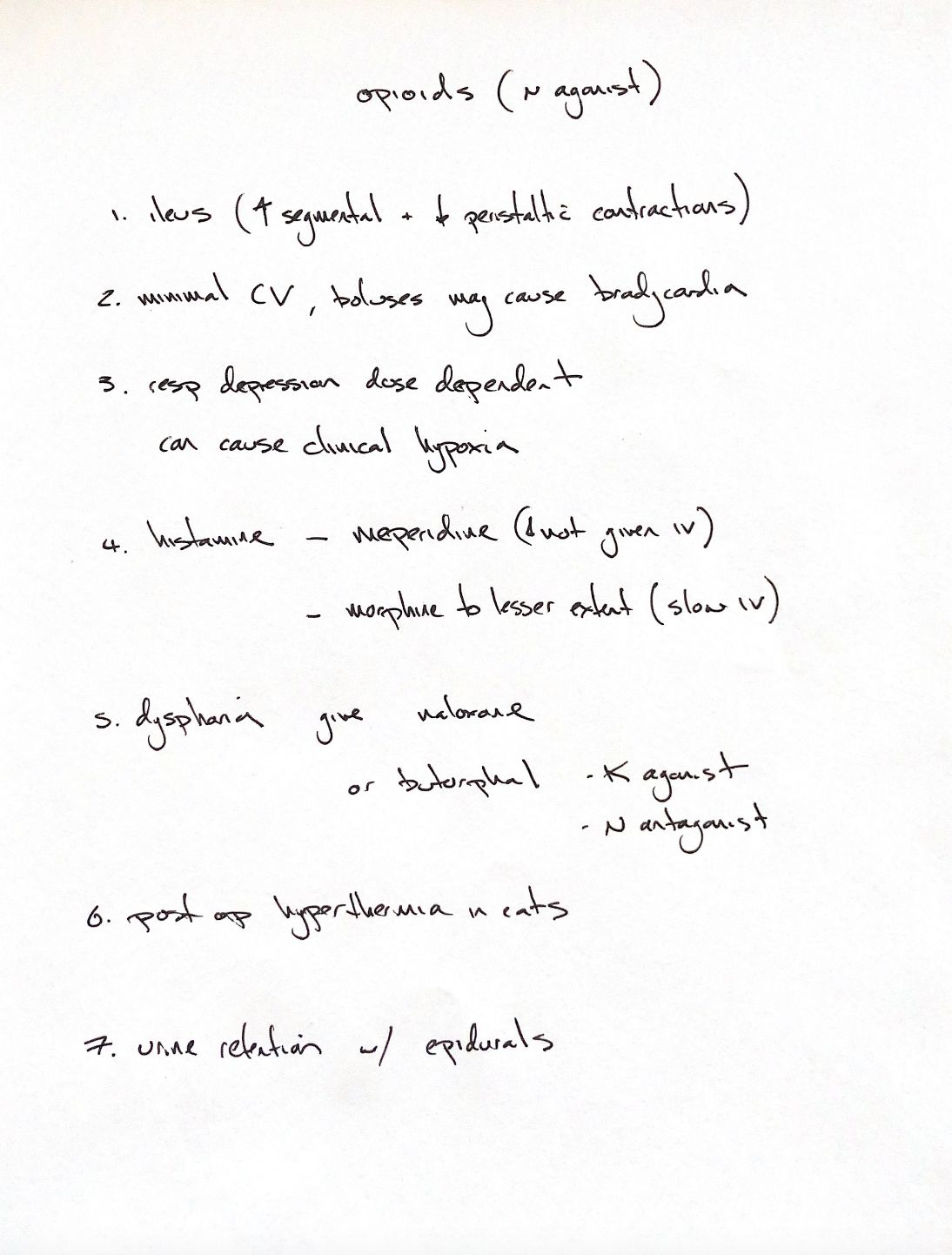
My μ-agonist list starts with ileus. Segmental contractions increase while useful forward contractions decrease. Cardiovascular effects are generally limited, but boluses of some opioids may cause bradycardia.
Respiratory depression is dose dependent. Hypoventilation can cause hypoxemia or hypercarbia, especially with other anaesthetic drugs, atelectasis or lung disease. The effect varies with the patient and drug combination.
Histamine release is most prominent with meperidine. The source and book say not to give it IV. Morphine can also release histamine, especially with rapid IV administration; the original cue is slow IV. The circled “peak 15–20min” has no stated endpoint, route or species. It is not a verified histamine peak or waiting interval.
For apparent dysphoria, first consider pain, anxiety or the need to urinate. Naloxone or butorphanol can reverse opioid effects when appropriate. Butorphanol is a κ agonist and μ antagonist. Reversal may also remove analgesia, so pain needs reassessment and monitoring.
Postoperative hyperthermia can occur in some cats. That does not prove an opioid caused every temperature rise. Urinary retention can occur with epidural opioids. These last two cues keep their cat and route qualifiers.
References
Johnston & Tobias, 2nd ed., Ch21. Original peak-time endpoint remains unverified.