
Opioids - mechanisms and drug cues
Read the draft explanation
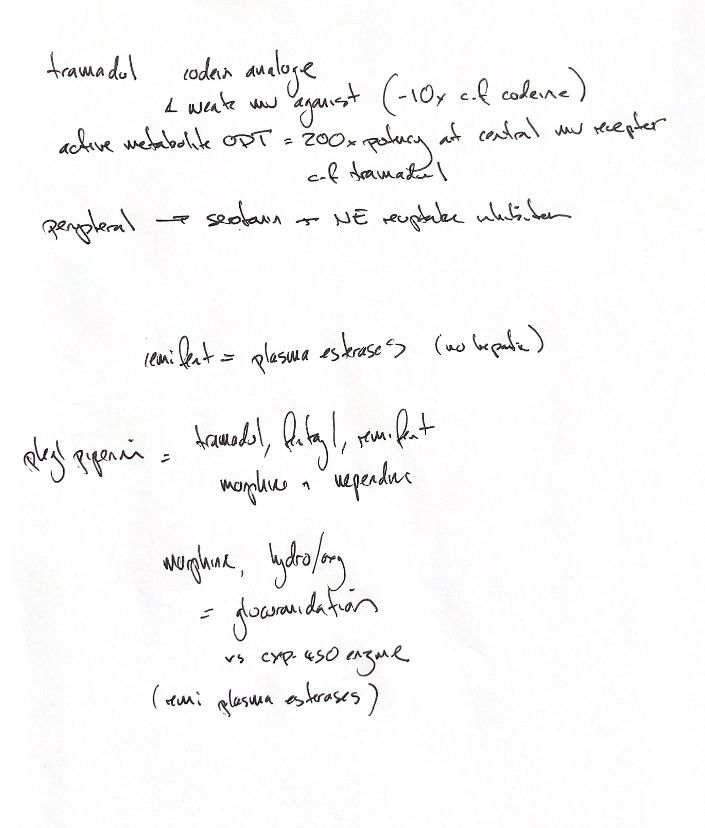
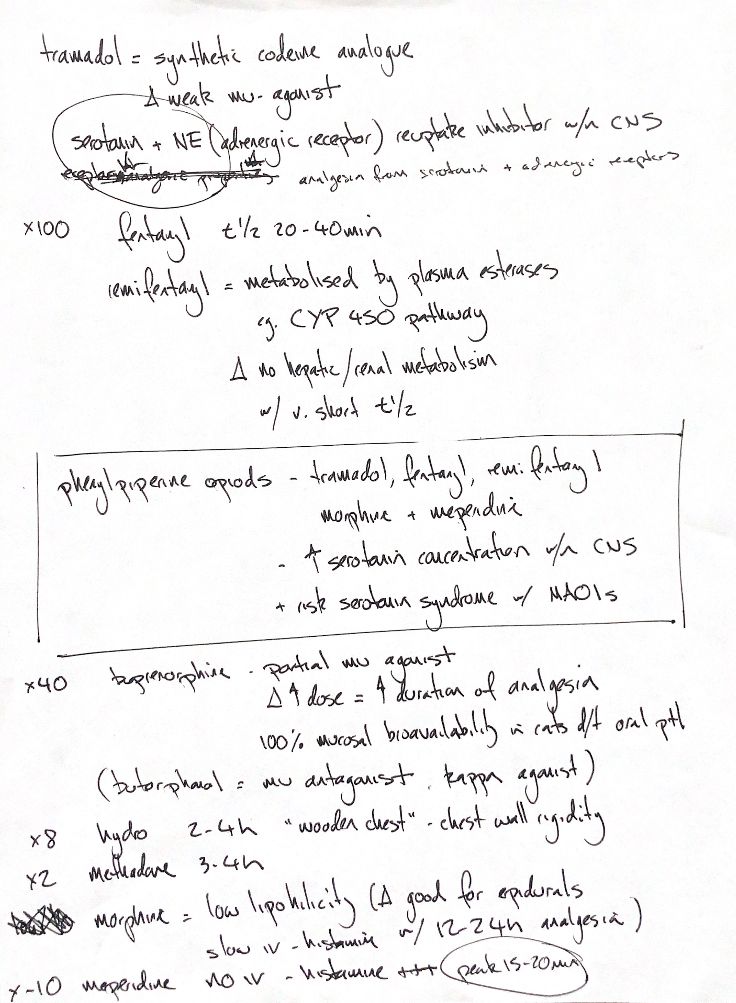
Tramadol combines weak μ-opioid action with serotonin and noradrenaline reuptake inhibition in the CNS. Its active metabolite is O-desmethyltramadol, or M1. The source 200× cue concerns μ binding, not 200× clinical analgesia. The historical codeine comparison also concerns weak binding, not a dose ratio. These mechanisms do not promise reliable analgesia in every dog or pain condition.
The book compares fentanyl at about 100× morphine, hydromorphone 8×, methadone 2×, meperidine one tenth and buprenorphine 40×. These are approximate reference cues. They are not a patient dose-conversion table. Binding, potency, duration and half-life are different measurements.
Fentanyl 20–40minutes means analgesic duration after an IV bolus in the book, not elimination half-life. Remifentanil is rapidly hydrolysed by blood and tissue esterases, not CYP450. Its parent-drug offset differs from renal clearance of its metabolite. The “wooden chest” cue belongs with fentanyl and potent derivatives.
The original serotonin box mixes chemical groups. The drugs do not all share one transporter mechanism. MAOI interactions depend on the drug. The “hydro/oxy” metabolism shorthand is not expanded in the note.
Buprenorphine is a partial μ agonist. The dose–duration arrow is a study cue, not a dosing instruction. Alkaline feline oral pH helps uptake. The historical 100% cue is protocol and sampling dependent; dogs also absorb it transmucosally. Butorphanol is a κ agonist and μ antagonist.
Morphine’s low lipophilicity supports epidural use. The 12–24hour cue is epidural analgesia. The circled meperidine “peak 15–20min” has no stated endpoint, route or species, so it cannot guide timing.
References
Johnston & Tobias, 2nd ed., Ch21; Raffa1992; Gillen2000; Rickli2018; Robertson2005; Hedges2014; official drug labels.