
Ventilator cycling, tidal volume and reservoir bag
Read the draft explanation
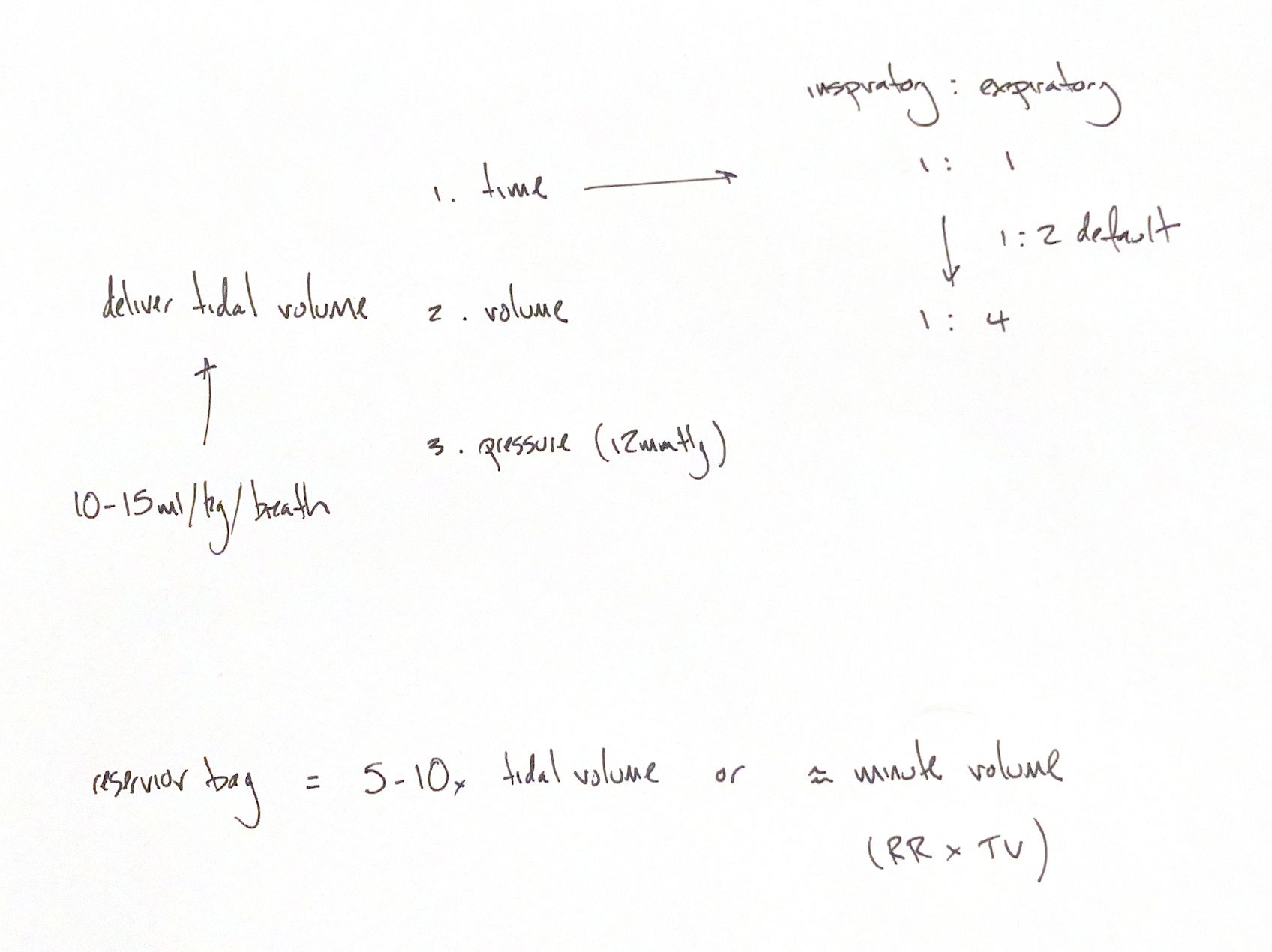
My three cycle cues are time, volume and pressure. Cycling means ending inspiration. A pressure-controlled mode can still be time-cycled, so the name alone does not tell us what ends the breath.
The book gives I:E ratios of 1:1 to 1:4, with 1:2 as a common machine default. Its initial examples are 10–15 mL/kg/breath and a peak inspiratory pressure of 12 mmHg. Those are source examples, not universal settings. Tidal volume needs individual assessment using end-tidal CO2 and airway pressure. The original pressure unit really is mmHg.
The bag cue is 5–10 × tidal volume, or roughly a minute volume. MV = respiratory rate × tidal volume. MV is a rate, so a volume comparison needs MV × 1 minute. The two shortcuts are not always equal. The exact primary basis for the 5–10 factor was not recovered; it remains a study-note heuristic.
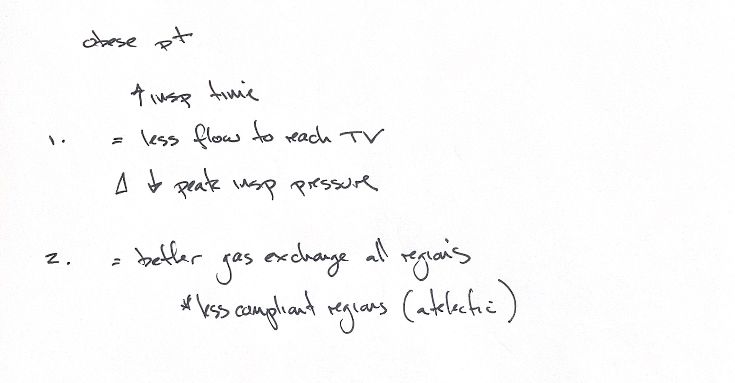
For the same tidal volume under a constant-flow pattern, more flow-delivery time means less flow. That can lower the resistive part of peak inspiratory pressure. Adding only a pause is different.
My second obese-patient cue is “better gas exchange all regions”, especially less compliant, atelectatic regions. This is a proposed rationale, not a guaranteed result. A low compliance alone does not mean slow filling: the time constant is resistance × compliance. In Araos and colleagues’ six obese dogs, the comparison was tidal volumes based on ideal versus current body weight. It did not test longer inspiratory times or show a gas-exchange difference. There is no universal obese-patient inspiratory-time setting here.
References
Johnston & Tobias, 2nd ed., Ch 21; Araos et al. 2021; Dräger Narkomed 6400 manual; Chatburn, Mechanical Ventilation.