
ASA classification
Read the draft explanation
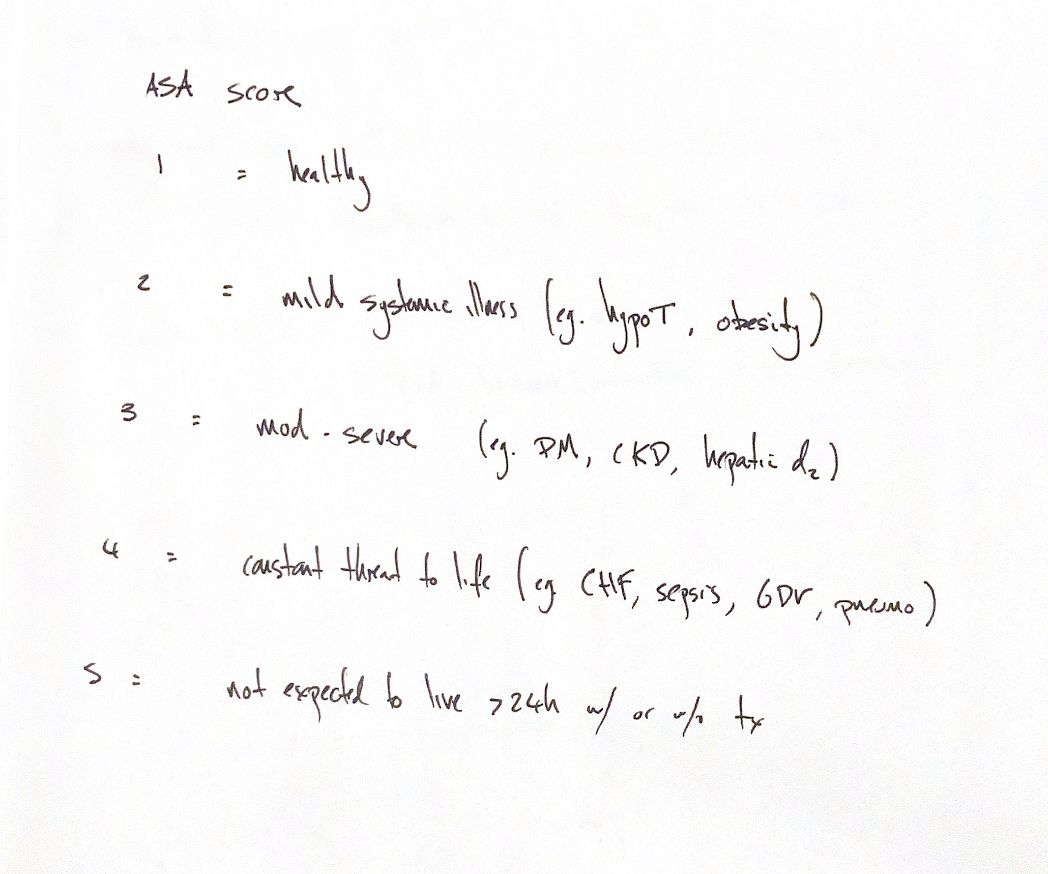
ASA physical status describes the patient's illness before anaesthesia. My five-row map follows the modified veterinary chart in Johnston and Tobias. The grade describes the patient, while the procedure and other factors also affect overall risk.
ASA I means no systemic illness: a healthy animal. ASA II means mild, compensated systemic illness. The source examples are hypothyroidism and obesity.
ASA III is moderate to severe compensated systemic illness in this book. My examples are diabetes mellitus, chronic kidney disease and hepatic disease. These are memory cues, not automatic grades for every patient with that diagnosis. Severity, control and the effect on the patient matter. AAHA 2020 calls class III moderate systemic disease; the current human ASA statement says severe systemic disease. These wordings are not identical.
ASA IV means disease that is a constant threat to life. The book describes decompensation. My examples are congestive heart failure, sepsis, gastric dilatation-volvulus and pneumothorax, when their severity fits that description.
ASA V is the moribund group. My note and the book say the patient is not expected to survive beyond 24 hours with or without treatment. That is the source's historical wording, not a precise survival clock or a reason to withhold care. AAHA 2020 and the current ASA definition instead say not expected to survive without the operation. They do not use that fixed 24-hour rule.
An E suffix records an emergency. Delay would significantly increase the threat to life or a body part. E modifies the physical-status class; it is not another severity grade, and an emergency alone does not make every patient class IV or V.
ASA is a useful shared description, not a complete risk model or an individual survival probability.
References
Johnston & Tobias, 2nd ed., Ch22, Table22.1; AAHA 2020; ASA physical-status statement and emergency definition.