
The anaesthetic triad and plane
Read the draft explanation
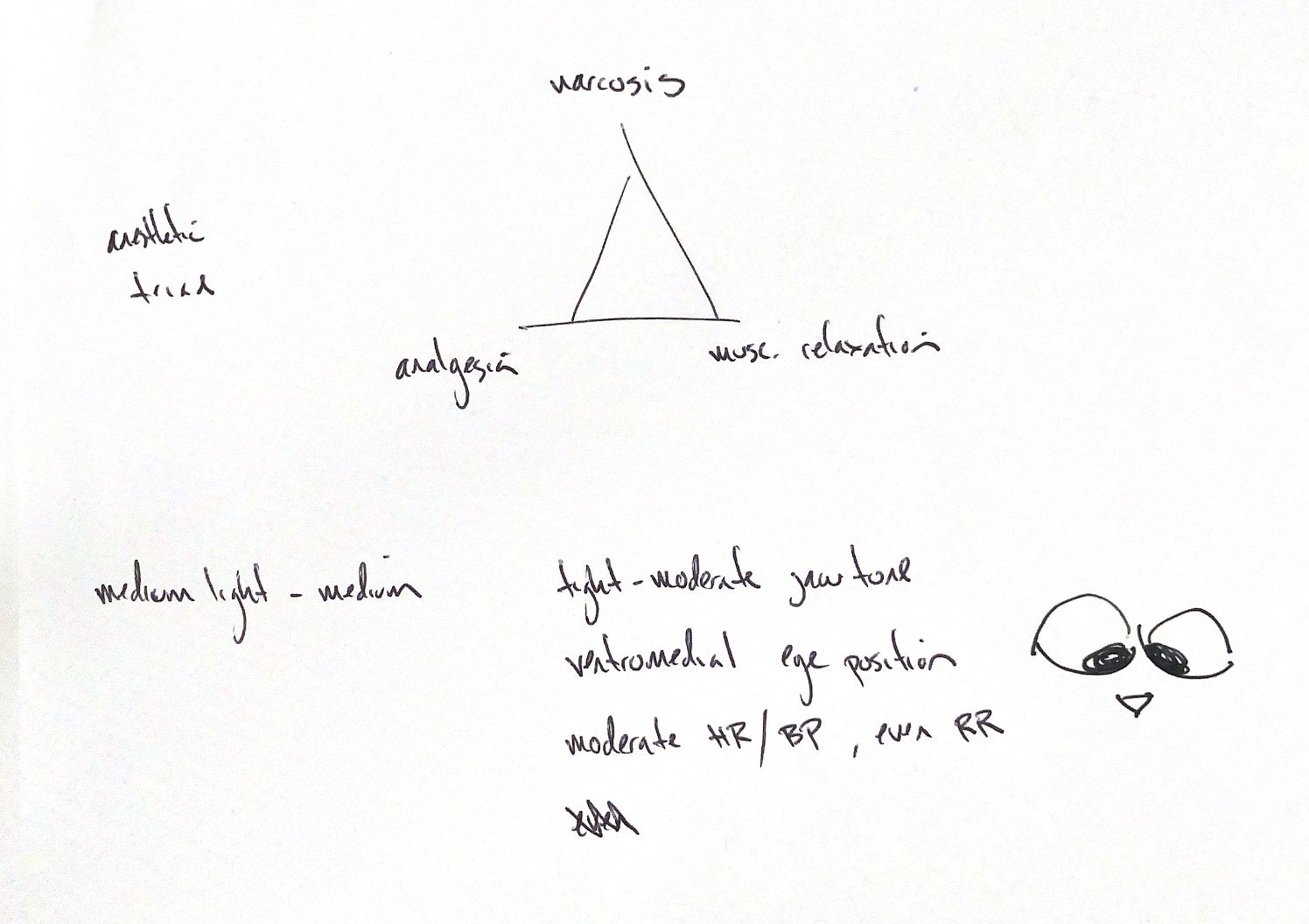
The anaesthetic triad has three parts. Narcosis means drug-induced unconsciousness. Analgesia provides pain control. Muscle relaxation reduces muscle tone. The triangle keeps all three in view. Relaxation or paralysis alone does not show that a patient is unconscious or free from pain.
My depth cue is medium-light to medium. Johnston and Tobias describe this as ideal for most procedures, so the surgeon can work without excessive depression of the patient's body systems. It is a usual source pattern, rather than one correct plane for every patient and procedure.
In the book's table, medium-light has tight jaw tone and medium has moderate jaw tone. Both have ventromedial eye position, moderate heart rate and blood pressure, and an even respiratory rate. The eye sketch shows the eyes turning down and towards the midline. These are descriptive categories, not numerical targets.
Depth signs must be read together. During volatile anaesthesia, the eyes generally turn ventromedially and the jaw relaxes. Injectable protocols, especially dissociative drugs, may not follow the same pattern. Neuromuscular blockade also removes useful muscle and reflex signs without causing unconsciousness.
The wording also varies between sources. AAHA's 2020 definition describes mild jaw tone in a typical surgical plane. Keep that separate from this book table's tight-to-moderate cue. Neither phrase is a stand-alone test.
Hands-on assessment belongs alongside monitoring of circulation, oxygenation and ventilation. A steady respiratory rate alone does not show that ventilation is adequate.
References
Johnston & Tobias, 2nd ed., Ch21, Table21.2; AAHA 2020; ACVAA 2025.