
Thyroid and parathyroid hormones
Read the draft explanation
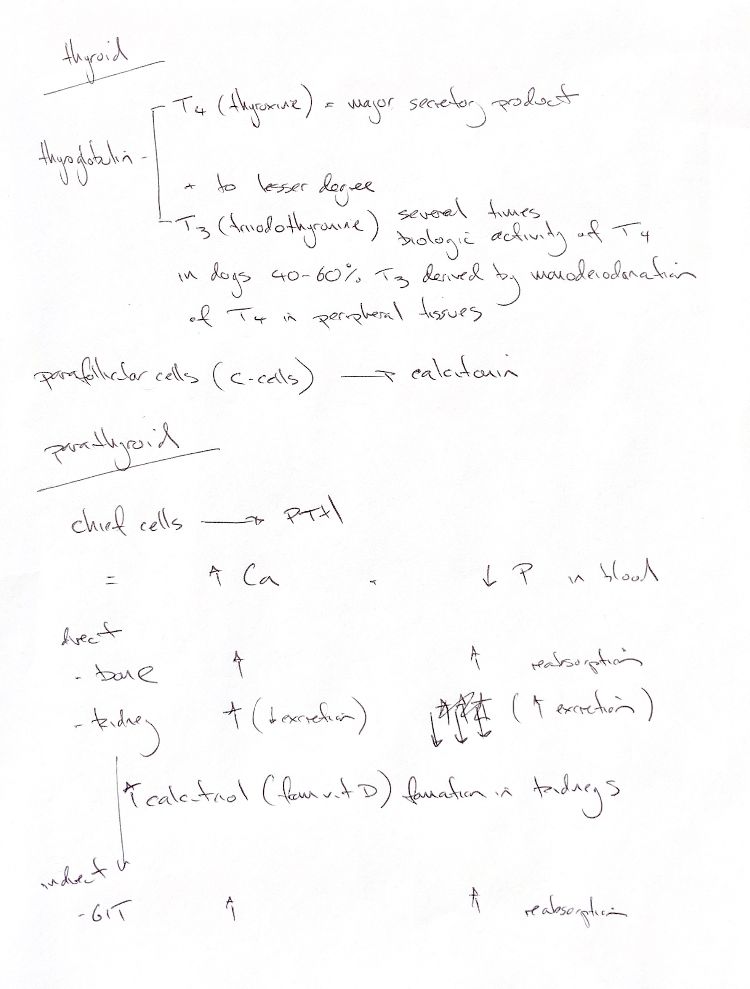
The thyroid makes mostly T4, or thyroxine, and a smaller amount of T3, or triiodothyronine. T3 has several times the biologic activity of T4 in the book's comparison. The two amounts tell us how much is secreted, not which hormone is more active.
Follicular cells use iodinated thyroglobulin as the scaffold and store for hormone precursors in colloid. When that protein is taken back into the cells and broken down, T4 and T3 can enter the blood. In dogs, the book estimates that about 40–60% of T3 comes from removal of one iodine from T4 in peripheral tissues. That is a share of T3 production, not the percentage of all T4 converted. It is an approximate canine estimate.
Thyroid parafollicular cells, also called C-cells, make calcitonin. Parathyroid chief cells make parathyroid hormone, or PTH. These are different cell groups.
PTH acts on bone and kidneys. Bone resorption releases both calcium and phosphate. In the kidney, the summary pattern is more calcium reabsorption and less phosphate reabsorption. That means less urinary calcium loss and more urinary phosphate loss.
PTH also increases calcitriol formation in the kidneys. Calcitriol is active vitamin D. It increases absorption of both calcium and phosphate from the intestine, so this gut effect of PTH is indirect.
The net normal blood pattern is higher calcium and lower phosphate. Renal phosphate loss outweighs phosphate released from bone. Keep bone release, kidney excretion and intestinal absorption separate when following the arrows. These are physiology cues, not a prediction for every diseased patient.
References
Johnston & Tobias, 2nd ed., Ch121. Primary checks and access limits are retained with the study files.