
Refeeding syndrome and electrolyte shifts
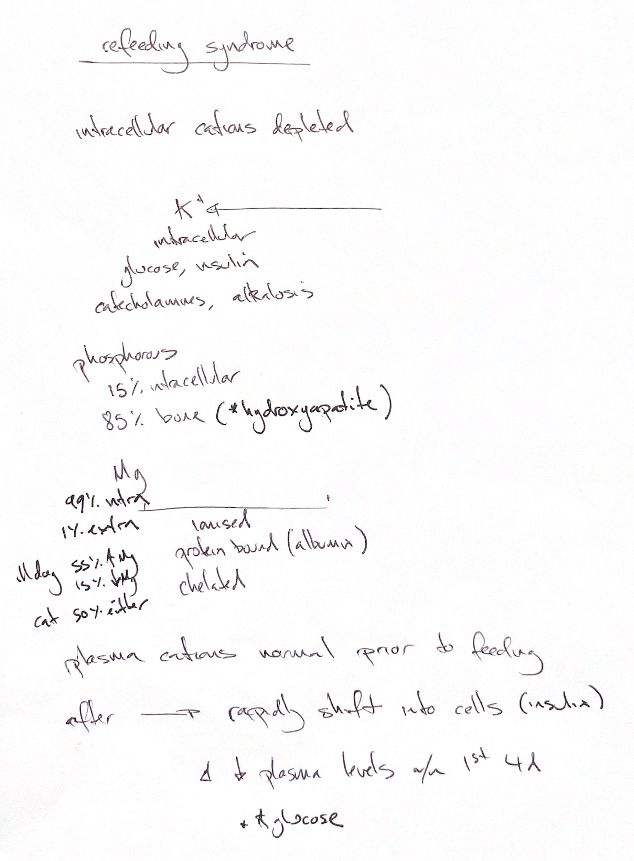
The handwritten dog magnesium figures differ from the cited study, which found low magnesium in 54% and high magnesium in 13% of 48 critically ill dogs.
Read the draft explanation
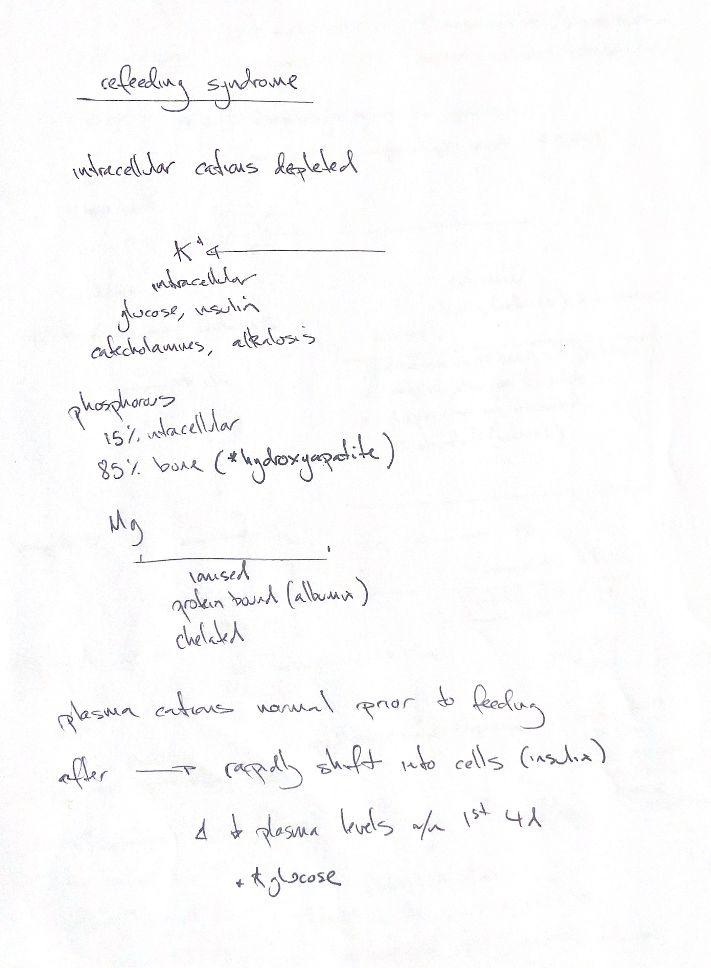
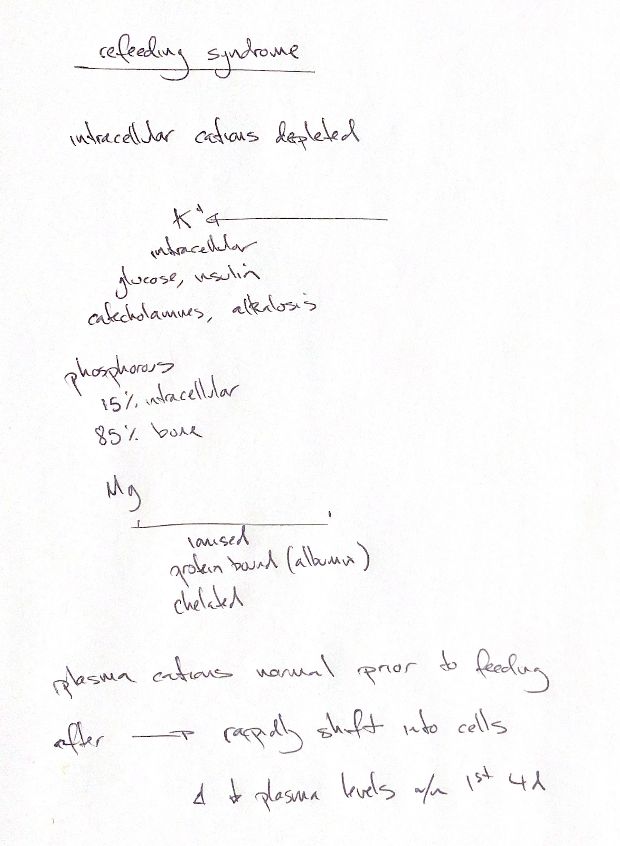
After prolonged starvation or severe malnutrition, body electrolyte stores can be depleted even when blood concentrations look normal. Feeding restarts carbohydrate metabolism and raises insulin. Potassium, phosphate and magnesium then move into cells, so their plasma concentrations can fall. Severe falls can cause weakness and cardiac rhythm changes. Phosphate is an anion; the note's shared “cations” label is shorthand.
The book says depletion is usually noticed within the first four days. That is an early-risk cue, not a deadline after which the risk disappears. My added glucose cue also needs a limit: glucose may rise, but both hyperglycaemia and hypoglycaemia have been reported with feline refeeding syndrome.
The potassium arrow keeps four inward-shift cues: glucose, insulin, catecholamines and alkalosis. Glucose can work through insulin, while the adrenergic cue concerns beta-2 stimulation. These are different mechanisms, not one common transporter.
The phosphorus numbers are rounded body-store cues: about 15% in soft-tissue cells and 85% in bone as hydroxyapatite, with a small extracellular fraction. They are not exact measured proportions for every patient.
For magnesium, the note's 99% “intracellular” and 1% “extracellular” shorthand must include bone and soft-tissue stores. Blood magnesium occurs as ionised, protein-bound, including albumin, and chelated forms. Ionised magnesium is the active fraction.
The first drawing says 55% high and 15% low magnesium in ill dogs. This conflicts with the cited study: among 48 critically ill dogs, total serum magnesium was low in 54% and high in 13%. The cat cue is 50% with either abnormality; the cited 57-cat ICU study found 46% during hospitalisation. These are study-specific illness figures, not refeeding incidence or rates for all dogs and cats.
References
Johnston & Tobias, Veterinary Surgery: Small Animal, 2nd ed.; Martin 1994, Toll 2002 and primary feline refeeding studies.