
B12 binding and ileal absorption
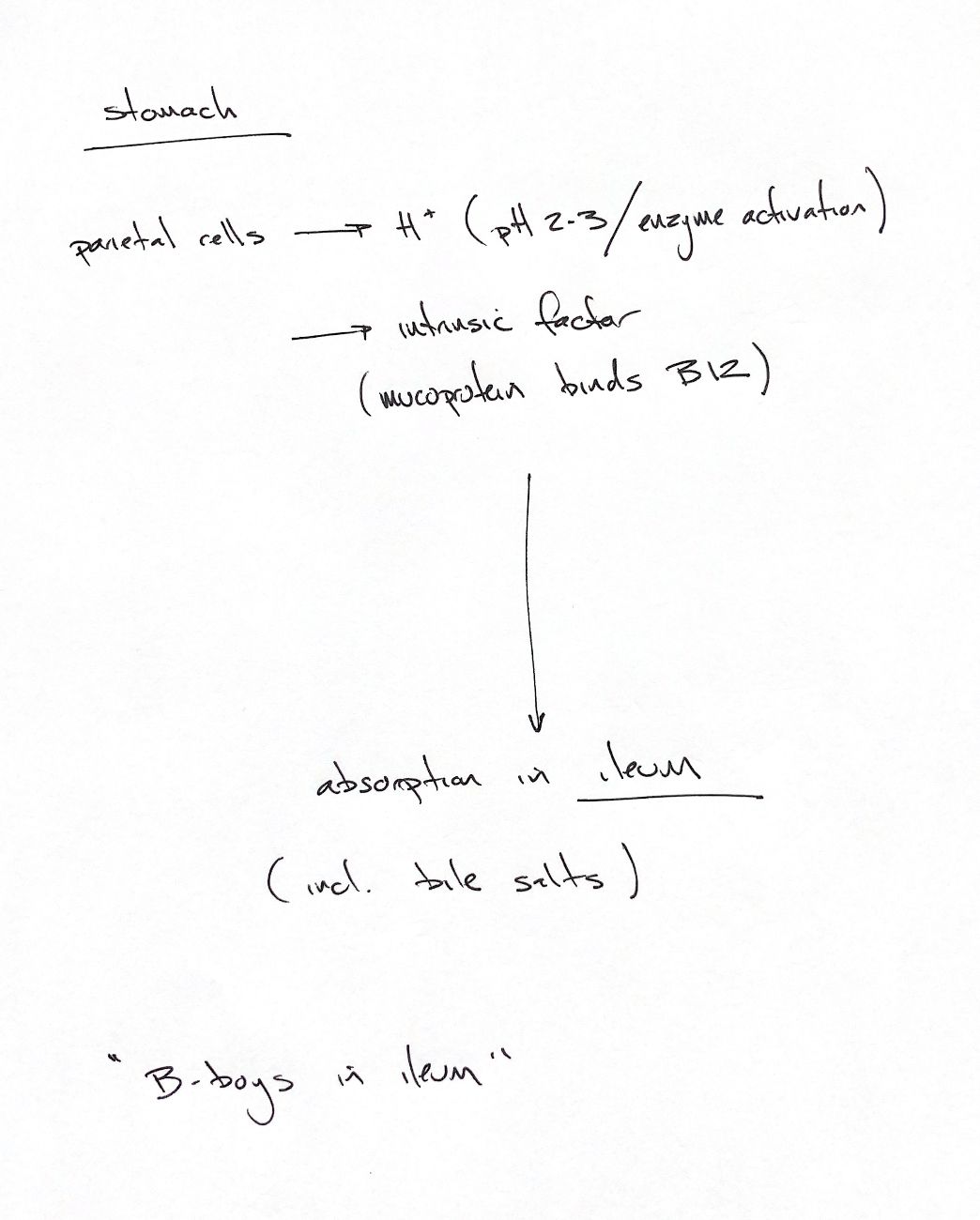
Read the draft explanation
Parietal cells pump H⁺ into the gastric lumen. My pH 2–3 label is an acidic memory cue; actual gastric pH varies with the animal and feeding state. Acidity activates gastric enzymes. For example, pepsinogen becomes pepsin.
The second branch shows intrinsic factor (IF), a cobalamin-binding glycoprotein called a “mucoprotein” in my note. This needs a species qualification. Dogs make IF in the stomach and pancreas, with pancreatic ducts as the major source. Gastric parietal production has been demonstrated in dogs, but other gastric cell sources have also been reported. In cats, IF is considered pancreatic rather than a gastric parietal-cell product.
After binding IF, B12 is taken up by ileal enterocytes through receptor-mediated endocytosis: the cell brings the bound complex inside. Both gastric and pancreatic IF promoted this ileal uptake in canine experiments. The drawing keeps the route focused on that binding and absorption step.
Bile salts are also reabsorbed in the ileum, through a separate sodium-coupled transport route. They do not use IF as their carrier. “B-boys in ileum” was my cue for B12 and bile salts here, not for every B vitamin.
References
Johnston & Tobias, 2nd ed., Ch91/92/97; Batt 1989; Simpson 1993; Okuda 1973; ACVIM 2023.