
Swallowing phases and nerves
Read the draft explanation
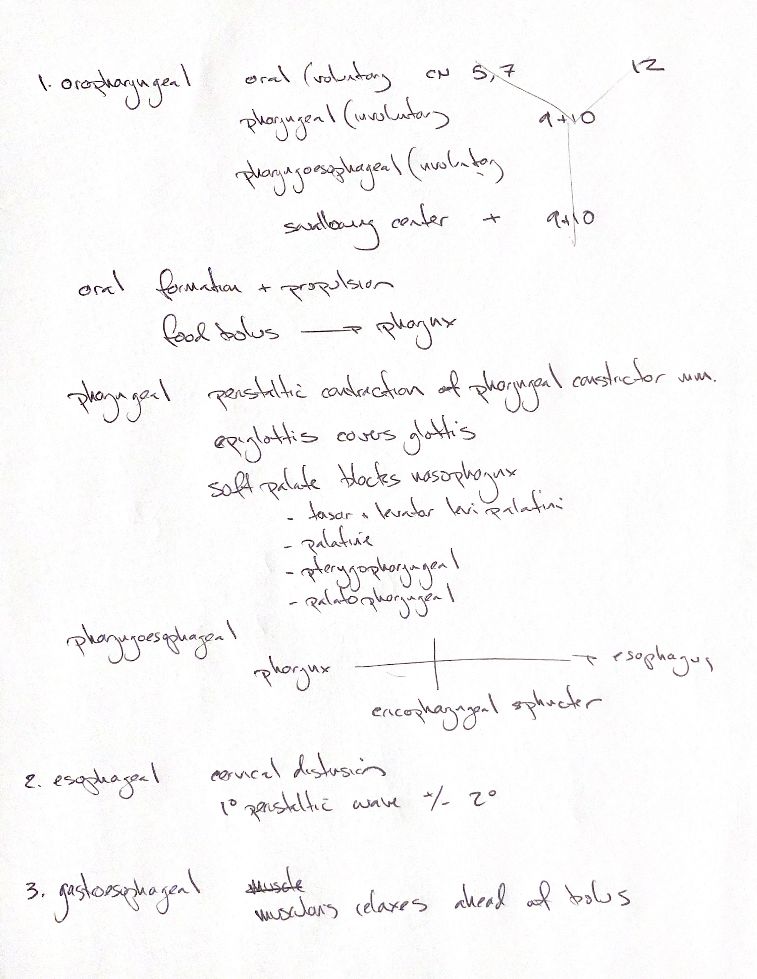
Swallowing, or deglutition, has three phases: oropharyngeal, oesophageal and gastroesophageal. The first phase contains three stages. Keep the stages separate from the three whole-process phases.
The oral stage is voluntary. The tongue and palate form a food bolus, then propel it into the pharynx. My oral nerve cues are CN V, VII and XII: trigeminal, facial and hypoglossal.
The next two stages are involuntary. The brainstem swallowing centre coordinates them with CN IX and X, the glossopharyngeal and vagus nerves. Pharyngeal constrictors move the bolus along. The epiglottis covers the glottis and the vocal folds adduct. The soft palate closes against the pharyngeal wall to protect the nasopharynx.
Tensor veli palatini makes the palate taut; levator veli palatini elevates it. My list also includes paired palatine, pterygopharyngeal and palatopharyngeal muscles. This is not a claim that all have the same action or nerve supply. The whole oropharyngeal phase involves all five listed cranial nerves.
During the pharyngoesophageal stage, the cricopharyngeal and thyropharyngeal muscles relax. The bolus passes through the upper oesophageal sphincter into the cervical oesophagus. The sphincter then closes as the pharyngeal constrictors relax.
Enough cervical oesophageal distension starts primary peristalsis. If it does not clear the bolus, distension can trigger a secondary wave. These are waves within the oesophageal phase, not extra swallowing phases.
Finally, the muscularis relaxes ahead of the bolus and the gastroesophageal sphincter relaxes so food can enter the stomach.
References
Johnston/Tobias, Veterinary Surgery: Small Animal, 2nd ed., Chapters 87 and 90. Stage-level nerve cues do not replace individual muscle innervation.