
Disseminated intravascular coagulation
Read the draft explanation
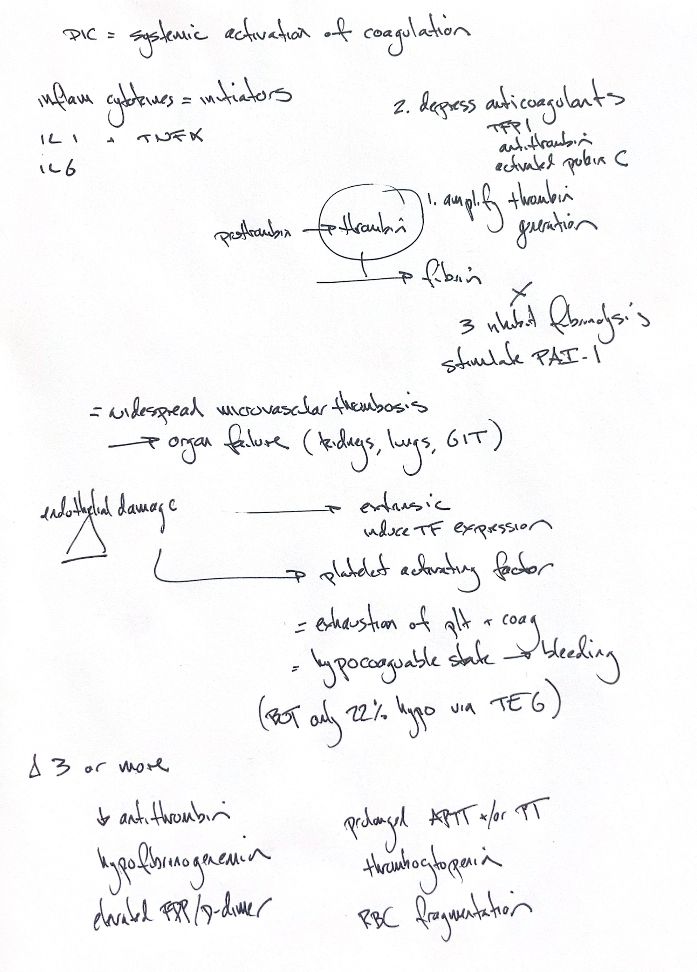
DIC is systemic activation of coagulation during an underlying illness. IL-1, IL-6 and TNF-α link inflammation to clotting. Endothelial injury, tissue factor expression and platelet-activating factor help amplify thrombin generation. Thrombin converts fibrinogen to fibrin.
The natural brakes also weaken: tissue factor pathway inhibitor (TFPI), antithrombin and the activated protein C pathway. The note's classic model adds more plasminogen activator inhibitor-1 (PAI-1), which limits clot breakdown. Fibrinolysis varies with species, trigger and stage; it is not always shut down in canine DIC.
Small-vessel thrombosis can reduce perfusion and damage the kidneys, lungs and gastrointestinal tract. Ongoing consumption can use up platelets and coagulation factors and contribute to bleeding. This is not a fixed sequence. Thrombosis and bleeding may occur together, and bleeding has several mechanisms.
The note's 22% TEG cue comes from 11/50 expert-diagnosed ICU dogs in Wiinberg 2008. Their tissue factor-activated TEG G categories used results from the day with the highest DIC score. It is not population prevalence. Hypercoagulability was the largest group, 22/50 (44%), not a majority; 17/50 were normocoagulable.
The traditional clue for overt DIC is an at-risk illness plus at least 3 abnormal test findings: low platelets, prolonged PT and/or aPTT, low fibrinogen, low antithrombin, and raised fibrin(ogen) degradation products or D-dimer. These findings are not specific. My note/book includes red-cell fragments; current Cornell guidance treats them as an extra supporting finding, outside the routine criteria. Fewer abnormalities do not exclude early DIC. Interpret serial tests with the clinical picture. Feline D-dimer sensitivity may be poor.
References
Johnston/Tobias, 2nd ed., Chapter 7; Wiinberg 2008; Cornell eClinpath. Full source context and access limits accompany this lesson.