
Glucose measurement and Whipple's triad
Read the draft explanation
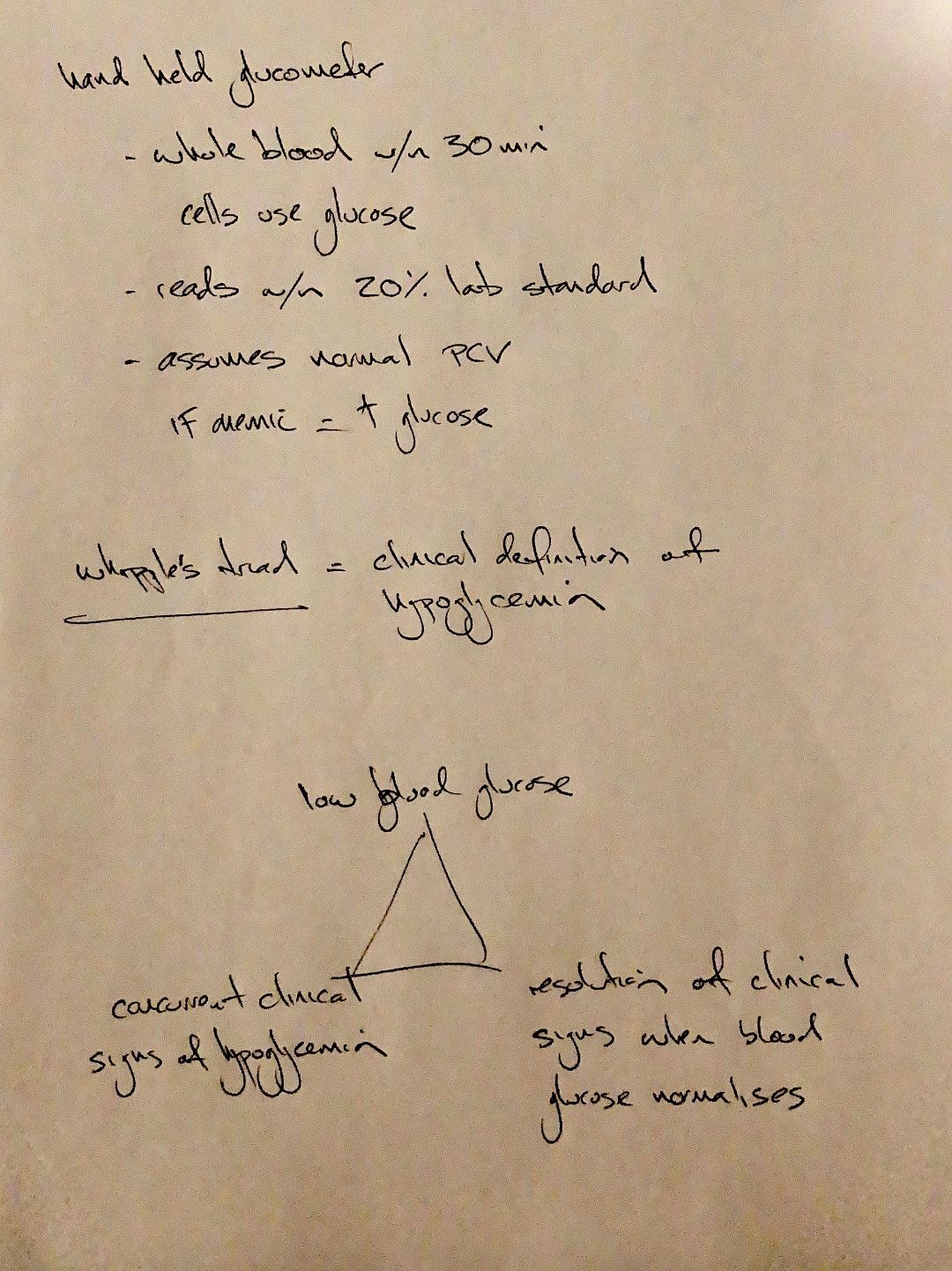
Start with the sample when you read a handheld glucometer. The original uses whole blood. Use the sample type validated for that meter.
Cells keep using glucose after blood is collected. If blood stays in contact with cells while separation or analysis is delayed, the result can become falsely low. The original’s “within 30 min” cue is a reminder to handle the sample promptly. It is not a stability guarantee for every tube, temperature or handling method.
Packed cell volume, or PCV, also matters. Some meters assume a normal PCV when estimating the glucose concentration. Anaemia can make a reading falsely high with some devices. The size and direction of the error depend on the meter. Haematocrit-corrected meters may behave differently.
The original and book give “within 20% of a laboratory standard” as an accuracy cue. Keep its historical scope. Accuracy depends on the device, species and glucose range. An abnormal or discordant result should be checked by a laboratory method.
Whipple’s triad keeps three findings together: low blood glucose, concurrent clinical signs of hypoglycemia, and signs that resolve when glucose normalises. The triangle links the signs to the low glucose. It does not identify the cause by itself, so it is not a diagnosis of insulinoma.
References
Chris Wood’s drawing; Johnston & Tobias, Veterinary Surgery: Small Animal, 2nd ed., ch. 5; Paul et al. 2011, PMID 21879978; Mori et al. 2017, PMID 28824044.