
Portosystemic shunt signalment, embryology and acquired routes
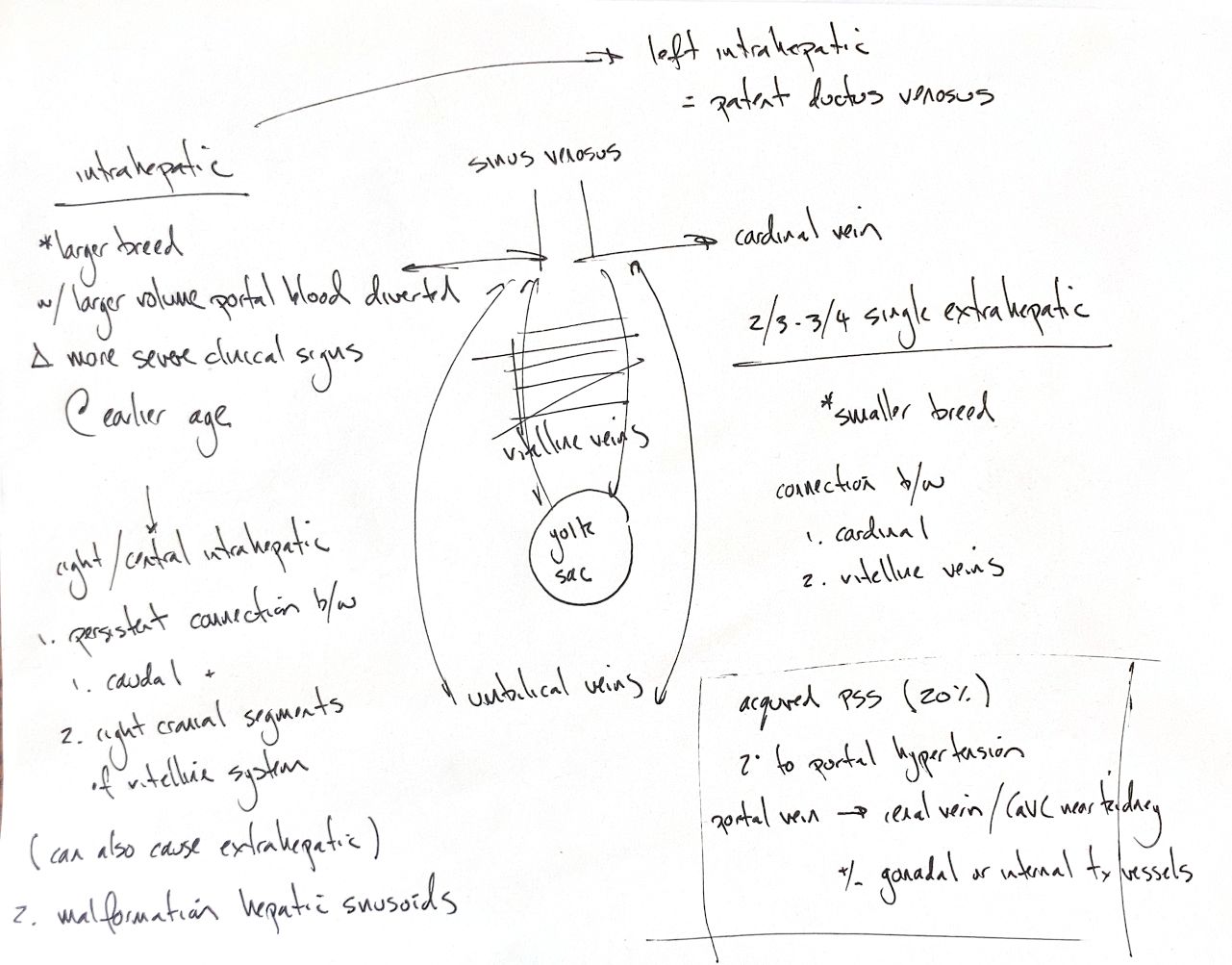
Read the draft explanation
A portosystemic shunt (PSS) lets portal blood bypass normal liver perfusion. Intrahepatic shunts are within the liver and are more typical in larger-breed dogs. They generally divert more portal blood, so signs are often more severe and appear earlier. Extrahepatic shunts lie outside the liver and are more typical in smaller breeds. These are patterns, not rules for every patient.
The original gives two-thirds to three-quarters as single extrahepatic shunts. The book specifies 66–75% of congenital single PSSs in dogs and cats. That denominator matters. This is a textbook summary, not a new population estimate.
The embryo map keeps three systems separate. Vitelline veins bring yolk-sac blood toward the sinus venosus and embryonic heart. Their network helps form hepatic sinusoids and the portal system; the right cranial segment contributes the hepatic caudal vena cava (CVC). Cardinal veins drain the body and help form systemic veins. Umbilical veins carry placental blood toward the liver and heart. The left route becomes the main placental inflow. The ladder is a memory cue, not an exact vessel count or timed canine atlas.
A left intrahepatic shunt most likely represents a patent ductus venosus. Its morphology fits that route. Right or central shunts may reflect a persistent caudal-to-right-cranial vitelline connection, or malformed hepatic sinusoids. These are proposed explanations: primary morphology work says their pathogenesis remains unknown. Such vitelline connections may also produce extrahepatic shunts. Another developmental model links vitelline portal channels with cardinal systemic channels.
Acquired shunts usually follow chronic portal hypertension and are often multiple, tortuous and extrahepatic. Common routes join a portal tributary to a renal vein or the CVC near the kidneys. Gonadal or internal thoracic vessels can also provide outlets. The original and book say acquired PSSs are 20%, but the denominator and primary basis are unclear. Keep that as a source recall cue, not measured prevalence.
References
Johnston/Tobias 2e, ch96; Lamb & White1998.