
Neuropathic pain adjuncts
Read the draft explanation
Gabapentin and amantadine act on different parts of pain processing.
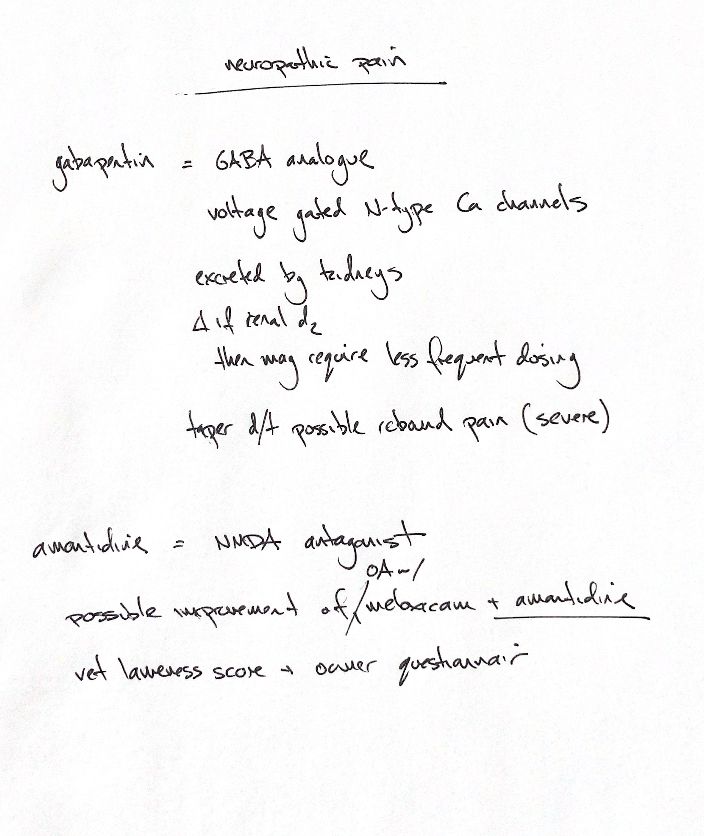
Gabapentin is a GABA analogue, but it is not a GABA-receptor agonist. It binds the α₂δ subunit of voltage-gated calcium channels. N-type calcium channels are one experimental target. Modifying channel function can reduce excitatory neurotransmitter release.
Renal excretion matters. With renal insufficiency, slower clearance may require less frequent dosing. Dogs also metabolise some gabapentin to N-methylgabapentin, so renal excretion does not mean that all of the drug stays unchanged.
Taper when stopping. Abrupt withdrawal may cause rebound pain, sometimes severe. The interval and taper need an individual plan. Human withdrawal reports and the textbook warning do not establish a fixed veterinary taper or a canine event rate.
Amantadine is an NMDA receptor antagonist. Its adjunct evidence includes a trial in 31 dogs with osteoarthritis pain despite NSAID treatment. All dogs received meloxicam. Amantadine or placebo was added from day 21 to day 42, a 21-day add-on period.
At day 42, the combination improved veterinarian lameness scores and owner-reported activity. The standard orthopedic questionnaire did not show a between-group difference. This supports possible benefit in refractory canine OA, without establishing benefit for every neuropathic condition.
References
Johnston & Tobias, 2nd ed., Ch.68; Lascelles et al., JVIM2008, PMID18289289; Gee et al., 1996, PMID8621444; Radulovic et al., 1995, PMID7600909; Norton, 2001, PMID11479399.
https://pubmed.ncbi.nlm.nih.gov/18289289/