
NSAID hepatic injury and liver enzymes
Read the draft explanation
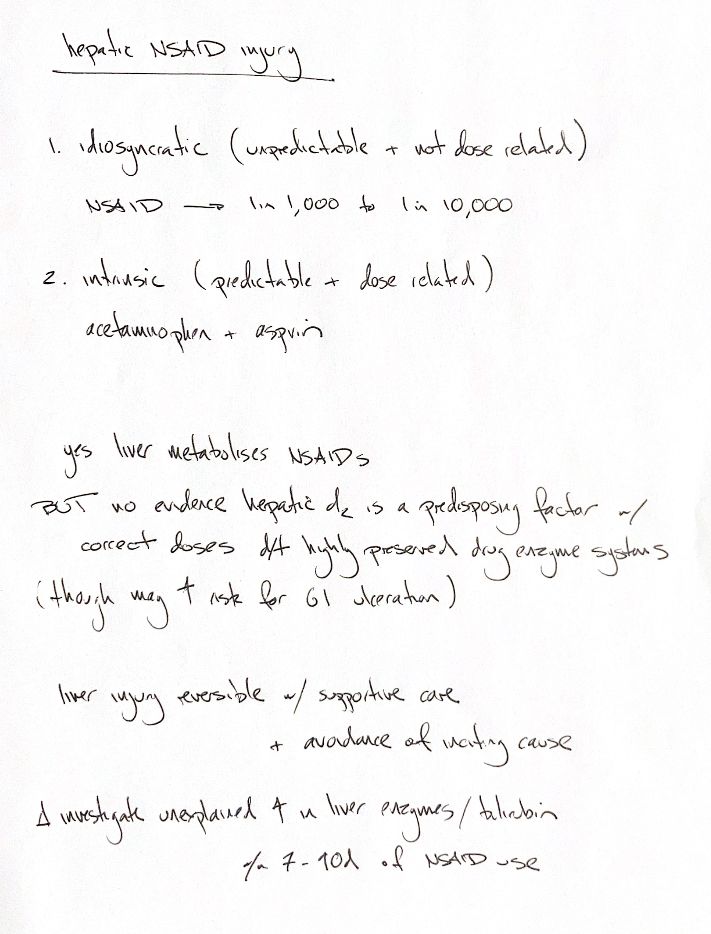
Idiosyncratic hepatic injury is unpredictable and not dose-related. It can occur at a correct NSAID dose. Intrinsic injury is predictable and dose-related. Aspirin and acetaminophen are examples, but acetaminophen is an analgesic, not an NSAID.
The liver metabolises NSAIDs, but an enzyme rise does not by itself show loss of liver function. Drug-metabolising pathways may remain preserved in liver disease. Pre-existing disease has not been shown to predict an idiosyncratic reaction. This does not establish safety in active liver disease. Follow the drug's contraindications and assess hepatic function. Liver disease can also raise GI ulcer risk.
Investigate unexplained liver-enzyme rises or falling albumin promptly, with clinical signs and other causes in mind. The original 7–10-day recheck cue is not a validated waiting period or safe window. New changes need assessment whenever they appear.
Withdrawal of the causative drug and supportive care can allow recovery. The course varies with severity; liver injury is not always reversible.
The original 1-in-1,000 to 1-in-10,000 shorthand needs drug-specific context. A 2018 Rycarfa carprofen label calls idiosyncratic hepatic events rare: more than 1 to fewer than 10 per 10,000 treated dogs. This product-label category does not establish an incidence for all NSAIDs.
References
Johnston & Tobias, 2nd ed., gastric ulceration/liver disease; Jasani, EJCAP26(3), 2016, p14; HPRA, Rycarfa 100 mg SPC(2018), §4.6; MacPhail et al., JAVMA1998, PMID9638189; FDA, Get the Facts about Pain Relievers for Pets.
https://www.fecava.org/wp-content/uploads/2019/09/autumn-2016.pdf
https://pubmed.ncbi.nlm.nih.gov/9638189/