
NSAID systemic adverse effects
Read the draft explanation
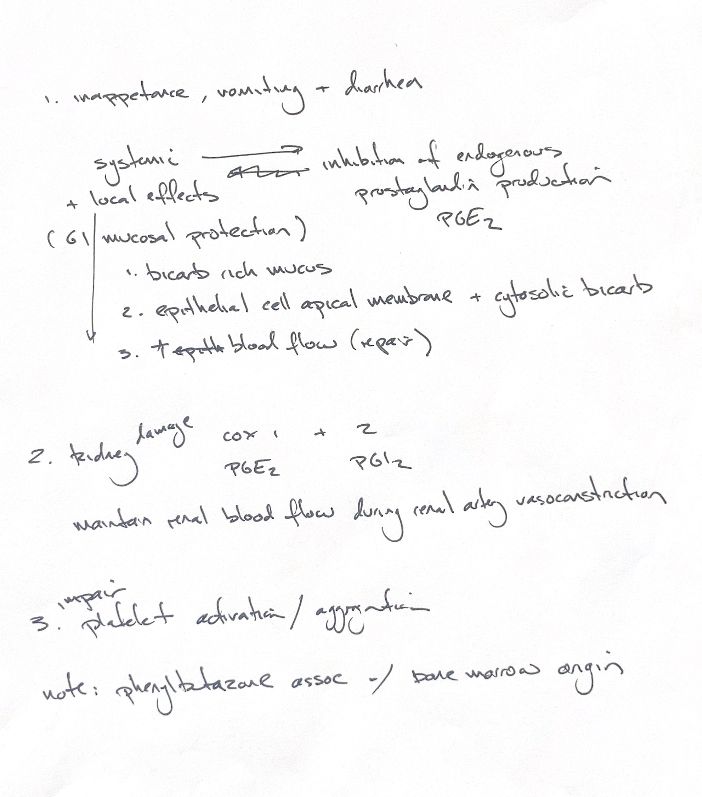
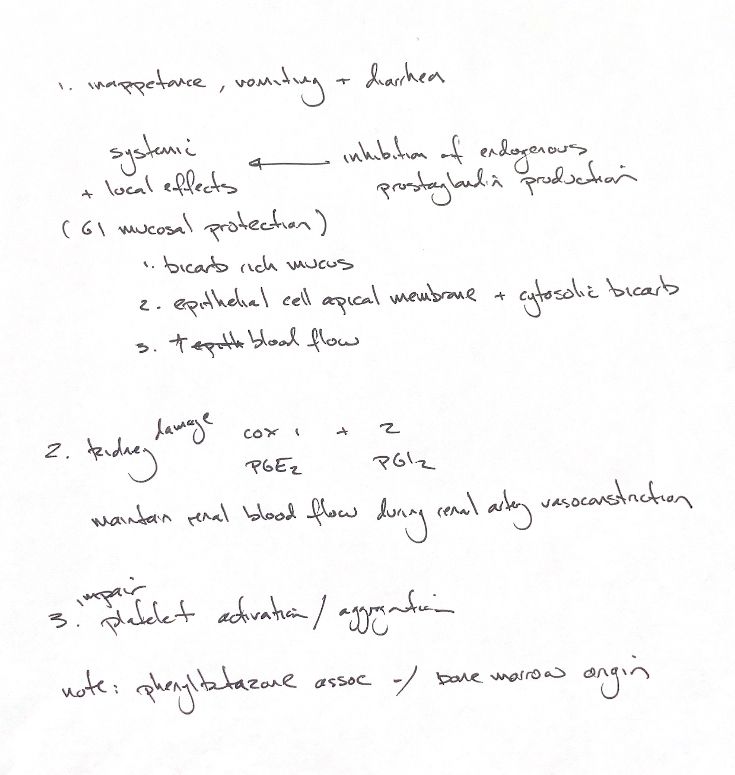
NSAIDs can cause inappetence, vomiting and diarrhea. Gastric damage has both local and systemic pathways. The local effect acts on the mucosa itself. The systemic effect comes from blocking endogenous prostaglandin production.
PGE₂ helps maintain three gastric defences. Bicarbonate-rich mucus buffers acid at the surface. The epithelial apical membrane and cytosolic bicarbonate protect the cells. Mucosal blood flow brings bicarbonate, removes acid and supports epithelial repair. Losing prostaglandin support weakens these defences.
In the kidney, COX-1 and COX-2 produce PGE₂ and PGI₂. These prostaglandins help maintain blood flow and tubular ion transport during renal arterial vasoconstriction. Blocking them matters most when perfusion is already threatened, such as with hypovolemia, dehydration or renal disease. COX-2 selectivity does not remove this renal risk.
Platelets use COX-1 to make thromboxane A₂, which helps drive activation and aggregation. Some NSAIDs impair this pathway more than others. The effect depends on the drug and its COX selectivity. Phenylbutazone has also been associated with bone marrow dyscrasias. That is an additional effect, separate from platelet inhibition.
References
Johnston & Tobias, Veterinary Surgery: Small Animal, 2nd ed., Ch.68, adverse effects of NSAIDs; FDA, Get the Facts about Pain Relievers for Pets.
https://www.fda.gov/animal-veterinary/animal-health-literacy/get-facts-about-pain-relievers-pets