
Delayed union, non-union and malunion
Read the draft explanation
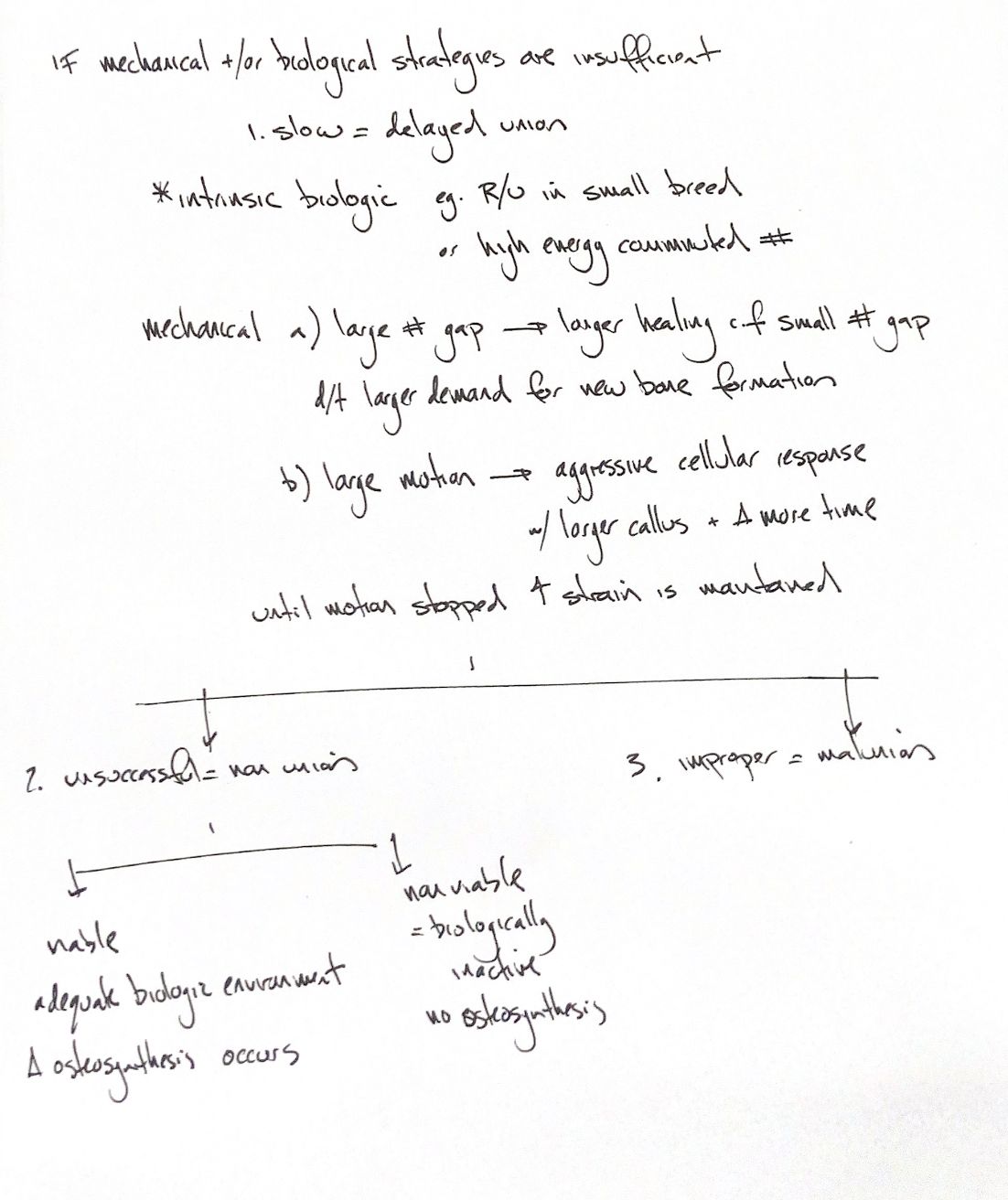
When mechanical support or the biological environment is insufficient, fracture healing can be slow, stall, or finish in poor alignment.
Delayed union means healing takes longer than expected. The expected pace depends on the fracture and patient. A small-breed radius and ulna fracture may have limited local biological support. High-energy comminution may damage the periosteum, muscle attachments and blood supply.
The size of the gap also matters. A larger gap needs more new bone and a greater cellular response, so bridging can take longer. This does not mean every large gap will bridge.
Excess movement may stimulate a vigorous cellular response and a larger callus. Building that callus takes time. If excessive movement continues, tissue strain stays high. If it exceeds what the developing callus and its blood vessels can tolerate, the response may remain unbridged and become a non-union.
A non-union has stopped progressing towards bony union. In a viable non-union, a healing response is present but does not bridge the fracture. Truly nonviable tissue lacks the biological activity needed to unite even with adequate stability. Callus appearance alone cannot establish tissue viability.
Malunion is different: the fracture has united, but the resulting shape or alignment is improper. The last sketch shows a healed angular deformity. Bone union and restoration of useful form are separate outcomes.
Serial clinical and radiographic assessment helps distinguish continued slow progress from a stalled fracture. A single universal healing deadline does not fit every patient.
References
hand-drawn ACVS Phase One notes; Johnston and Tobias, Veterinary Surgery: Small Animal, 2nd edition, Chapter 45.