
Endochondral ossification and the long-bone template
Read the draft explanation
Endochondral ossification builds bone by replacing a hyaline cartilage template. Follow the four stages in the drawings.
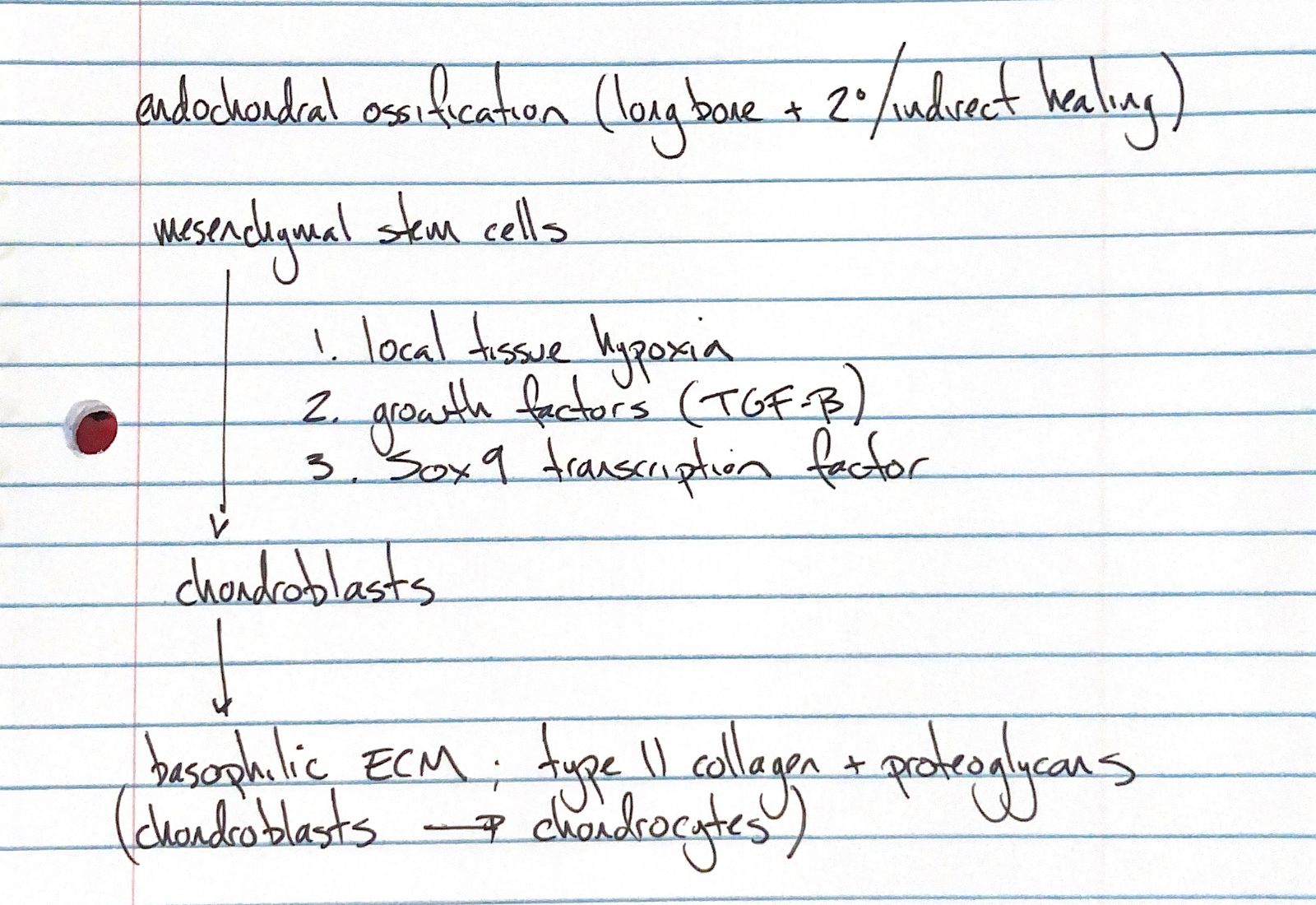
1. Mesenchymal stem cells condense. Local hypoxia and TGF-β favour cartilage formation. The SOX9 transcription factor is required for the cells to become chondroblasts. These cells produce basophilic ECM containing type II collagen and proteoglycans, including aggrecan. As matrix surrounds them, they become chondrocytes. The template takes the shape of the future bone. Its outer perichondrium holds progenitor cells that support growth.
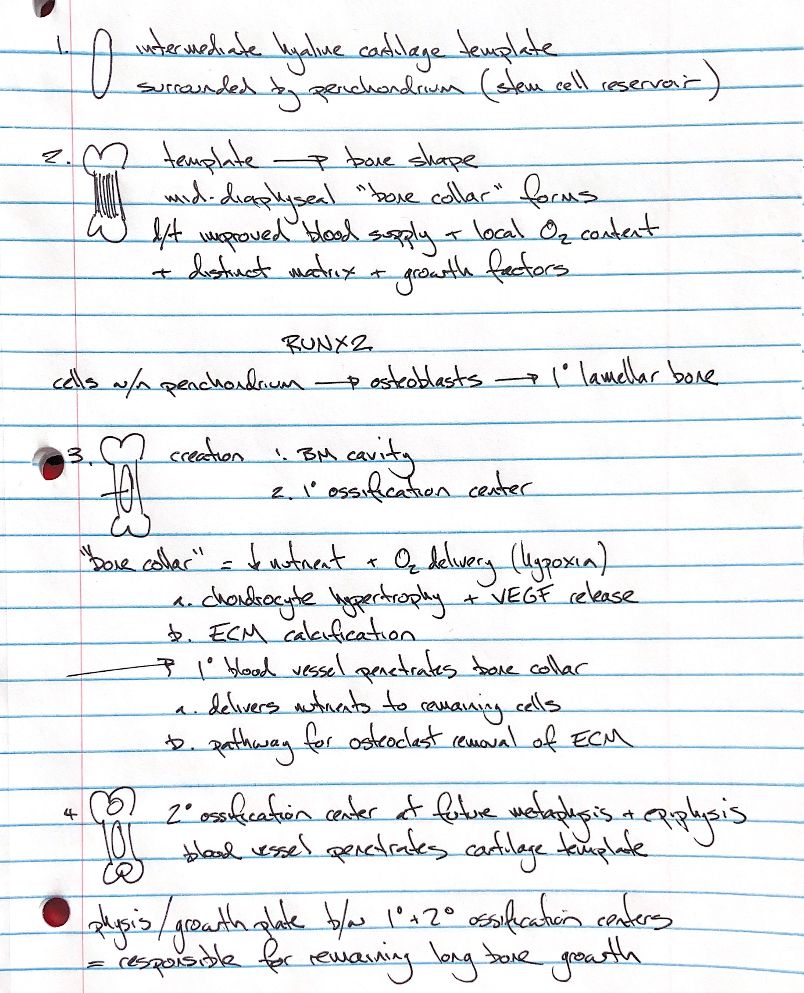
2. Improved blood supply and oxygen around the template, together with matrix and growth-factor signals, favour osteoblast formation in the perichondrium. RUNX2 helps drive this change. These osteoblasts form a collar of primary lamellar bone around the mid-diaphysis. The covering becomes periosteum.
3. The collar reduces nutrient and oxygen delivery to central chondrocytes. These cells enlarge, release VEGF and their surrounding matrix calcifies. VEGF is vascular endothelial growth factor; it helps recruit growing blood vessels. A primary vessel enters through the collar, brings nutrients to surviving cells and gives osteoclasts access to remove mineralised matrix. A marrow cavity and primary ossification centre develop. Osteoblasts add new bone on remaining calcified cartilage surfaces. The cartilage is replaced, rather than simply turning into bone.
4. Vessels enter the ends of the template and secondary ossification centres develop in the epiphyses. A cartilage growth plate remains between each epiphysis and the shaft-side metaphysis. This is the physis, also called the epiphyseal plate. It separates the primary and secondary centres and supports the remaining increase in bone length.
The same cartilage-to-bone pathway also contributes to secondary fracture healing, alongside intramembranous bone formation.
References
Tobias & Johnston, Veterinary Surgery: Small Animal, 2nd ed., Ch. 39.