
What diagnostic numbers mean
Read the draft explanation
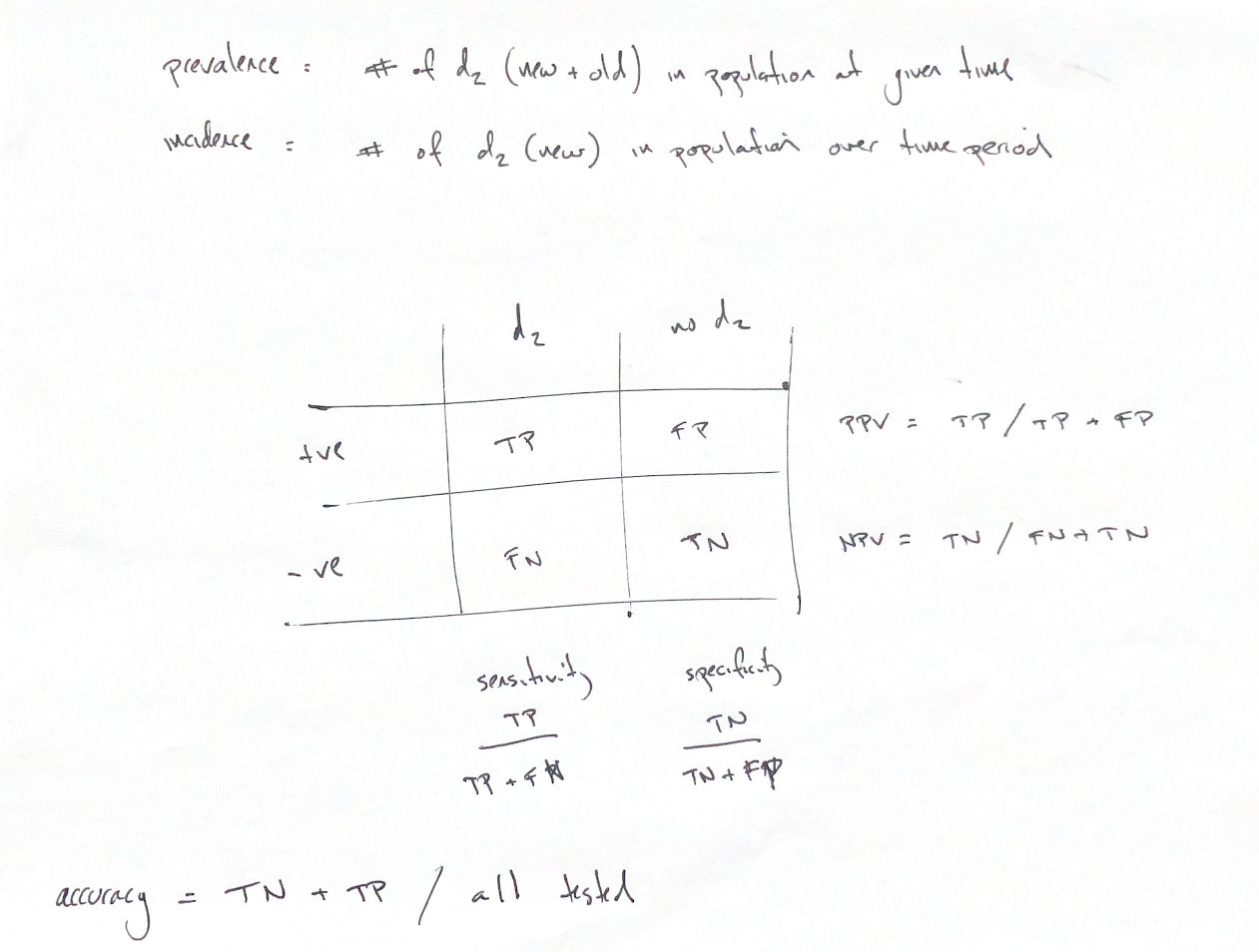
Prevalence is the proportion of a population that has the disease at a given time. It includes existing cases, whether new or longstanding. Incidence tracks new cases over a defined period. The denominator depends on the measure: incidence risk uses the population at risk at the start; an incidence rate uses time spent at risk.
For a diagnostic test, start with the table. A true positive has disease and tests positive. A false positive tests positive without disease. A false negative has disease but tests negative. A true negative has neither disease nor a positive result.
Sensitivity asks how many diseased animals the test finds: TP/(TP+FN). Specificity asks how many disease-free animals it correctly excludes: TN/(TN+FP). Both start with disease status.
Predictive values start with the test result. PPV is the chance of disease among positive results: TP/(TP+FP). NPV is the chance of no disease among negative results: TN/(FN+TN). Predictive values depend on disease prevalence in the population being tested.
Accuracy combines the correct results: (TP+TN)/(TP+FP+FN+TN). Keep the denominator in view. It tells you which question each number answers.
References
Chris Wood's original Anki study note. CDC, Principles of Epidemiology in Public Health Practice, 3rd ed., Lesson 3, section 2; Lesson 5, Appendix A.