
Working space: irrigation, insufflation and thoracic limits
Read the draft explanation
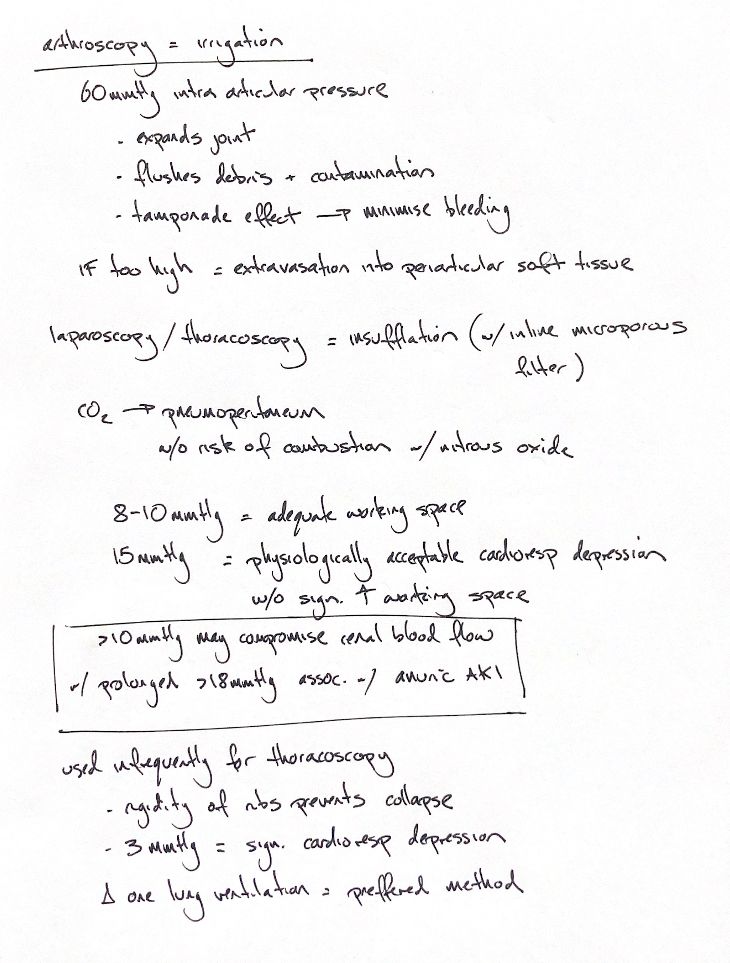
Irrigation does three jobs in arthroscopy. It distends the joint, flushes debris and contamination, and raises local pressure enough to help tamponade bleeding. Around 60 mmHg within the joint is a starting point. The pump setting can differ from joint pressure, so adjust to the joint and purpose. Excess pressure drives fluid into periarticular soft tissues. The ideal pressure for every canine joint is not established.
Laparoscopy needs a pneumoperitoneum. CO₂ is useful because it does not support combustion, unlike nitrous oxide. An in-line microporous filter helps block particles, bacteria and reverse fluid flow. In most dogs and cats, 8–10 mmHg gives useful working space. At 15 mmHg for 180 minutes, five healthy, ventilated dogs had physiologic changes that remained acceptable in that experiment. This does not mean the pressure has no effect.
The small gain in abdominal working volume above 8 mmHg was reported in cats. It should not be merged with the 15 mmHg dog study. Higher abdominal pressure can impair renal perfusion, but neither 10 nor 18 mmHg defines a universal canine AKI threshold. Pressure, duration, volume status and the patient all matter. A fixed association between prolonged pressure above 18 mmHg and anuric AKI is not established in dogs.
The chest behaves differently. The ribs hold the wall open when air enters through a cannula, so working space often develops without insufflation. In seven healthy ventilated dogs, only 3 mmHg of thoracic pressure reduced cardiac output and arterial pressure. If more space is needed, one-lung ventilation can deflate the operative lung and is often preferred to pressurising the chest.
References
Johnston & Tobias, Veterinary Surgery: Small Animal, 2nd ed., Chs 24 and 71; Duke et al., Vet Surg 1996, doi:10.1111/j.1532-950x.1996.tb01381.x; Daly et al., JAAHA 2002, doi:10.5326/0380515; Almeida & Ganem, Rev Bras Anestesiol 2004, doi:10.1590/S0034-70942004000300008.