
Seeing: light source and scope geometry
Read the draft explanation
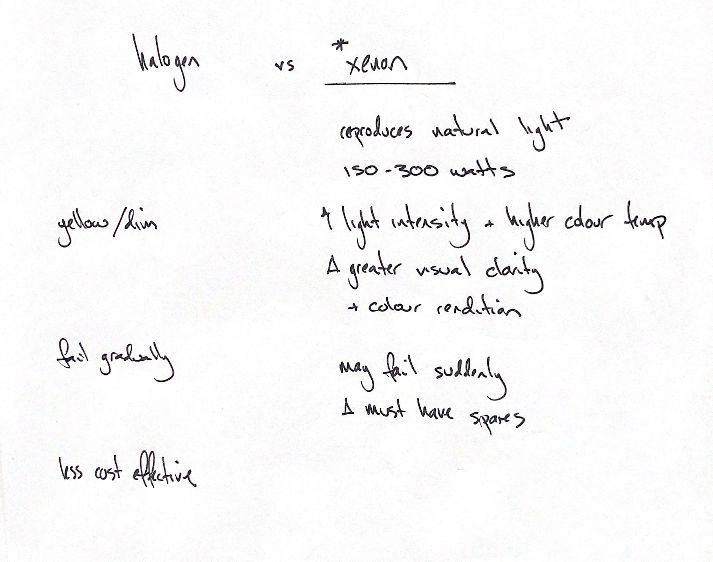
Xenon gives a brighter, higher-colour-temperature light than halogen, so structures and colours are easier to separate. It closely reproduces natural light. A 150–300 W source supports good picture quality. Halogen looks more yellow, dims gradually and is less cost-effective. Xenon may fail suddenly, so keep a spare bulb. A powered fibre-optic cable tip can heat quickly; turn the light down when it is not in use.
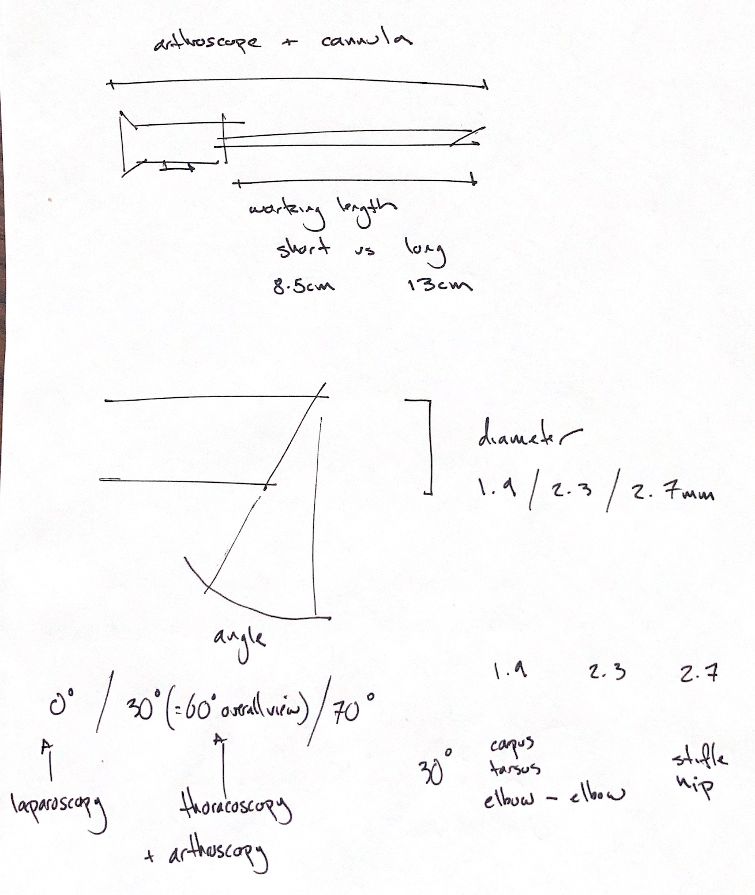
Three measurements describe an arthroscope: shaft diameter, working length and viewing angle. The cannula sits outside the telescope, so its diameter is larger. Short scopes are about 8.5 cm; long scopes are about 13 cm. A 1.9 mm scope suits the carpus, tarsus and elbow. The elbow may also take 2.4 mm, while 2.7 mm is a common choice for the stifle and hip. Match the instrument to the individual joint and patient. The hip usually needs the longer scope.
A 0° scope looks straight ahead and often works well in the abdomen. A 30° oblique scope is the usual choice for arthroscopy and helps you look around thoracic structures. Rotation sweeps the viewing direction around the shaft; opposite rotations give a 60° overall sweep. That is different from the instantaneous optical field of view. A 70° scope looks more steeply to the side and is used less often.
References
Johnston & Tobias, Veterinary Surgery: Small Animal, 2nd ed., Chs 24 and 71.