
Circuits
Read the draft explanation
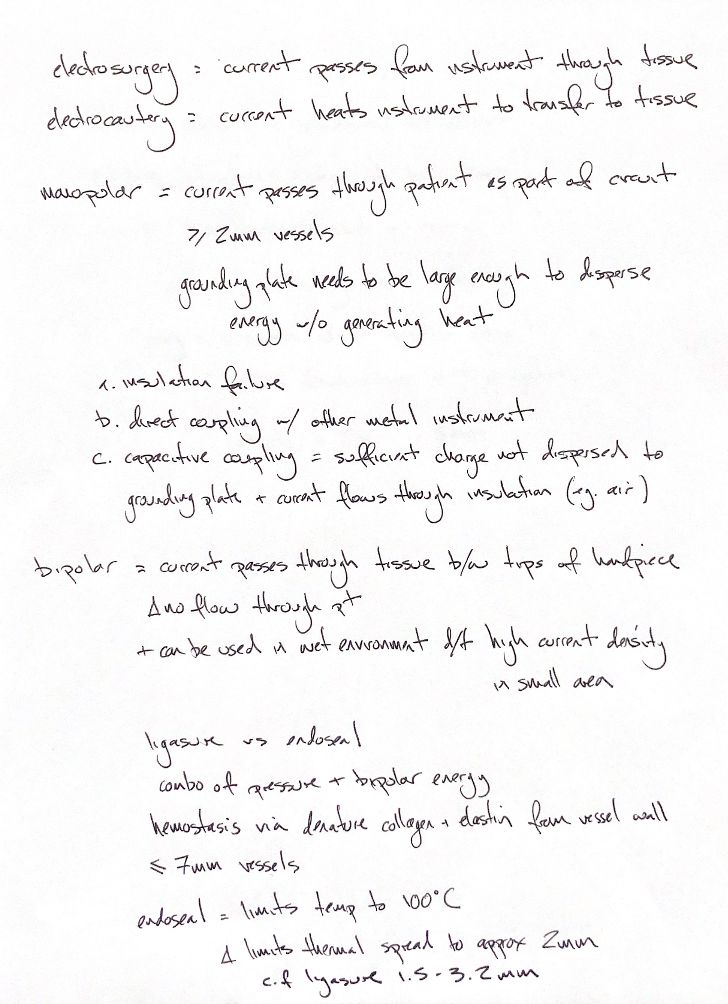
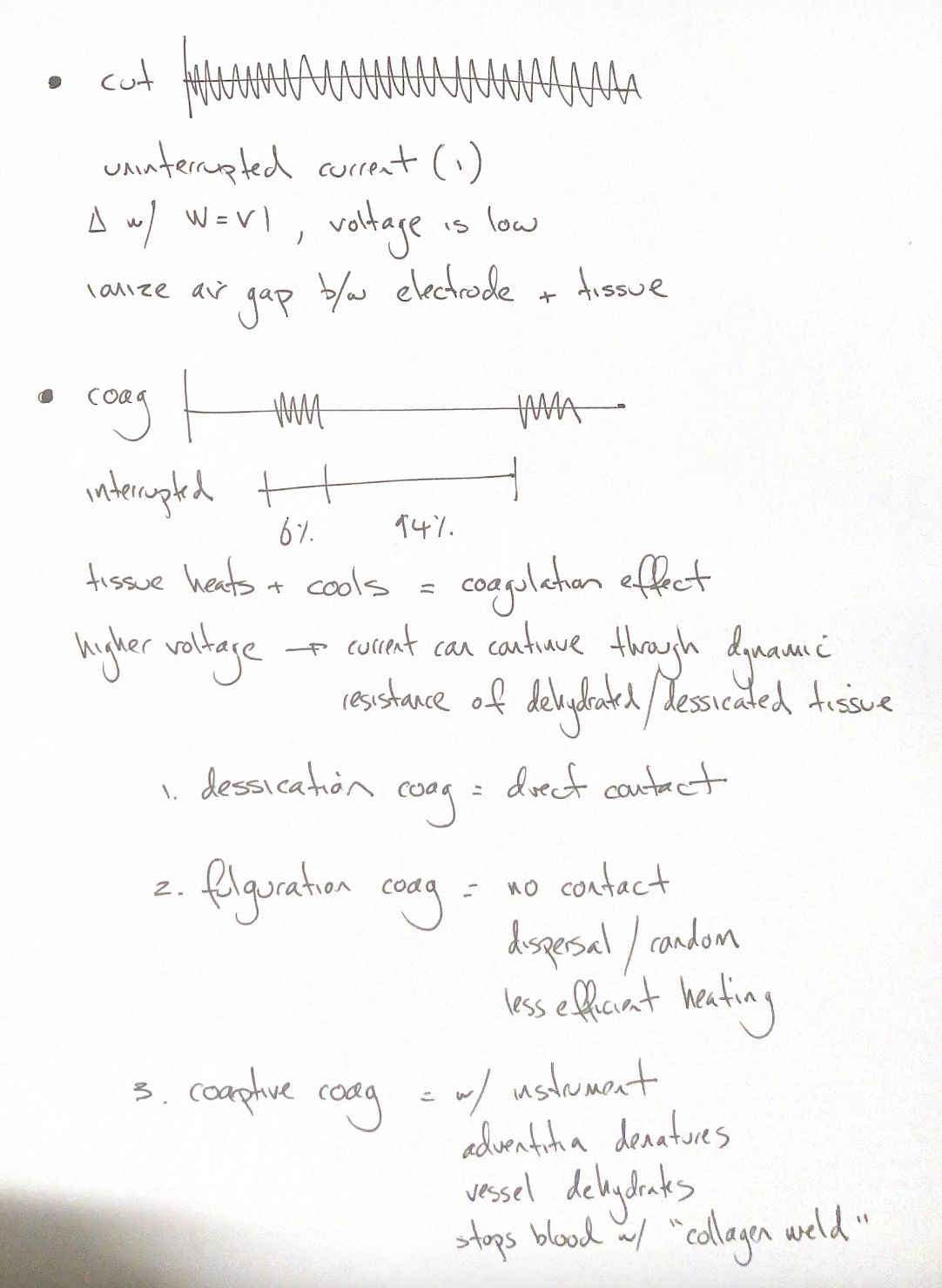
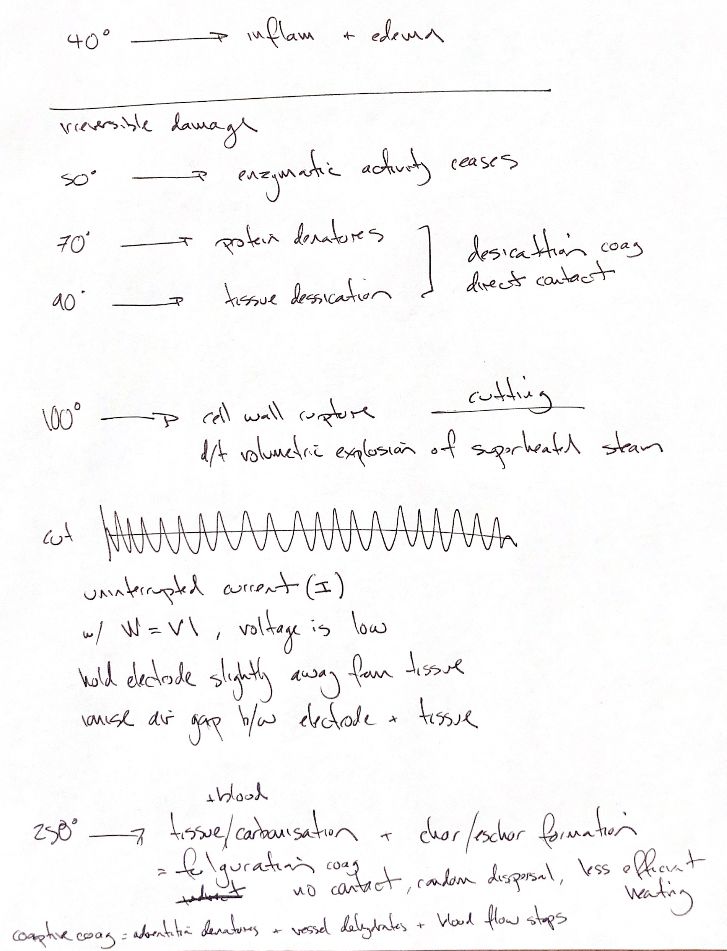
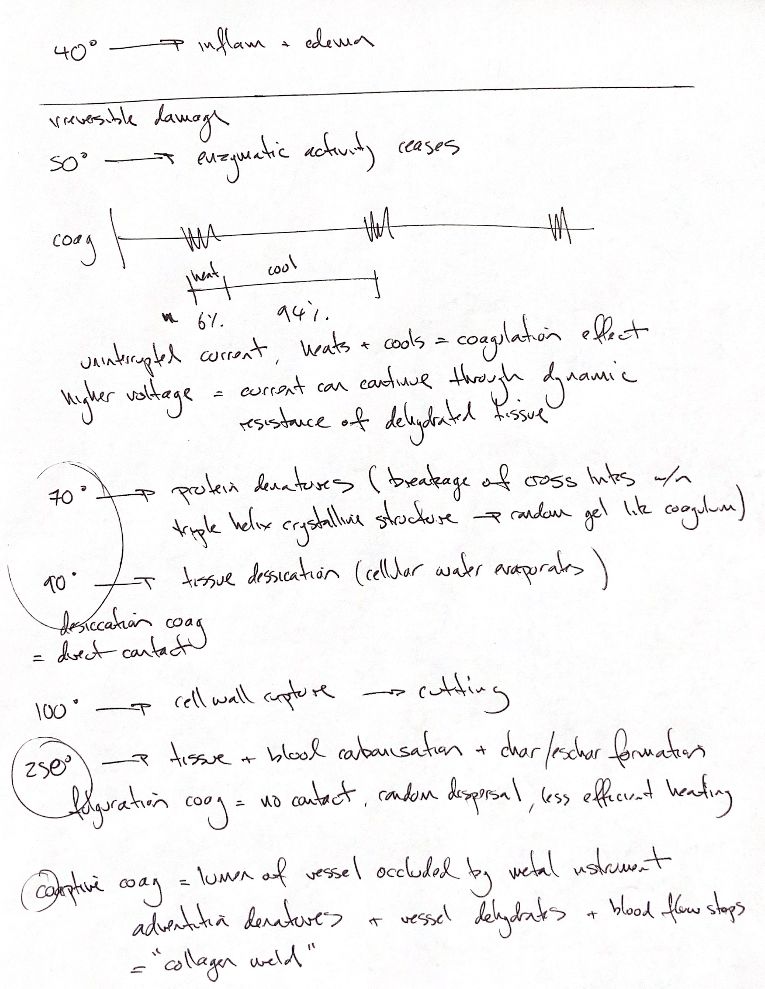
Electrosurgery sends current through tissue. Resistance turns that electrical energy into heat. Electrocautery heats a metal tip first, then transfers heat from the tip to tissue.
In monopolar electrosurgery, current runs from the active tip through the patient to a broad return pad, then back to the generator. The pad spreads the returning current over a large area. Poor pad contact concentrates current and can cause a burn.
Routine monopolar coagulation is a small-vessel technique. The “≥2 mm” cue in the original note should not be read as a lower size limit or as permission to seal larger vessels. Vessel size, the method of contact and the tissue all affect hemostasis.
Bipolar forceps send current through the tissue held between their tips. They do not need a distant return pad. The short path and high current density let them work in a wet field. Current still passes through the tissue in the jaws.
Stray energy can take three routes. A defect in insulation exposes active metal. Direct coupling transfers current when the active electrode touches another metal instrument. Capacitive coupling transfers energy between conductors across intact insulation. If the outer metal cannot disperse that energy safely, it can discharge into nearby tissue.
References
Benitez, “Principles and Use of Energy Sources in Small Animal Surgery,” Johnston & Tobias, Veterinary Surgery: Small Animal,2nd ed., PDF pp.573,577–582. Dubiel et al., Vet Surg 2010;39:909–924.