
Peroxide plasma and other methods
Read the draft explanation
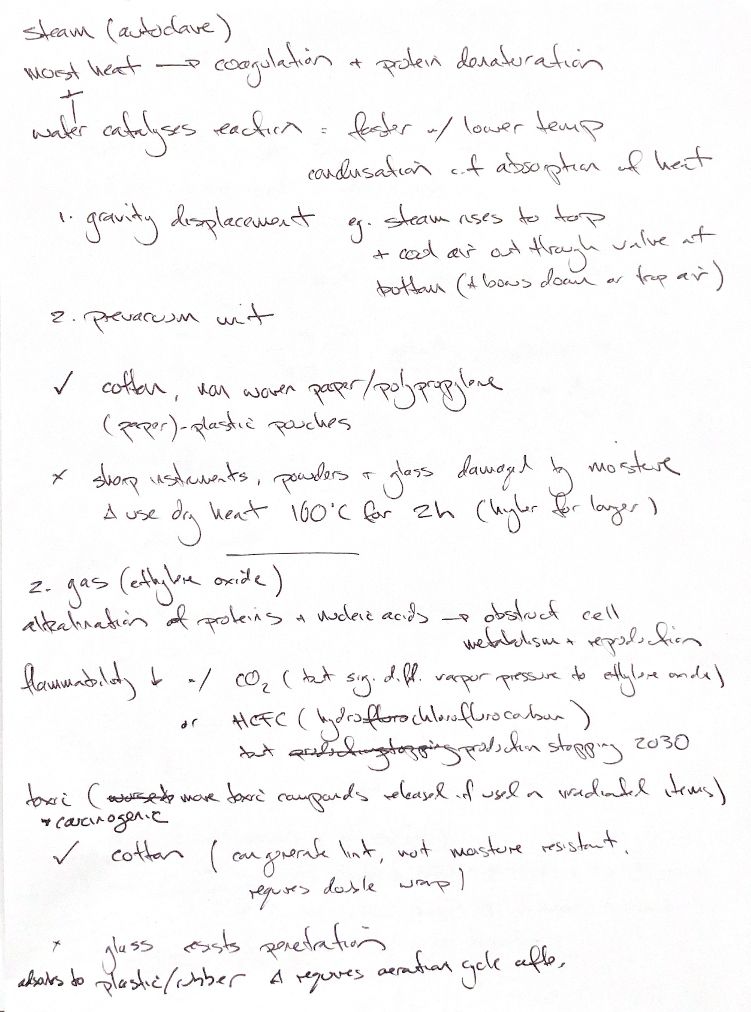
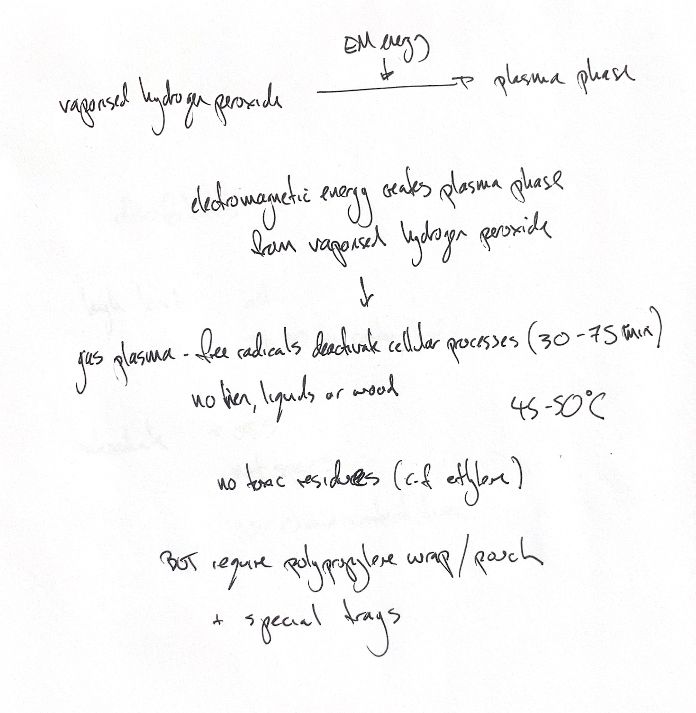
Hydrogen peroxide plasma uses electromagnetic energy to turn vapour into a plasma phase. Reactive products, including free radicals, disrupt cellular processes. It can sterilise heat- or moisture-sensitive devices without leaving toxic residues that need an aeration cycle.
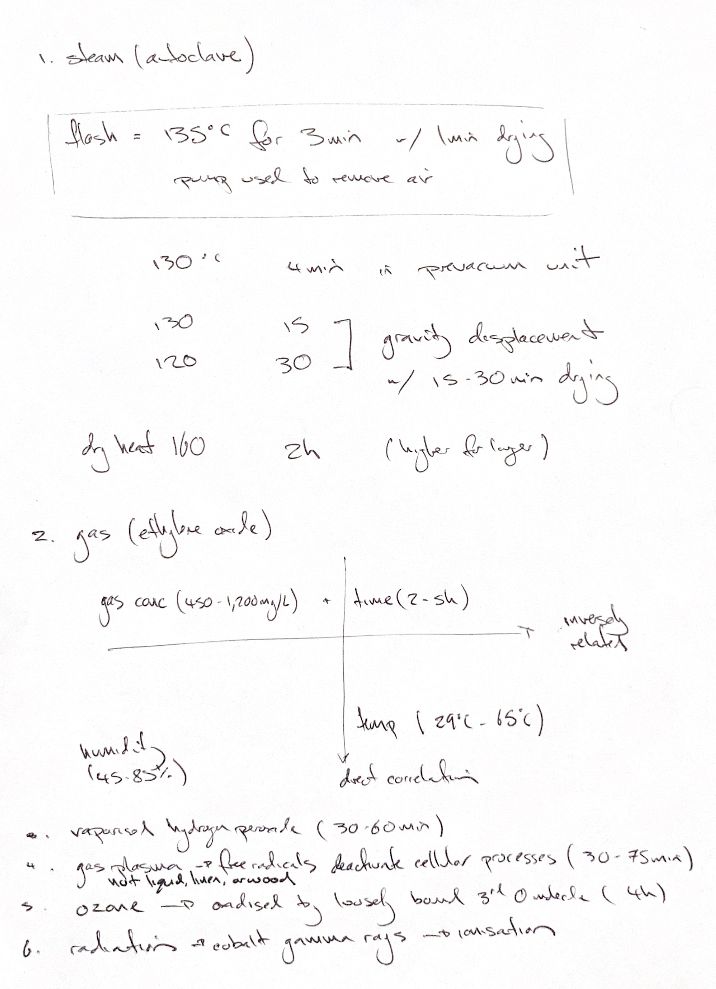
The textbook gives 45–50°C and 28–75 min, depending on the system. The handwritten 30–75 min cue was rounded. Use compatible polypropylene wraps, polyolefin pouches and special trays. The note groups wrap and pouch under polypropylene; the textbook separates polypropylene wraps from polyolefin pouches. Keep linens, liquids and wood out. A narrow lumen still needs a validated cycle for its diameter and length.
Vaporised hydrogen peroxide is a separate low-temperature method. The textbook gives 30–55 min, rather than the note’s 30–60 min. It leaves no toxic residue and needs no aeration. It can process compatible metal and nonmetal devices, but not liquids, linens, powders or cellulose.
Ozone has a loosely bound third oxygen atom that oxidises microbial components. The textbook’s approximate cycle is 4 h at 30–35°C. CDC describes a particular cleared system at about 4 h 15 min. Keep wood and paper out. These method ranges describe examples, so the validated system instructions still set the cycle.
Ionising radiation, including cobalt-60 gamma rays, is mainly used by manufacturers. Sutures and some implants are supplied this way. Radiation can also damage materials: prolonged storage after gamma sterilisation may oxidise polyethylene, and irradiation can weaken bone grafts or damage some drugs.
References
Renberg & Claeys, “Sterilization,” Johnston & Tobias, Veterinary Surgery: Small Animal, 2nd ed., PDF pp. 485–486. CDC, Table 6: Sterilization Advantages and Disadvantages; Other Sterilization Methods.