
Ethylene oxide
Read the draft explanation
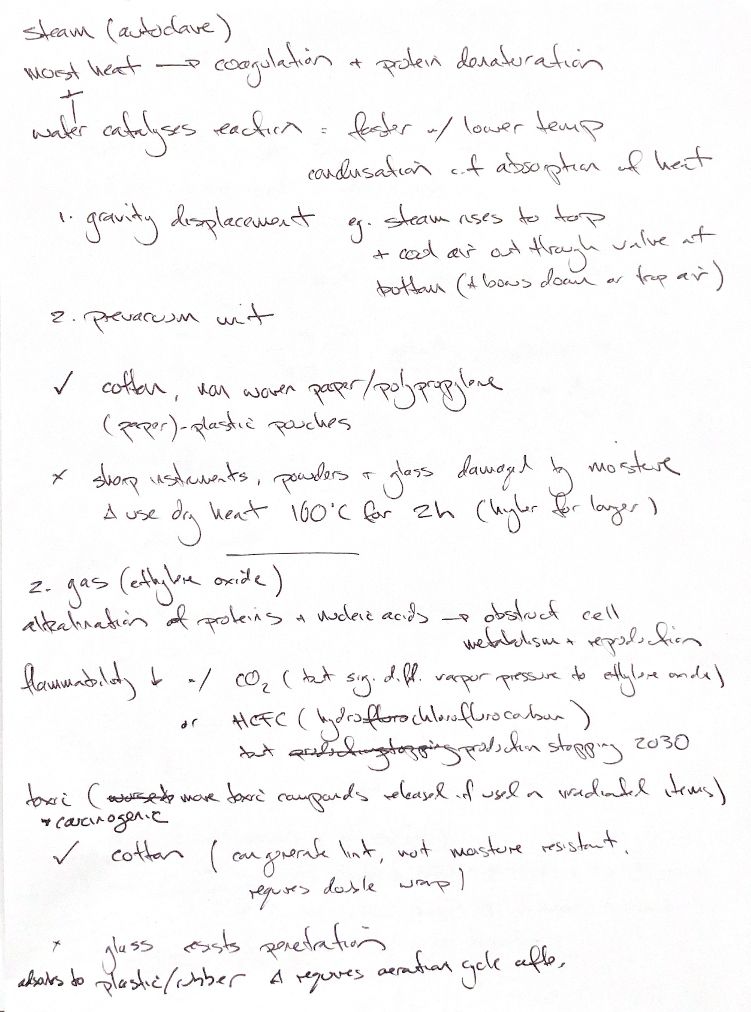
Ethylene oxide alkylates proteins and nucleic acids. This blocks cell metabolism and reproduction. It can process heat-sensitive devices that cannot tolerate steam, but the gas is flammable, toxic and carcinogenic.
Gas must reach the device. Keep packs loose. Cotton can be used with a double wrap, although it sheds lint and does not resist moisture. Glass blocks gas penetration. Rubber and some plastics retain ethylene oxide, so the cycle needs an aeration stage to remove the residue. Avoid EO sterilisation of previously irradiated items because toxic compounds may form.
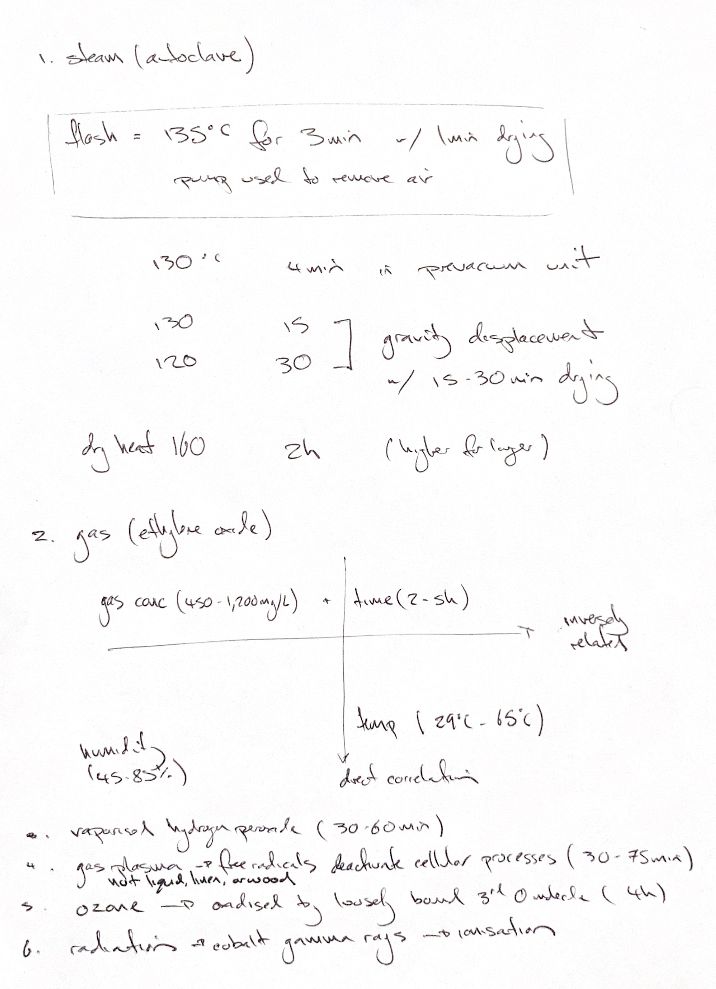
EO cycles balance four conditions. The textbook ranges are 450–1200 mg/L gas, 29–65°C, 45–85% humidity and 2–5 h exposure, then aeration. These are machine-dependent ranges, not settings to mix and match. CDC lists different broad ranges: 37–63°C, 40–80% humidity and 1–6 h. Follow the validated device, load and sterilizer cycle.
Within validated limits, more EO and higher temperature can shorten the exposure needed. The temperature–time relationship was written as “direct” in the source note and textbook; that direction is incorrect.
CO₂ and historical HCFC mixtures reduce flammability. CO₂ has a very different vapour pressure from EO, which complicates delivery. The note’s HCFC “2030” cue refers to the U.S. production and import phaseout, not a date until which every sterilant mixture remains available. Most HCFC uses were restricted earlier; EPA lists the remaining U.S. phaseout for 2030.
References
Renberg & Claeys, “Sterilization,” Johnston & Tobias, Veterinary Surgery: Small Animal, 2nd ed., PDF pp. 480, 484. CDC, Ethylene Oxide “Gas” Sterilization. EPA, Phaseout of Class II Ozone-Depleting Substances.