
Antiseptic solutions
Read the draft explanation
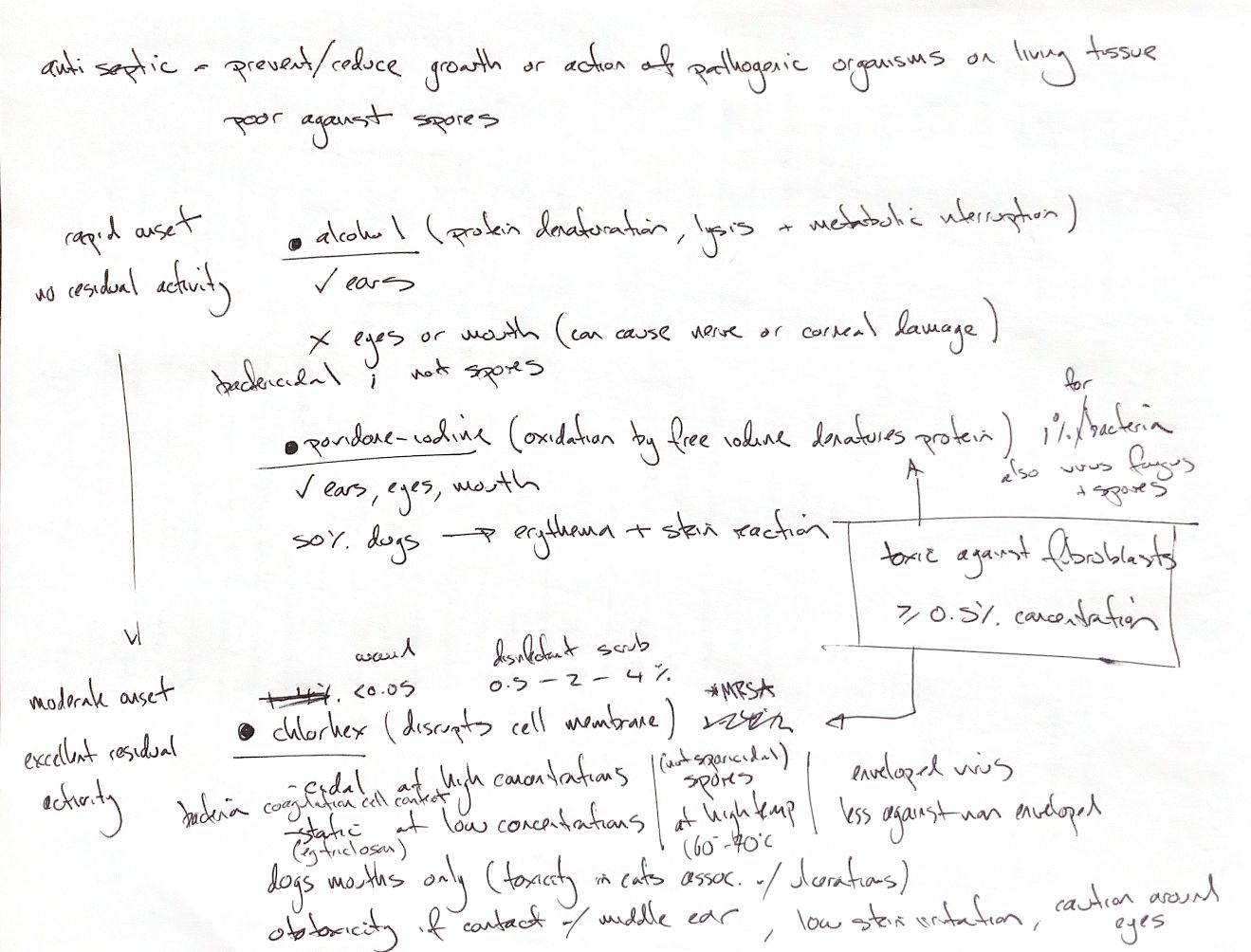
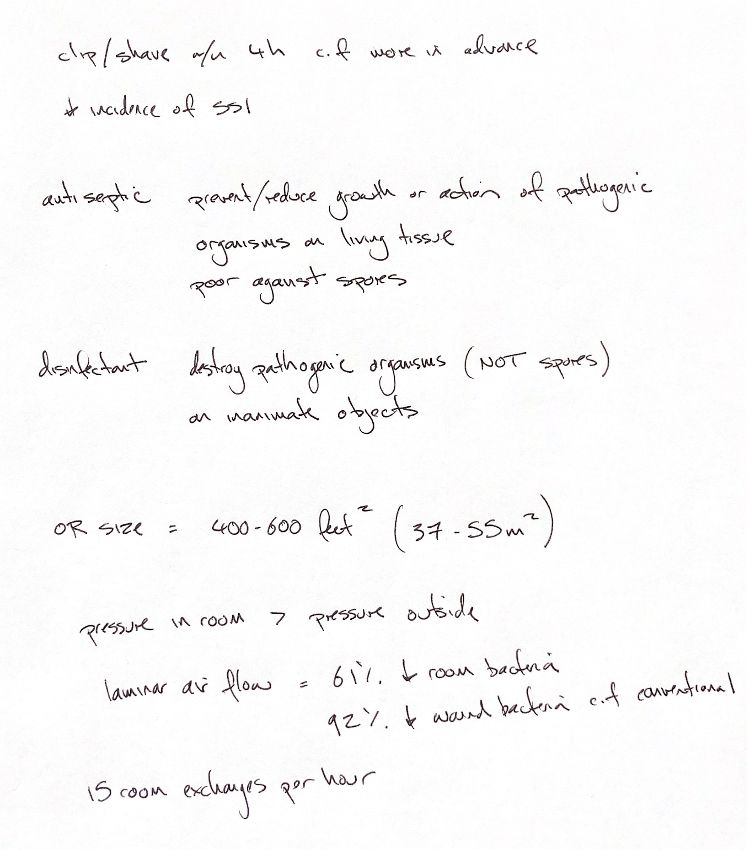
An antiseptic acts on living tissue. A disinfectant acts on objects. Spore activity depends on the agent and exposure. Routine skin antisepsis does not sterilise skin.
Alcohol works fast by damaging membranes and denaturing proteins. It leaves no residual action on its own. Keep skin-prep alcohol off the ocular surface and oral mucosa. An ear-use cue is not blanket permission for middle-ear exposure.
Povidone-iodine releases free iodine, which oxidises and disrupts proteins. It acts against bacteria, viruses and fungi. Spore activity needs the right formulation and longer contact. Eye, ear and oral work needs a suitable aqueous product without alcohol or detergent. A fixed 50% skin-reaction rate should not be applied to all canine prep protocols.
Chlorhexidine disrupts membranes. High concentrations kill; lower concentrations can be bacteriostatic. Triclosan is also bacteriostatic. Chlorhexidine persists on skin, but site and formulation matter. Veterinary oral products are labelled for dogs and cats, so “dog mouths only” is too broad. Eye exposure can cause keratitis; middle-ear exposure can be ototoxic. MRSA susceptibility varies.
The agents have different fibroblast toxicity thresholds. After 30-min exposure in a canine cell study, fibroblasts survived below 0.5% povidone-iodine and below 0.013% chlorhexidine diacetate. Bactericidal concentrations harmed fibroblasts in vitro. These values do not directly predict wound healing.
The 60–70°C spore cue is not a patient-prep protocol. Chlorhexidine is not a reliable clinical sporicide. The ≤0.05% wound solution, 0.5–2% disinfectant and 2–4% scrub labels describe separate uses. A wound solution can be 0.05%; it does not have to be strictly below 0.05%. Detergent scrub does not belong in an open wound.
References
Johnston & Tobias, Veterinary Surgery: Small Animal, 2nd ed., ch. 13. Sanchez et al., 1988 (PMID 3238890); Osuna et al., 1990. Nolvadent and Dentahex manufacturer labels. Igarashi & Oka, 1988.