
Infection surveillance
Read the draft explanation
Surveillance asks how we find a problem before we can act on it.
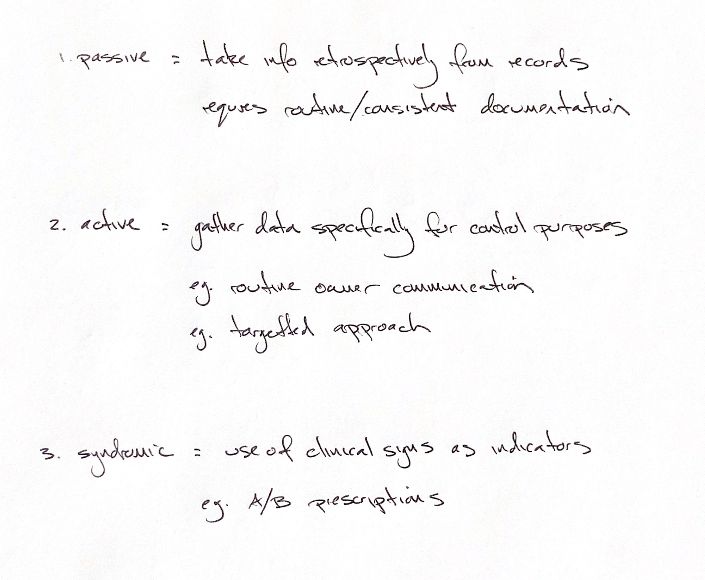
Passive surveillance uses data we already collect, such as medical records and culture results. It works when we use the same case definitions and record findings consistently. Retrospective review cannot recover an infection that was never recorded.
Active surveillance gathers data for infection control. Planned owner calls can find problems that do not reach the hospital record. A targeted program can focus on a defined high-risk group. It is easier to run, but it can miss problems outside that group.
Syndromic surveillance tracks signs or proxy indicators. Fever, diarrhoea, cough and changes in antimicrobial prescribing can flag a trend that needs investigation. A rise in prescriptions is a signal; it does not prove that infections have increased or identify the organism. Patients with the same signs may have different diseases or a noninfectious cause.
For surgical site infection (SSI) rates, use consistent definitions and reliable follow-up. Record the number of operations as well as the number of infections. Communication with owners and referring practices helps capture problems that appear after discharge.
References
Johnston & Tobias, Veterinary Surgery: Small Animal, 2nd ed., ch. 14, “Development of a Practical Surgical Site Infection Surveillance Program”, passive, active and syndromic surveillance sections.