
Adverse-effect map and aminoglycoside risk reduction
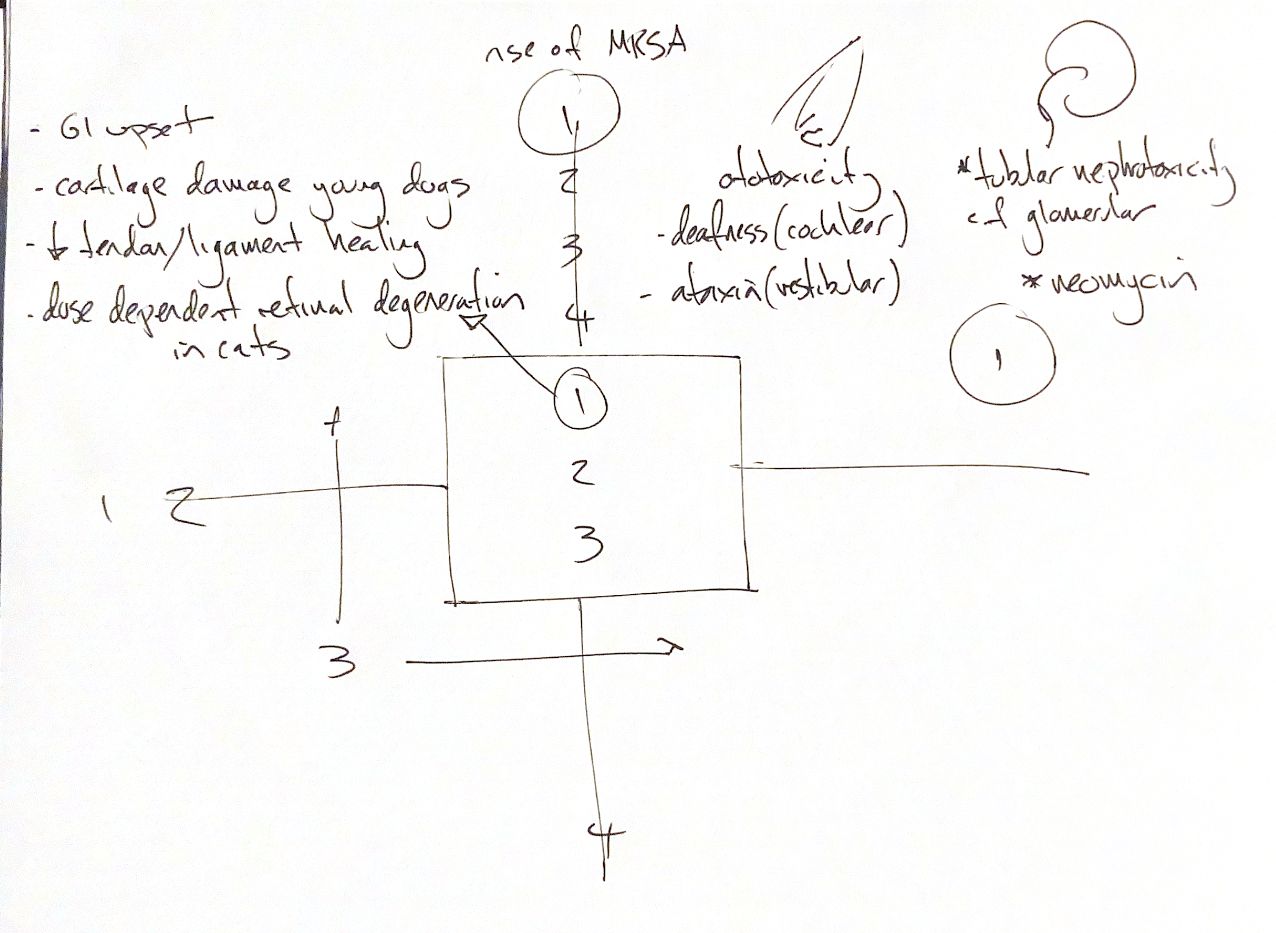
Read the draft explanation
Link each drug to the tissue it can harm, then think about exposure.
Fluoroquinolones can cause GI upset and cartilage injury in growing dogs. They can reduce tendon and ligament healing in experimental models; the effect varies with the drug and model. In cats, enrofloxacin is a particular concern for dose-related retinal degeneration. Cephalosporins can select for MRSA through antimicrobial selection pressure.
Aminoglycosides can damage the cochlea, causing deafness, and the vestibular apparatus, causing ataxia. In the kidney, they mainly injure proximal tubules. Remember neomycin's nephrotoxicity. Tubular injury can then reduce glomerular filtration, or GFR.
The 11-point renal-risk plan starts with once-daily treatment when appropriate and good hydration. Aim for effective peak exposure, then monitor peaks, troughs and clearance. Check urinary GGT:creatinine, urine sediment and serum creatinine. GGT means gamma-glutamyl transferase. Choose an effective drug with lower renal risk and use rational combinations. Avoid concurrent furosemide and other added nephrotoxic or nephroactive exposure.
The monitoring targets are Cmax/MIC >10 and trough <2 µg/mL. Match these general goals to the drug, patient and regimen. They are not established efficacy cut-offs for every dog or cat setting.
Gentamicin–Staphylococcus and amikacin–Pseudomonas are relative activity examples; check susceptibility. When using an aminoglycoside for a Gram-positive infection, the combination principle is to add an appropriate synergistic partner. Combination treatment is not required for every Gram-positive infection.
Activity-time dosing proposes early morning in dogs and possibly evening in cats. A canine study found pharmacokinetic differences; clinical renal benefit remains unproven. N-acetylcysteine, or NAC, is a possible adjunct based on experimental protection. Clinical renal benefit in dogs or cats has yet to be established.
References
original notes and Box 7-1; Gelatt 2001, PMID 11422990; Widerhon 2005, PMID 16147903; Kashuba 1998, human pneumonia PK/PD, PMID 9661031; current veterinary aminoglycoside pharmacology.