
Why pus changes antibiotic activity
Read the draft explanation
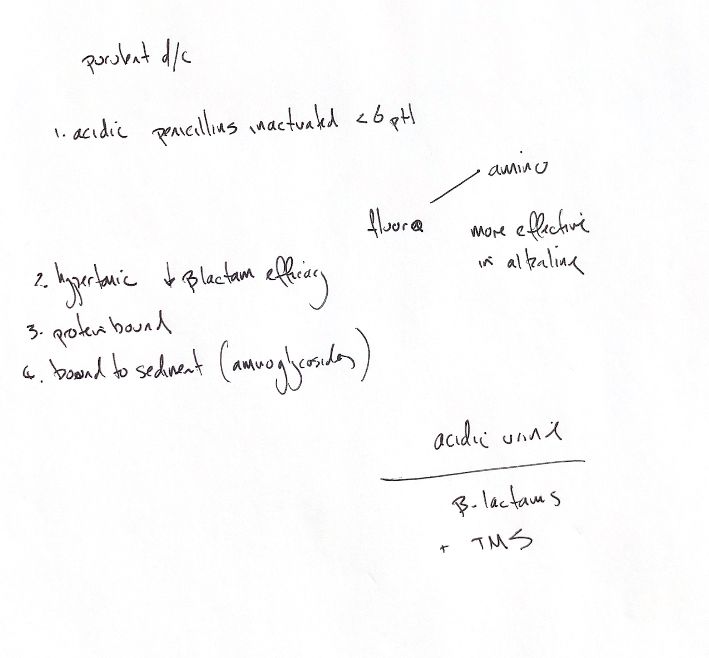
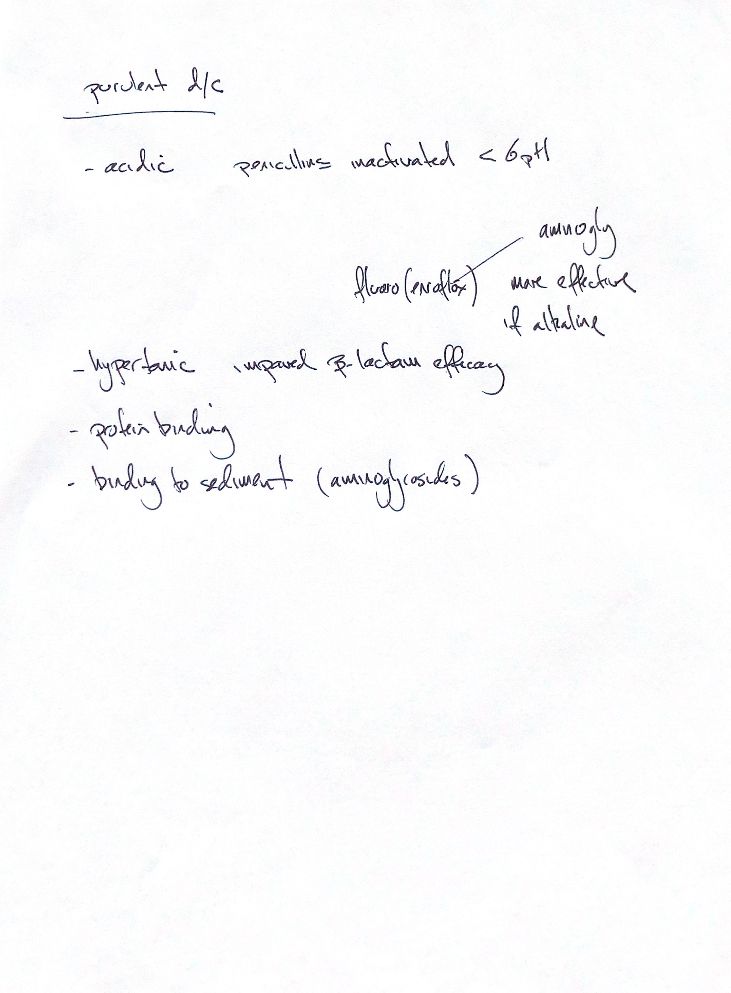
Pus changes the conditions in which an antibiotic has to work. Think of four effects: acidity, hypertonicity, protein binding and binding to cellular sediment.
Acidity can reduce aminoglycoside and fluoroquinolone activity. Hypertonic conditions can protect bacteria from osmotic lysis after β-lactams damage the cell wall. Protein binding reduces the free, active drug. Aminoglycosides can also bind material from broken-down inflammatory cells. In a human-neutrophil laboratory model, chromatin and DNA were important sites of gentamicin binding. That binding can reverse, releasing active drug.
What happens below pH 6? In a culture experiment with penicillin-treated S. pneumoniae, low pH suppressed lysis and reduced killing. Growth inhibition continued. The change reflected bacterial physiology. These findings do not make pH 6 a general threshold for chemical penicillin breakdown.
Urine has its own pH effects. One laboratory study tested 24 drugs against six human uropathogenic species. Many β-lactams were more active in acidic conditions. Aminoglycosides, fluoroquinolones and co-trimoxazole worked better in alkaline conditions. That corrects the acidic-urine pairing for TMP–sulfa. The effect varied with the drug and organism. Whether changing urine pH improves clinical outcomes in dogs or cats remains unestablished by this experiment.
References
López et al. 1976, doi:10.1128/AAC.10.4.697; Vaudaux & Waldvogel 1980, doi:10.1093/infdis/142.4.586; Gudmundsson et al. 1991, PMID 1810197; Yang et al. 2014, doi:10.1016/j.urology.2014.04.048.
https://pubmed.ncbi.nlm.nih.gov/10831/
https://pubmed.ncbi.nlm.nih.gov/7441018/
https://pubmed.ncbi.nlm.nih.gov/25168568/