
Antibiotic antagonism and absorption interference
Read the draft explanation
Antibiotics can interact in two ways here. One drug can change how another acts on bacteria. Or it can reduce how much oral drug is absorbed.
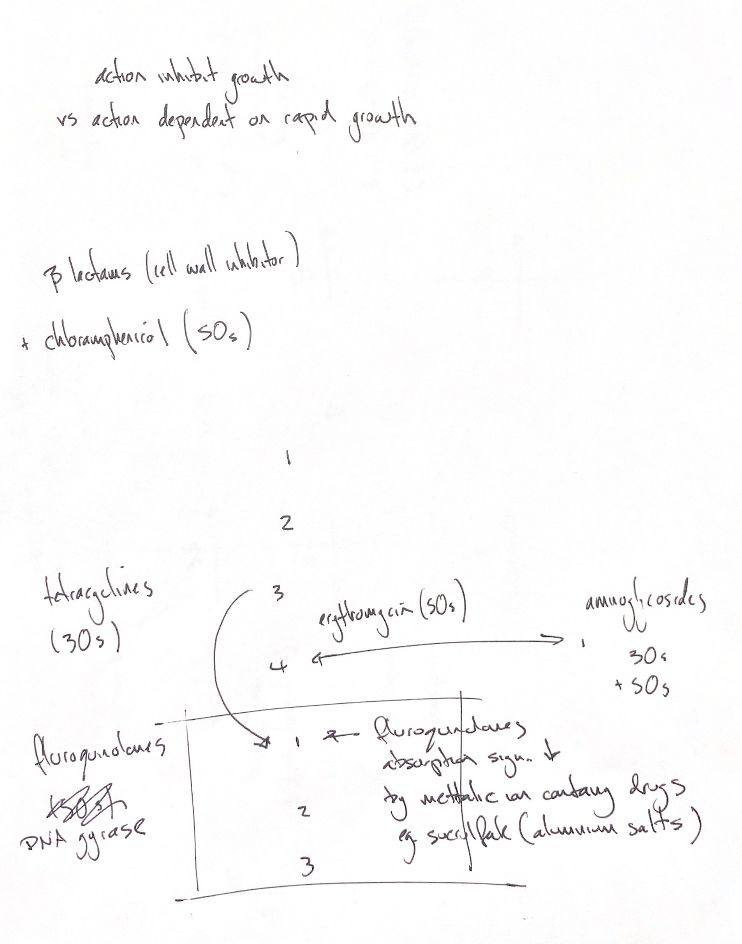
Some antibiotics kill best when bacterial processes are active. Chloramphenicol blocks protein synthesis at 50S. β-lactams block cell-wall cross-linking. In laboratory studies, chloramphenicol has reduced killing by some β-lactam combinations. The result depends on the drugs and organism. Static/cidal labels alone do not predict whether a combination will fail.
Erythromycin acts at 50S. Aminoglycosides bind mainly at 30S, with some other ribosomal interactions. Blocking protein synthesis can reduce aminoglycoside uptake and killing. The drugs act at different main binding sites. Tetracyclines act at 30S and can reduce fluoroquinolone killing in vitro. Fluoroquinolones inhibit DNA gyrase. Drug concentrations and the order of exposure also matter.
In the gut, multivalent cations can bind an oral fluoroquinolone. Aluminium in sucralfate is one example. This leaves less free drug for absorption.
The size of the effect depends on the drug. In five healthy fed Greyhounds, giving sucralfate at the same time as ciprofloxacin led to highly variable exposure. Mean relative bioavailability was 48%, compared with ciprofloxacin alone. For enrofloxacin, it was 104%. Neither drug showed a statistically significant pharmacokinetic difference in this small study. The ciprofloxacin result still suggested a possible clinically relevant interaction. The individual drug, feeding state and patient matter when applying these findings.
References
Brown & Alford 1984, PMID 6375551; Bryan & Kwan 1983, PMID 6351731; 4-quinolone interaction study, PMID 2664184; KuKanich et al. 2016, doi:10.1111/jvim.13796.
https://pubmed.ncbi.nlm.nih.gov/6375551/
https://pubmed.ncbi.nlm.nih.gov/2664184/
https://pubmed.ncbi.nlm.nih.gov/26651022/