
Blood-brain and blood-prostate barriers
Read the draft explanation
The antibiotic has to reach the infection as well as cover the organism.
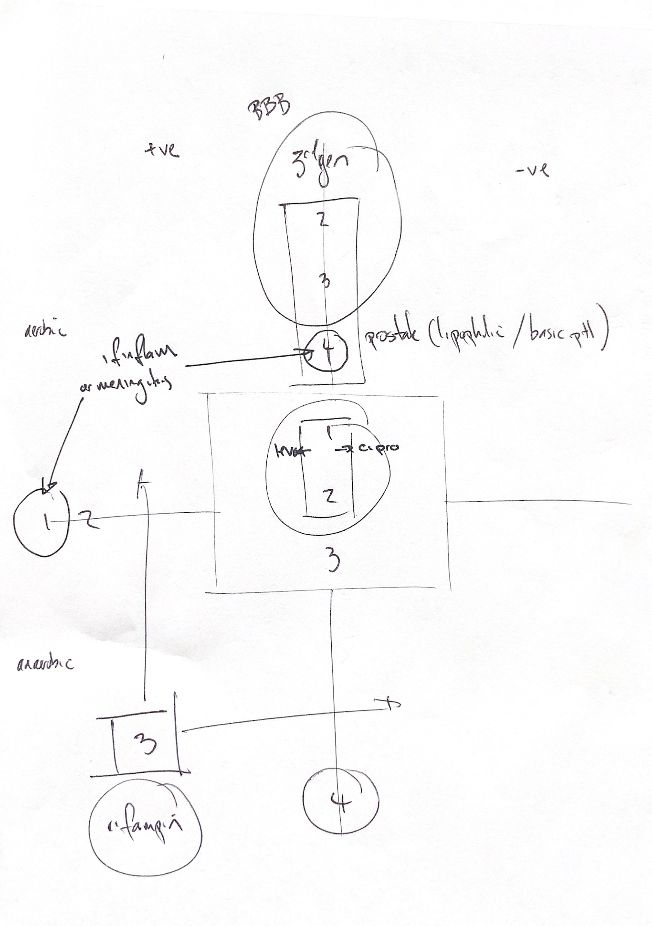
The blood–brain and blood–CSF barriers are different structures. Table 29.1 groups drugs by how well they enter the central nervous system.
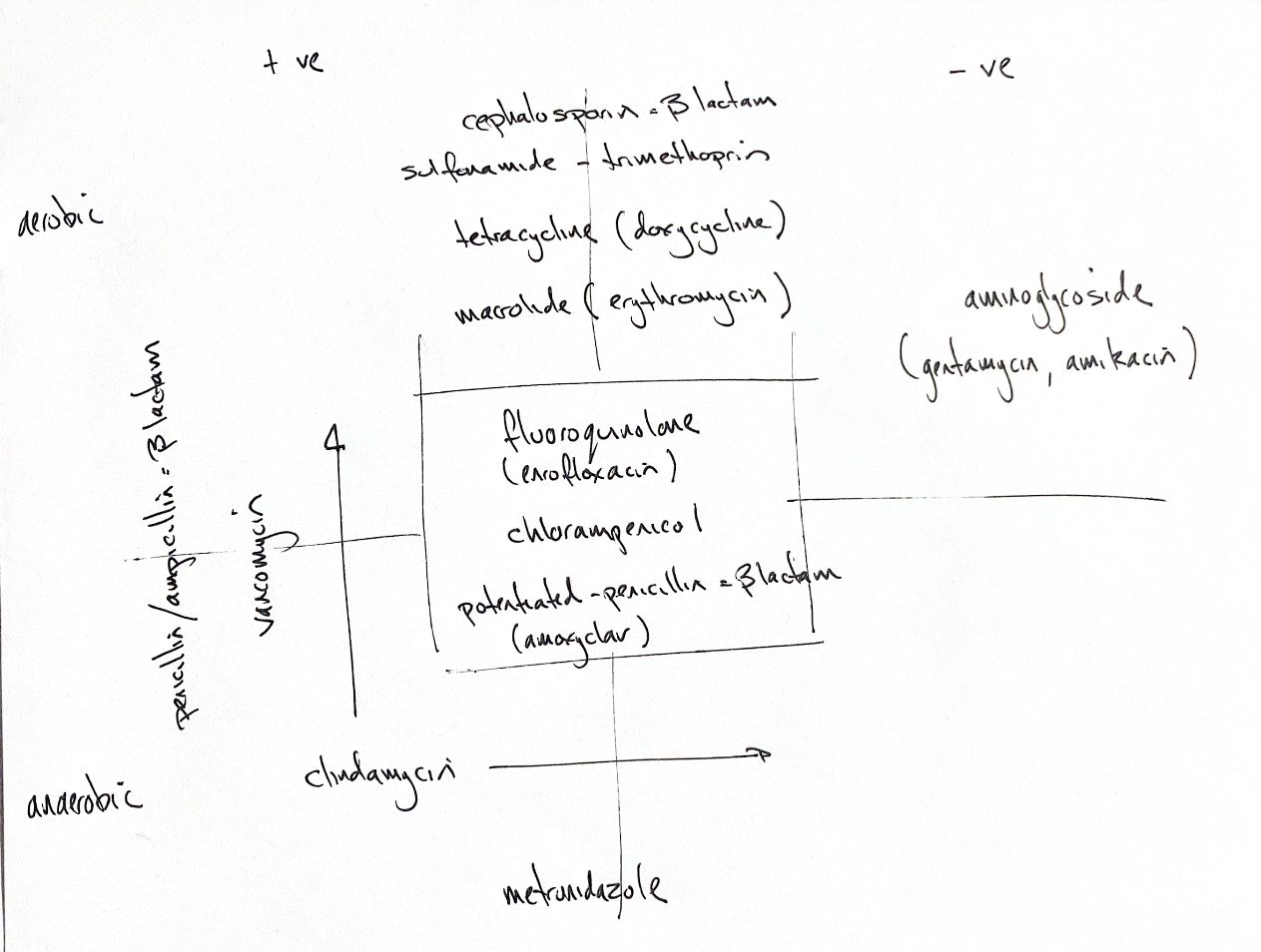
The good-penetration group includes third-generation cephalosporins, fluoroquinolones, metronidazole, sulfonamides, chloramphenicol and trimethoprim. For cephalosporins, this means selected agents such as cefotaxime. The individual drug still matters.
With meningitis, moderate penetration is listed for tetracyclines, especially doxycycline and minocycline, plus erythromycin, penicillins and rifampin. First- and second-generation cephalosporins, aminoglycosides, clindamycin and vancomycin have poor penetration. These are relative groups. Inflammation, dose, the individual drug and the organism's susceptibility affect useful exposure.
For the prostate, lipid solubility, weakly basic properties and limited protein binding favour entry. “Basic” describes the drug, not the prostatic fluid. Once a weak base enters acidic fluid, it can become ionised and trapped there.
Erythromycin and other macrolides illustrate this principle. A drug must still cover the organism. Enrofloxacin, marbofloxacin, TMP–sulfa and chloramphenicol are well-penetrating options for susceptible organisms. Doxycycline may also be considered. Inflammation makes prostatic tissue more permeable, so penetration can differ between normal and inflamed glands. Enrofloxacin also forms active ciprofloxacin, as covered in the metabolism post.
References
Chris Wood's drawing; Johnston & Tobias, Veterinary Surgery: Small Animal, 2nd ed., Table 29.1, adapted from Fenner, JAVMA 185:1176, 1984; Chs30 and 113; Merck Veterinary Manual, Pharmacotherapeutics in Bacterial Prostatitis in Dogs and Cats.