
Static, cidal and exposure
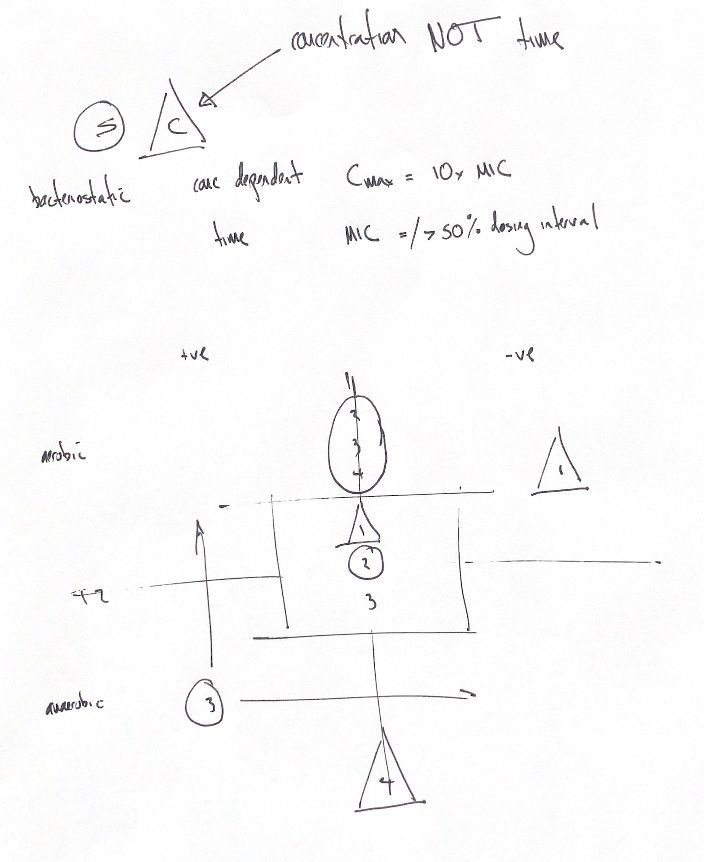

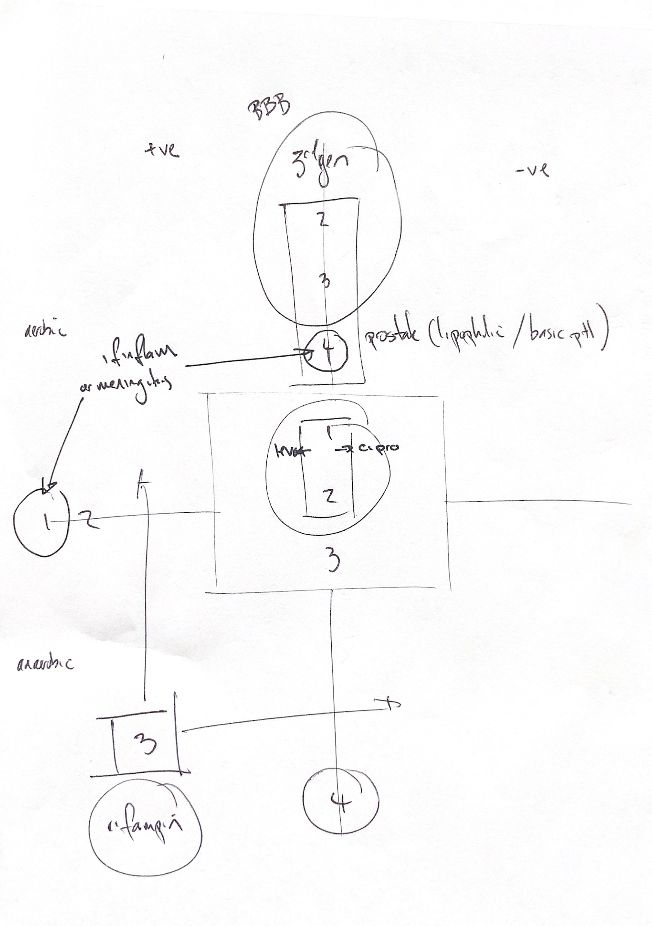
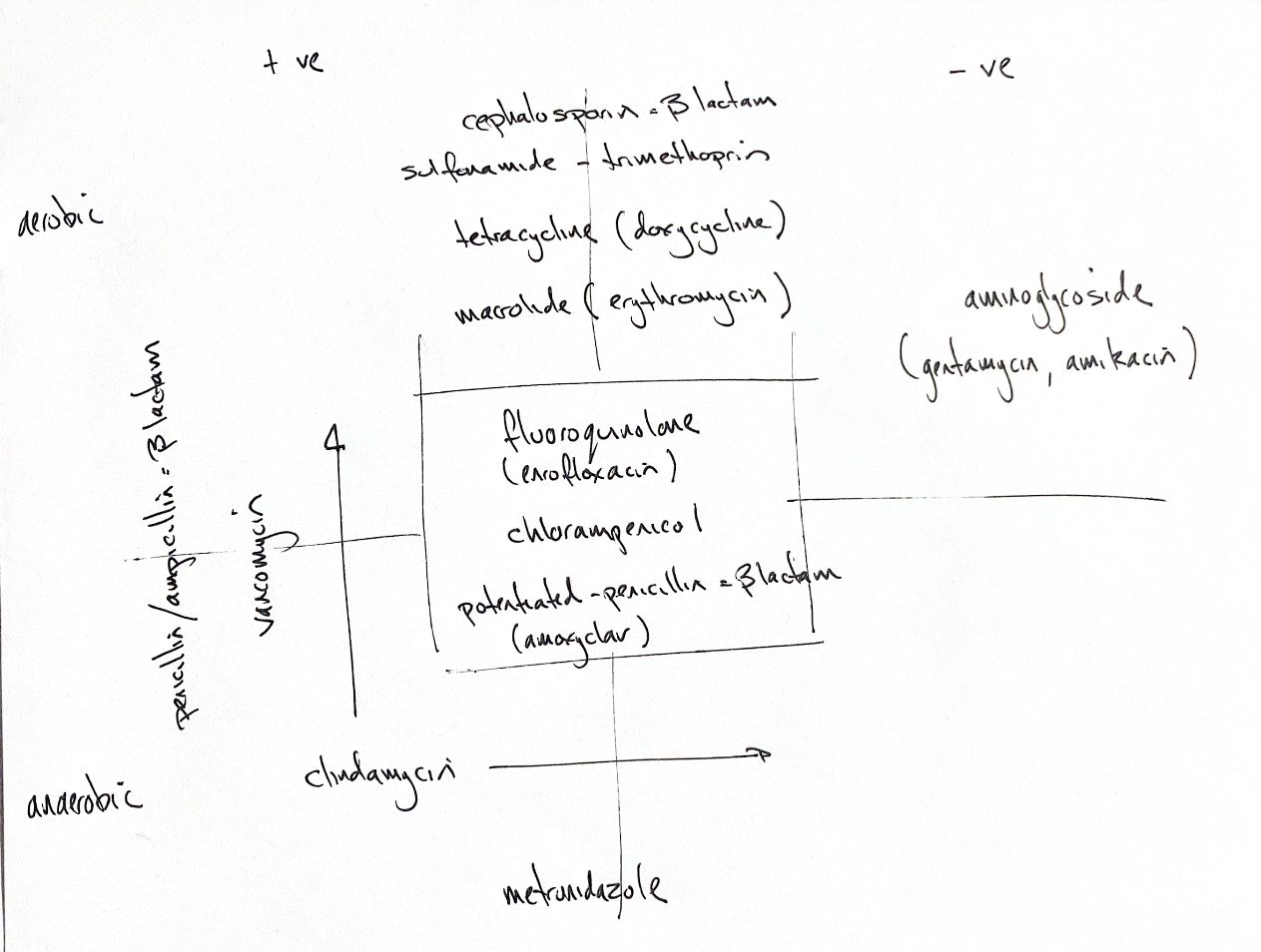
Read the draft explanation
Bacteriostatic drugs slow bacterial growth. Bactericidal drugs kill susceptible bacteria. The effect depends on the organism and the drug exposure.
Tetracyclines, macrolides, chloramphenicol and clindamycin are usually classed as static. β-lactams, aminoglycosides, fluoroquinolones, metronidazole and vancomycin are usually cidal.
Single sulfonamides and trimethoprim are static. Combine them, and they block two steps in folate synthesis. The potentiated combination is usually bactericidal.
Now ask how drug exposure drives the effect. For β-lactams, a useful measure is the time that free drug stays above the minimum inhibitory concentration, or MIC. The “>50% of the dosing interval” figure is a study shorthand. The target changes with the drug, pathogen and infection site.
The time-dependent group on the map includes penicillins and ampicillin, cephalosporins, amoxicillin–clavulanate, TMP–sulfa, tetracyclines, macrolides, chloramphenicol, clindamycin and vancomycin. The best exposure measure differs across these classes; some are better described by AUC/MIC, the total exposure relative to MIC.
The triangles mark aminoglycosides, fluoroquinolones and metronidazole. Peak/MIC compares the highest concentration with MIC. AUC/MIC compares total exposure with MIC. Cmax ≈10× MIC is a classic aminoglycoside peak concept. Targets for the other marked groups differ. Fluoroquinolone efficacy is commonly linked to AUC/MIC. The map alone cannot set a dose.
References
Chris Wood's study drawing; Johnston & Tobias, Veterinary Surgery: Small Animal, 2nd ed., Ch10; McKellar et al. 2004, doi:10.1111/j.1365-2885.2004.00603.x; Merck Veterinary Manual, Design of Dosing Regimens for Animals; Sulfonamides and Sulfonamide Combinations Use in Animals.